
Sound Healing For Pets: 10 Ideas To Try At Home
Sound healing for pets is an emerging complementary wellness practice that uses quiet, predictable sounds to create a more comfortable environment. Gentle sounds can become part of a peaceful routine at home.
For some animals, gentle auditory enrichment may support relaxation during stressful or unfamiliar situations. Different sounds can also create a soothing atmosphere during rest, quiet time, or moments of change.
Every pet responds to sound differently. A playful puppy, senior dog, curious cat, or another companion animal may have individual preferences for music, nature sounds, familiar voices, or simple household sounds.
Learning how sound healing works can help pet parents explore different options while paying attention to their pet’s comfort and reactions. This guide looks at gentle sounds, their potential benefits, and practical ways to introduce them at home.
What Is Sound Healing For Pets?
Sound healing for pets is a gentle relaxation practice that uses quiet, soothing audio to create a calm and peaceful environment. Because animals can be sensitive to sound, this approach focuses on low-volume, predictable sounds rather than anything loud or sudden.
The sounds used can vary widely, from soft music and nature sounds to gentle humming, familiar voices, or quiet ambient noise. The goal is to create a comfortable, non-overwhelming atmosphere.
Every pet has individual preferences and sensitivities, so their reactions are an important part of the process. Watching body language and behaviour can help pet parents recognize which sounds their companion finds relaxing and which ones they would rather avoid.
Sound healing supports relaxation and comfort, not medical treatment. It can simply become another gentle way to create peaceful moments and strengthen the connection between pets and their families.
Benefits Of Sound Healing For Pets
Sound can influence how comfortable a pet feels in their surroundings. Gentle, predictable sounds may help create a peaceful atmosphere where animals can settle and relax at their own pace.
Pets experience the world through highly sensitive senses, and sound is an important part of their environment. Familiar or soothing sounds may provide reassurance when their surroundings feel different or unsettled.
Sound can also become part of a comforting daily routine. Quiet music, nature sounds, or a familiar human voice may help signal that it is time to rest, relax, or simply enjoy a peaceful moment together.
Every pet is different, so the same sound will not appeal to every animal. Watching your pet’s body language can help you discover which sounds seem comforting and which ones they prefer to avoid.
The following benefits explore some of the ways gentle sound may support relaxation, emotional comfort, enrichment, and quiet bonding in a pet’s everyday life.
1. Encourages Relaxation
Gentle music and other quiet, predictable sounds may help some pets settle and rest more comfortably. Research involving kennelled dogs has found that music can encourage restful behaviours, including spending more time lying down.
One study published in Physiology & Behaviour found that dogs spent more time lying down and less time standing when exposed to different types of music. This suggests that gentle sound may help create an environment that encourages relaxation and quiet rest.
2. Helps Create Calm During Stressful Situations
Gentle sounds can create a calmer environment when pets encounter unfamiliar or stressful situations. Soft music or other predictable sounds may provide a reassuring background and reduce stimulation.
Research involving shelter dogs found that dogs exposed to music displayed more relaxed behaviours, including resting with their heads lowered.
Since every pet responds differently, paying attention to body language can help you discover which sounds they find most comforting.
3. Creates A Calmer Environment
Quiet background audio can make an environment feel more predictable by masking sudden or unfamiliar noises. This can be especially comforting when rescue animals are adjusting to a new environment and becoming familiar with everyday sounds around them.
Soft music, nature sounds, or familiar background audio can also create a more peaceful atmosphere during noisy periods. The RSPCA recommends music, television, or soothing pet playlists to help mask fireworks sounds.
Because pets often have more sensitive hearing than humans, volume matters. Keeping sounds low and comfortable allows gentle audio to remain soothing rather than becoming another source of stimulation.
4. Supports Rest During Quiet Times
Soft, predictable sounds can become part of a peaceful routine that encourages pets to settle during quiet times. Gentle music or nature sounds can provide a soothing background while a pet rests in a favourite comfortable spot.
This type of routine may be particularly enjoyable for senior dogs who appreciate quieter moments throughout the day. Keeping the environment peaceful and the volume low allows pets to relax without demanding their attention.
Over time, familiar sounds can also become associated with periods of rest. Playing the same gentle music during quiet time can help create a consistent and comforting atmosphere.
5. Provides Auditory Enrichment
Sound can be used as a form of environmental enrichment for pets when introduced at a comfortable volume. The type of sound should always suit the individual animal and their surroundings.
Research suggests that some types of music can influence behaviour in dogs, particularly in kennel and shelter environments. Gentle audio can provide sensory stimulation without requiring interaction.
A review published in Animals found that classical music showed the most consistent calming effects in dogs exposed to stressful environments. Responses differed between animals, highlighting the importance of observing how each pet reacts to different sounds.

6. Creates Opportunities For Quiet Bonding
Gentle sounds can become part of peaceful moments shared with your pet. Sitting quietly together while soft music or nature sounds play in the background creates space for calm companionship without demanding interaction.
These quiet moments allow pets to choose how close they want to be and whether they simply rest nearby. A relaxed atmosphere can make spending peaceful time together feel like a natural part of your daily routine.
Your pet’s response should always guide the experience. Keep sounds soft and comfortable, and allow your pet to move away whenever they choose.
Safe Sound Options For Pets At Home
Choosing sounds for pets begins with keeping the experience gentle and comfortable. Animals can hear frequencies and volumes differently from humans, so quieter is usually a better starting point.
Familiar, predictable sounds are often easier to introduce than sudden or constantly changing audio. Soft music, nature sounds, gentle voices, and other low-level background sounds can all be explored.
The best choice will depend on your pet’s individual preferences. Some animals may settle with soft music, while others may prefer nature sounds or other gentle options that complement energy healing for animals.
Body language can provide valuable clues about how your pet feels. Relaxed posture, resting, or remaining comfortably in the area may suggest that the sound is not causing distress.
The following sound options offer gentle ways to explore auditory enrichment at home while allowing your pet to decide what feels comfortable.
1. Nature Sounds
Nature sounds such as flowing water, gentle rainfall, soft wind, or rustling leaves can provide a steady background for quiet moments at home. Their gentle, repetitive patterns can create a peaceful atmosphere without demanding your pet’s attention.
Recordings of natural environments can also add variety through gentle auditory enrichment. Since every pet has individual preferences, their body language can help you determine which sounds they are comfortable hearing.
Key Points
- Keep the volume low and comfortable.
- Place speakers away from your pet’s resting area.
- Avoid thunder, loud animal calls, and sudden changes in sound.
- Use nature sounds during rest, Reiki sessions, or other quiet periods.
- Allow your pet to move away whenever they choose.
2. White Noise
White noise creates a steady background sound that can help mask unpredictable noises such as traffic, fireworks, barking dogs, or household activity. By reducing sudden changes in the sound environment, it can make surrounding noise feel more consistent.
Unlike music, white noise does not rely on melody or rhythm. Its purpose is simply to provide an even background that can soften the contrast between quieter periods and unexpected sounds.
You can play white noise quietly during rest time, at bedtime, or when your pet is comfortable being home alone. Place the speaker away from your pet’s bed so the sound remains in the background rather than becoming the focus.
Key Points
- Keep white noise at a low background volume.
- Position the speaker away from your pet’s resting area.
- Use it to help mask traffic, household activity, or other unpredictable sounds.
- Introduce it while your pet is already calm and comfortable.
- Stop or lower the volume if your pet appears unsettled.
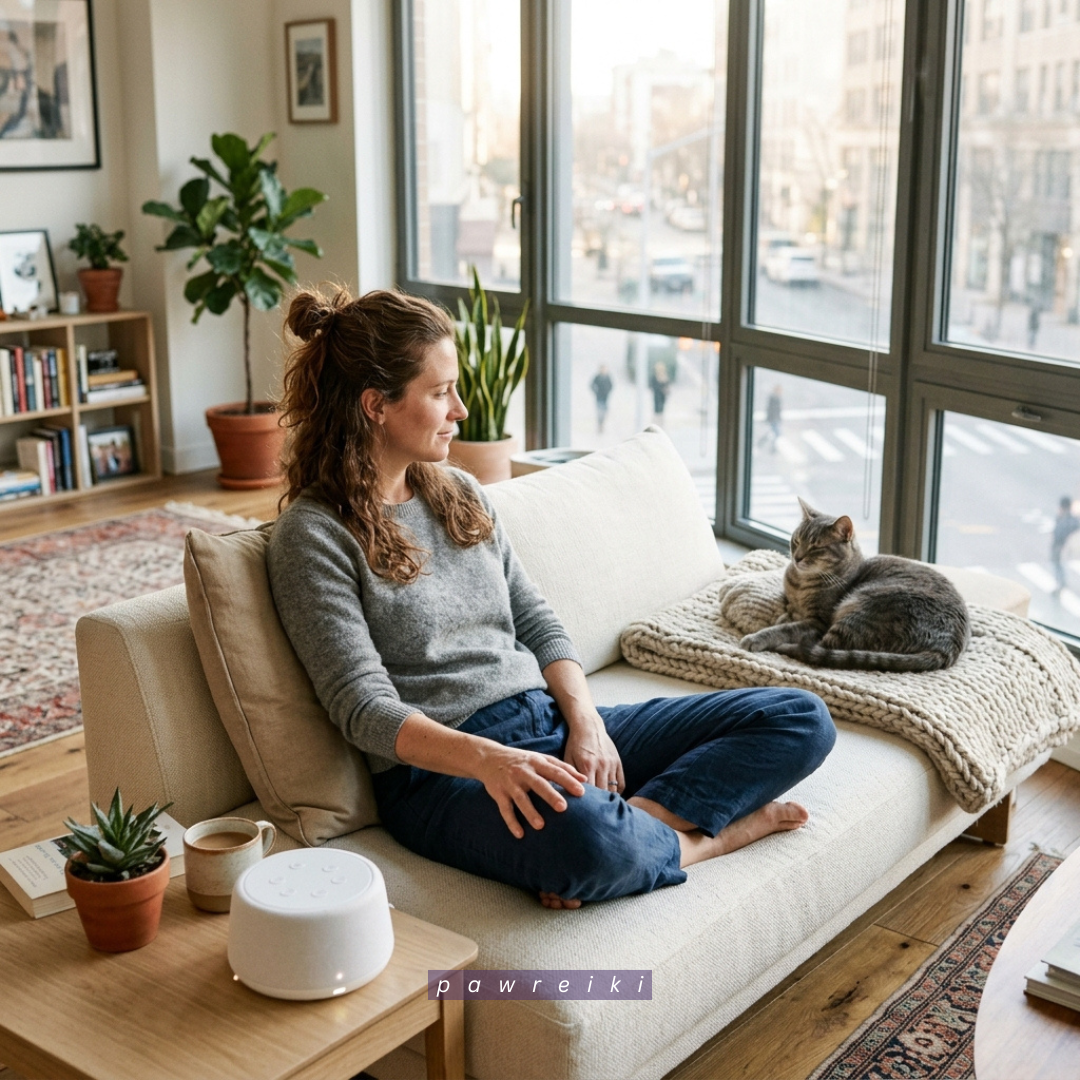
3. Ambient Soundscapes
Ambient soundscapes combine gentle environmental sounds such as rainfall, ocean waves, forest ambience, or light wind. Some recordings also include soft instrumental music to create a quiet, consistent background.
These soundscapes generally have few sudden changes in volume or rhythm, making them suitable for peaceful periods at home. They can accompany afternoon rest, gentle grooming, Reiki sessions, or other calm moments.
Choose relaxation-focused recordings, and keep the volume low enough to blend naturally into the room. Your pet’s behaviour can help you determine whether a particular soundscape feels comfortable.
Key Points
- Choose recordings with gentle, predictable sounds.
- Avoid sudden volume changes or unexpected sound effects.
- Keep the volume low and unobtrusive.
- Try ambient sounds during rest, grooming, or Reiki sessions.
- Let your pet’s response guide which recordings you continue using.
4. Live Human Voice: Soft Humming Or Gentle Singing
A familiar human voice can be a reassuring sound for many pets. Soft humming or gentle singing creates slow, predictable vocal patterns while allowing your pet to hear the voice of someone they know and trust.
The rhythm matters more than musical ability. Quiet, steady humming can become part of peaceful time together during a Reiki session, evening relaxation, or another calm part of the day.
Sit comfortably near your pet and hum or sing softly without making sudden changes in volume. You don’t need to encourage a response—simply let your pet listen, rest, move closer, or leave as they choose.
Key Points
- Keep your voice soft, slow, and natural.
- Choose gentle melodies without sudden volume changes.
- Try humming during Reiki sessions or other quiet moments.
- Stay relaxed rather than trying to produce a particular response.
- Let your pet choose where they want to be.
Curious About Reiki For Your Pet?
Exploring gentle ways to support your pet’s well-being can naturally lead you to Reiki, another peaceful approach centred around relaxation, connection, and quiet time together.
✨ Please Read: A Beginner’s Guide To Reiki Healing For Animals5. Audiobooks And Gentle Storytelling
Audiobooks and gentle storytelling provide the steady rhythm of a human voice without requiring direct interaction. A calm narrator can create consistent background sound while a pet rests or spends quiet time at home.
Research involving shelter dogs has found that audiobooks can encourage relaxed behaviours, with dogs spending more time resting and less time displaying some active behaviours. This makes spoken-word audio an interesting option for auditory enrichment.
Choose a narrator with a soft, steady voice and avoid recordings with dramatic music, shouting, or sudden sound effects. Audiobooks can be played quietly during afternoon rest, bedtime, or other peaceful periods.
Key Points
- Choose a calm narrator with a steady speaking voice.
- Avoid dramatic sound effects, shouting, or loud music.
- Keep the playback volume low and comfortable.
- Try audiobooks during rest or other quiet periods.
- Observe your pet’s response when introducing a new recording.
6. Quiet Music
Quiet music can provide a steady, predictable background during rest or other peaceful periods. Research involving dogs has found changes in resting behaviour when certain types of music are played, with slower and softer styles often associated with calmer behaviour.
The type of music matters, but so does the individual pet. Gentle instrumental or classical music can be a good starting point, while your pet’s body language can help you decide what they are comfortable hearing.
Choose music without sudden loud passages, dramatic changes, or heavy percussion. Play it quietly in the background and position the speaker at a comfortable distance from your pet’s resting area.
Key Points
- Choose slow, gentle music with a consistent volume.
- Avoid heavy percussion and sudden musical changes.
- Keep the speaker away from your pet’s resting area.
- Use quiet music during rest, Reiki sessions, or other peaceful moments.
- Lower the volume or stop the music if your pet appears uncomfortable.

7. Ocean And Gentle Water Sounds
Ocean waves, flowing streams, and gentle water sounds provide soft, repetitive background audio. Their natural rhythms can create a peaceful atmosphere without demanding your pet’s attention.
Water sounds can work particularly well during quiet periods when the rest of the home is calm. They can accompany afternoon rest, Reiki sessions, gentle grooming, or simply peaceful time spent together.
Choose recordings with smooth waves, gentle streams, or softly flowing water rather than crashing surf or sudden splashes. Keep the volume low and let the sound blend naturally into the surrounding environment.
Key Points
- Choose gentle waves, streams, or softly flowing water.
- Avoid crashing surf, sudden splashes, and dramatic sound effects.
- Keep the recording at a low background volume.
- Try water sounds during rest, Reiki sessions, or other quiet moments.
- Follow your pet’s body language when choosing recordings.
8. Forest And Nature Ambience
Forest and nature ambience can bring sounds such as soft wind, rustling leaves, distant birds, and other outdoor sounds into the home. These recordings provide another form of gentle auditory enrichment during quiet periods.
Birdsong and other animal sounds do not necessarily need to be avoided. Some pets may enjoy listening to them or become quietly interested, while others may become more alert when they hear unfamiliar calls.
Choose recordings with gentle, natural sounds and avoid tracks with thunder, very loud bird calls, or abrupt sound effects. Keep the volume low, and let your pet’s behaviour guide which recordings you use.
Key Points
- Choose recordings with soft, natural outdoor sounds.
- You can include birdsong if your pet enjoys it.
- Avoid thunder, loud calls, and abrupt sound effects.
- Keep the volume at a comfortable background level.
- Notice whether your pet appears relaxed, interested, or uncomfortable.
9. Pet-Specific Music And Calming Videos
There are music recordings and videos created specifically to provide calming background sound for dogs, cats, and other companion animals. Many feature slow instrumental music, gentle nature sounds, or a combination of both.
These recordings can be convenient for pet parents because long playlists are available for extended quiet periods. They can accompany rest, Reiki sessions, grooming, or peaceful time at home.
Not every video labelled “calming music for pets” will suit every animal, so listen to it first. Choose recordings with a consistent volume and avoid sudden advertisements, loud transitions, unexpected animal sounds, or dramatic musical changes.
Key Points
- Look for music or videos created specifically for pets.
- Preview recordings before playing them for your pet.
- Choose slow, gentle audio with a consistent volume.
- Be cautious of advertisements or abrupt changes in long videos.
- Let your pet’s behaviour guide which recordings you continue using.
10. Rain Sounds
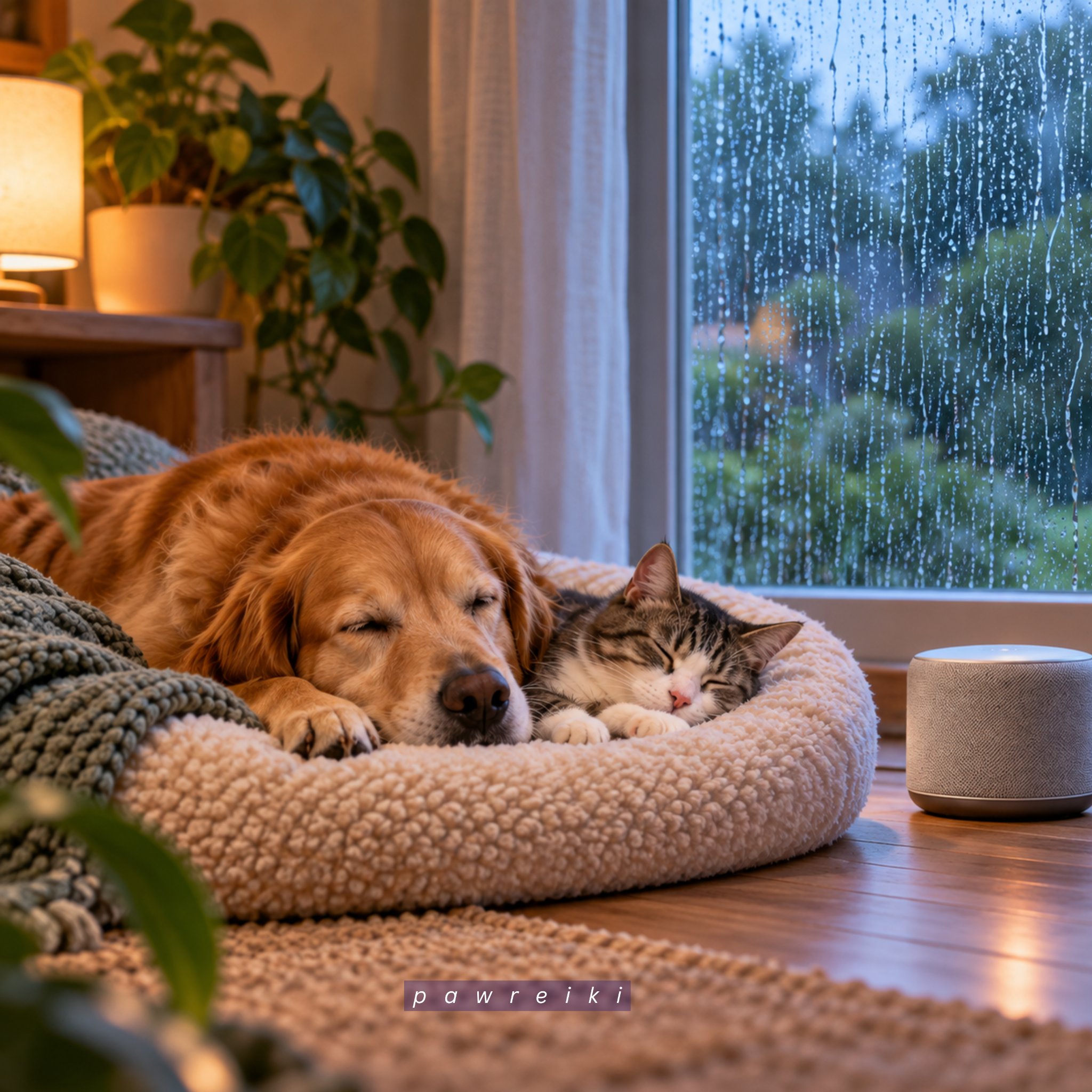
Gentle rain provides a steady, repetitive background that can create a peaceful atmosphere during quiet periods. The continuous sound can also soften the contrast between silence and occasional noises inside or outside the home.
Soft rainfall can accompany rest, Reiki sessions, bedtime, or other calm moments. Choose recordings with continuous, gentle rain rather than heavy downpours, thunderstorms, or dramatic changes in intensity.
Play the recording quietly through a speaker positioned away from your pet’s resting area. Your pet’s body language can help you decide whether rain sounds are something they enjoy having in their environment.
Key Points
- Choose soft, continuous rainfall.
- Avoid thunder, heavy downpours, and sudden sound effects.
- Keep the volume low and comfortable.
- Try rain sounds during rest, Reiki sessions, or other quiet periods.
- Let your pet’s response determine whether you continue using them.
When To Use Calming Sounds
Calming sounds can fit naturally into many everyday moments when your pet is already settling down or could benefit from a quieter environment. The goal is to complement the moment rather than force relaxation.
Rest time and bedtime are natural opportunities to introduce soft music, rain sounds, or other gentle audio. Familiar sounds can gradually become part of a peaceful routine your pet recognizes.
Calming sounds can also be useful when unfamiliar noises disrupt the usual atmosphere at home. Fireworks, traffic, visitors, household activity, or changes in routine can make a steady background sound particularly helpful.
Quiet audio can accompany Reiki sessions, gentle grooming, meditation, or simply peaceful time spent together. Keeping the experience relaxed allows sound to blend naturally with other holistic pet wellness practices.
No single time or sound works for every pet. Watching their body language will help you discover when calming sounds fit comfortably into their daily routine.
1. During Fireworks Or Thunderstorms
Calming background sounds can help soften the contrast between quiet periods and sudden noises during fireworks or thunderstorms. Gentle music, white noise, or familiar nature sounds can provide a steady background when the surrounding environment becomes noisy.
If possible, introduce the sound before the louder noises begin and keep the volume comfortable. Pair it with a familiar resting space where your pet can settle or move away from the activity around them.
Familiar sounds can also help maintain some consistency while unpredictable noises are happening outside. Choose audio your pet already knows and keep the rest of their environment as calm and comfortable as possible.
2. When Your Pet Is Home Alone
A quiet background sound can make the transition from a busy household to an empty home feel less abrupt. Soft music, an audiobook, or gentle ambient sounds can provide familiar background noise while your pet rests at home.
Choose sounds your pet has already heard while you are there rather than introducing something new just before leaving. Keeping the same low volume and familiar recording can help maintain a consistent environment.
Sound works best as part of an established routine rather than something that appears only when you leave. Your pet can then associate the audio with ordinary quiet time at home, whether you are present or away.
3. During Rest Time
Gentle sounds can become part of the quiet periods when your pet naturally settles down to rest. Soft instrumental music, rain sounds, or other familiar audio can create a peaceful background without demanding attention.
Using the same gentle sounds during regular rest periods can also add consistency to your pet’s surroundings. Keep the volume low enough that the audio remains a subtle part of the environment.
Choose predictable recordings without sudden changes, loud effects, or interruptions. Let your pet decide whether to stay near the sound, move elsewhere, or enjoy complete silence.
4. During Grooming
Gentle background sounds can create a quieter atmosphere during grooming and other routine care. Soft music, nature sounds, or familiar audio can provide a steady background while brushing, combing, or other gentle grooming takes place.
Using familiar sounds may be especially helpful if they are already part of your pet’s regular quiet-time routine. Keep the volume low so the audio remains in the background rather than competing with what is happening around them.
Introduce sound gradually and pay attention to your pet’s body language throughout the grooming session. If they appear uncomfortable or restless, lower the volume or return to the quieter environment they prefer.
5. During Travel
Travel can introduce pets to unfamiliar sounds from vehicles, traffic, people, and changing surroundings. Playing quiet audio they already know from home can add a familiar element to an otherwise different environment.
Soft instrumental music or another favourite recording can be played at a low volume during car journeys. Using familiar audio rather than introducing something new allows the sound to remain part of a routine your pet already recognizes.
Keep the volume comfortable and avoid recordings with sudden or dramatic changes. Sound should remain a gentle background while your pet’s safety, comfort, and secure travel arrangements remain the priority.
6. In A New Environment
Moving into a new home or spending time in an unfamiliar environment can introduce pets to many different sights, smells, and sounds. Familiar music or gentle ambient audio can provide some consistency while they explore and become comfortable with their surroundings.
This can be particularly helpful for puppies adjusting to a new home, where everything from household noises to daily routines may be unfamiliar. Playing sounds they already recognize can add one familiar element while they gradually discover their new environment.
Keep the volume low and provide a quiet, comfortable place where your pet can retreat whenever they choose. Allow them to explore, rest, and adjust at their own pace without expecting them to respond to the sound in any particular way.
Frequently Asked Questions
Q1: Is Sound Healing Safe For Puppies And Kittens?
You can gradually introduce gentle, low-volume sounds to puppies and kittens during quiet periods. Start with familiar, predictable audio and keep sessions short while they become accustomed to it.
Watch their body language and allow them to move away whenever they choose. Young animals have individual sound preferences just like adult pets.
Q2: What Type Of Sound Is Best For Pets?
There is no single sound that every pet will enjoy. Soft instrumental music, nature sounds, gentle rain, white noise, audiobooks, or a familiar human voice are all options worth exploring.
Start with one sound at a low volume and observe your pet’s response. Their behaviour will help you discover which sounds they prefer.
Q3: How Can I Tell If My Pet Enjoys Sound Healing?
Relaxed body language can provide useful clues. Your pet may settle down, stretch comfortably, rest quietly, close their eyes, or simply remain peacefully in the area.
If your pet becomes restless, leaves the room, or appears uncomfortable, turn the sound down or off. Giving them a choice is an important part of the experience.
Q4: How Loud Should Sound Healing Be For Pets?
Sound healing should remain at a low, comfortable volume that blends gently into the background. Pets can be more sensitive to sound than humans, so louder does not mean more effective.
Place speakers away from your pet’s resting area rather than directly beside them. If your pet appears restless or moves away, lower the volume or turn the sound off.
Q5: How Long Should A Sound Healing Session Last?
There is no required length for a sound healing session. You might begin with a few minutes of gentle sound and gradually extend the time if your pet remains relaxed and comfortable.
Some pets may enjoy quiet music throughout a longer rest period, while others prefer shorter sessions. Let your pet’s behaviour determine what works best.
Q6: Can I Use Sound Healing During A Reiki Session?
Yes. Gentle music, nature sounds, soft humming, or other calming audio can create a peaceful atmosphere during a Reiki session. Keep the sound quiet so it complements the experience rather than becoming the focus.
You can also practise Reiki without any background sound. Your pet’s response can help you decide whether sound or silence feels more comfortable during each session.
Helpful External Resources
If you’d like to explore pet wellness, behaviour support, or gentle healing practices further, here are trusted organizations and educational resources you may find helpful:
- American Veterinary Medical Association (AVMA) – General pet health, behaviour guidance, and care resources.
- ASPCA Pet Care Library – Behaviour tips, anxiety support, and animal-care information.
- VCA Animal Hospitals: Know Your Pet – Comprehensive articles written by veterinarians.
- International Center for Reiki Training (ICRT): Animal Reiki – Introductory information and classes for working with animals.
- Shelter Animal Reiki Association (SARA) – Ethical, animal-led Reiki practices and training.
Conclusion
Sound healing for pets can offer a gentle way to create a peaceful environment where companion animals can relax and feel more comfortable. Quiet music, nature sounds, audiobooks, soft humming, and other gentle audio can all become part of a calming routine.
No single sound will appeal to every pet. Exploring different options while watching your pet’s body language can help you discover whether they prefer music, natural sounds, familiar voices, or simply silence.
Start quietly and allow the experience to develop naturally. Familiar sounds can accompany rest, Reiki sessions, grooming, or other peaceful moments without requiring anything from your pet.
Most importantly, let your pet guide the experience. When you offer sound gently and with choice, it can become another simple way to create peaceful moments and enjoy quiet time together.
I trust you enjoyed this article on the [blog name]. Please stay tuned for more Reiki insights, pet wellness tips, and holistic lifestyle ideas.
Take care!
— JeannetteZ 🐾💜
💬 Your Opinion Is Important To Me
Do you have thoughts, ideas, or questions? I’d love to hear from you. Please leave your comments below or email me directly at Jeannette@pawreiki.com.
📚 More PawReiki Reads — Discover Energy Healing & Holistic Pet Wellness
💜 My #1 Recommendation for Online Success
Reiki has brought so much peace and purpose to my life, and sharing it online has been a true blessing. If you’ve ever dreamed of creating a gentle income stream around your love for animals and holistic healing, this platform gives you all the tools, training, and community support you need — no tech experience required.
🌟 See How Reiki Lovers Build Online Income — Try WA FreeNo credit card required · Free starter training included
Disclosure
This post may contain affiliate links. As an Amazon Associate and participant in other affiliate programs, I earn from qualifying purchases at no extra cost to you. Please read my full affiliate disclosure.