Reiki For Rabbits: A Complete Guide To Trust, Bonding & Calm
Reiki for rabbits is a calming practice that helps create a comfortable experience for your rabbit. Because rabbits are sensitive animals, they may respond strongly to changes in their surroundings, handling, and daily routines.
Reiki lets your rabbit stay in a familiar space while you offer quiet, focused energy without requiring physical contact. Your rabbit can stay nearby, move closer, change position, or leave.
While Reiki is not a substitute for veterinary care, some rabbit parents include it as part of a quiet wellness routine at home. The emphasis is always on respecting your rabbit’s comfort, boundaries, and natural behaviour.
In this guide, you’ll learn about Reiki for rabbits, how to prepare a relaxing space, and simple ways to practice it at home. You’ll also learn how to read your rabbit’s body language and respond appropriately.
What Is Reiki For Rabbits?
Reiki is a Japanese practice commonly described as a form of energy healing. The word Reiki is often associated with universal life energy, and the practice generally involves quiet focus, positive intention, and relaxed hand positions.
Reiki for rabbits adapts this calming approach to the needs of small, sensitive animals. Rabbits are naturally alert prey animals and may feel uncomfortable when trapped, chased, lifted, or handled for extended periods.
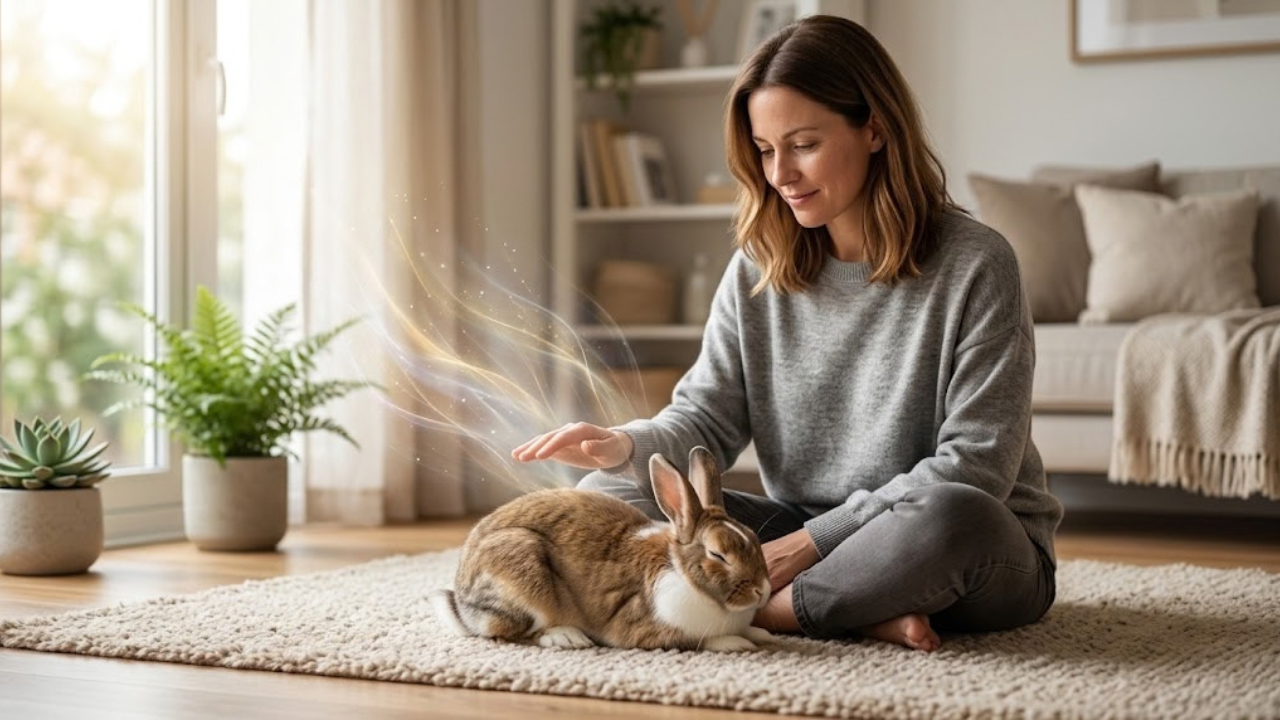
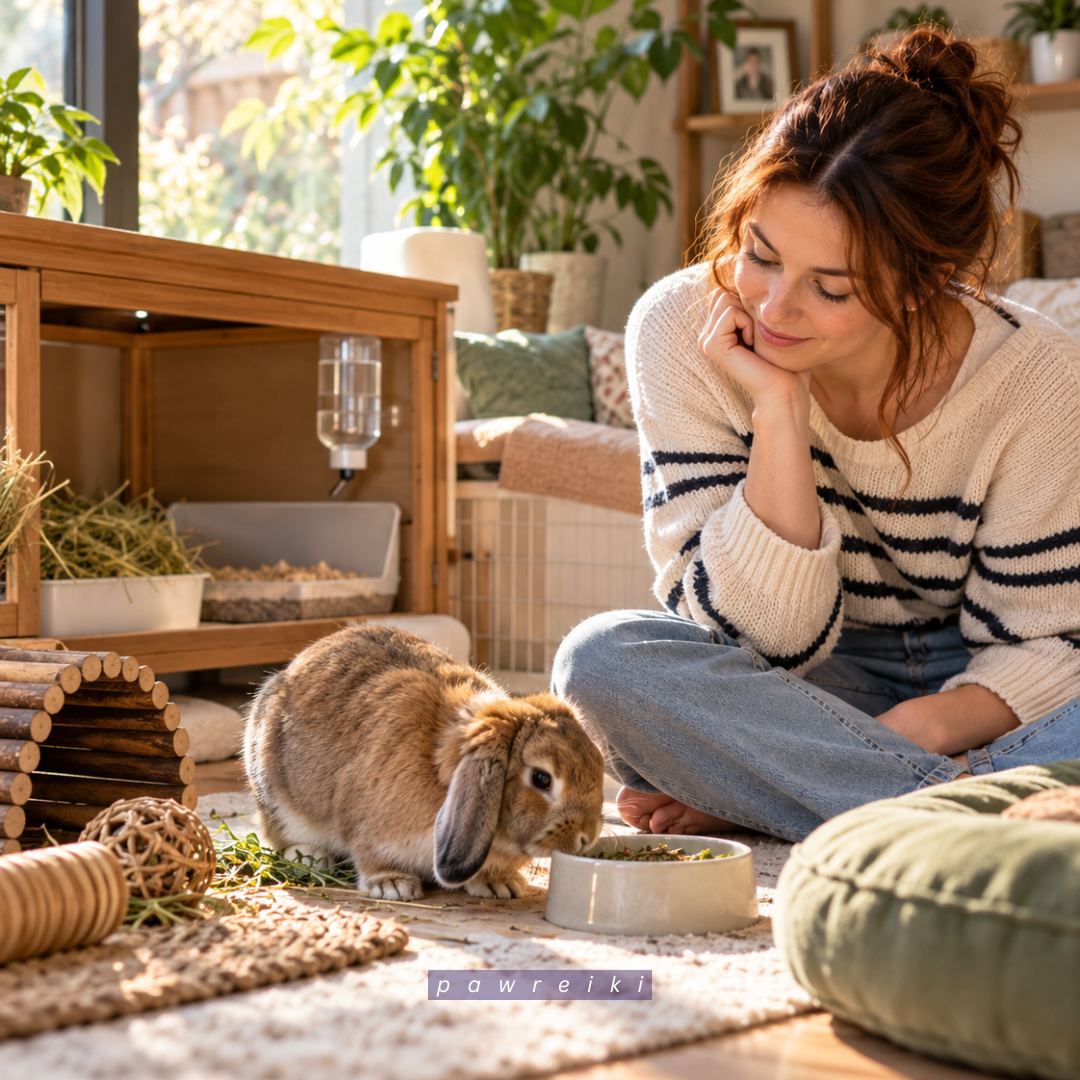
For this reason, rabbit Reiki does not require physical contact. You might sit quietly near your rabbit, slow your breathing, relax your hands, and leave enough space for them to move freely.
Your rabbit might remain where they are, move closer, change position, explore, or leave altogether. Allowing these natural behaviours keeps the experience relaxed without restricting your rabbit’s movement.
Reiki is best used as a complementary wellness and bonding practice rather than a medical treatment. It should never replace appropriate veterinary care when a rabbit is ill, injured, or showing unusual changes in behaviour.
Benefits Of Reiki For Rabbits
Reiki offers rabbit parents a quiet way to spend focused time with their pets while respecting their need for space and freedom of movement. Sessions generally take place in a familiar environment, where the rabbit remains free to move around.
The slow, unhurried nature of the practice suits rabbits that prefer limited handling. Reiki also encourages the person offering the session to become quieter and more attentive.
This relaxed time together provides opportunities to observe your rabbit’s body language, preferences, and responses. Over time, these quiet interactions may also become a familiar part of the time you spend together.
Always focus on your rabbit’s comfort rather than trying to get a particular response. Each rabbit is different, so their behaviour should guide the length, distance, and style of every session.
1. Creates A Peaceful Home Environment
Reiki turns a few quiet minutes with your rabbit into a relaxing part of your daily routine. Instead of picking up or constantly touching your rabbit, sit nearby, relax your breathing, and allow them to move freely around you.
A familiar room, minimal distractions, and your relaxed presence create a comfortable setting for spending time together. Your rabbit can explore, rest, approach you, or settle nearby.
This approach keeps the interaction unhurried and respectful. Over time, these quiet moments may become a familiar part of your time with your rabbit.
2. Encourages Relaxation Through Quiet Interaction
Because rabbits are naturally alert, a peaceful setting gives them space to relax without pressure or unwanted handling. During a home Reiki session, reduce noise, slow your movements, and spend several quiet minutes near your rabbit.
Your rabbit might stretch out, groom, explore slowly, or settle into a comfortable position. Watching these behaviours also helps you recognize what feeling relaxed and comfortable looks like for your individual rabbit.
Reiki has not been scientifically established as a treatment for relaxation. Instead, the quiet routine offers unhurried time together while your rabbit remains free to move around as they wish.
3. Strengthens The Bond Between You And Your Rabbit
One of the most personal aspects of Reiki for rabbits is the opportunity to build trust without demanding physical contact. Sitting quietly beside your rabbit lets them approach you, stay at a comfortable distance, or move away.
Over repeated sessions, these relaxed interactions may become part of your shared Reiki routine. You may also begin noticing small details, such as where your rabbit prefers to sit, when they approach you, and which forms of interaction they enjoy.
This attentive companionship encourages you to respect your rabbit’s boundaries while spending meaningful time together. Those quiet moments support a relationship built around patience, freedom, and trust.
4. Allows Your Rabbit To Move Freely During Reiki
Many rabbits prefer to move around their familiar space. During a home Reiki session, your rabbit remains unrestrained and moves wherever they feel comfortable.
They may approach you, sniff your hands or clothing, sit nearby, explore the room, return to a favourite resting spot, or move farther away. Some rabbits may change locations several times during a session.
Keep your hands relaxed and remain in place rather than following your rabbit when they move. This allows the session to continue without interrupting their normal movement or requiring physical contact.
5. Creates Dedicated Quality Time With Your Rabbit
Daily rabbit care includes feeding, cleaning, grooming, and maintaining a comfortable living environment. Reiki adds another dimension by setting aside dedicated time for companionship.
Even a few relaxing minutes beside your rabbit encourages you to put distractions aside and pay closer attention to their normal behaviour.
This focused time also gives you an opportunity to become more familiar with how your rabbit communicates, including subtle changes in eating habits, movement, grooming, and posture.
Regular observation helps you recognize what is typical for your individual rabbit. Changes in usual behaviour may then stand out more clearly, helping you recognize when your rabbit needs closer attention or appropriate veterinary care.
6. Supports A Calm Approach For Nervous Rabbits
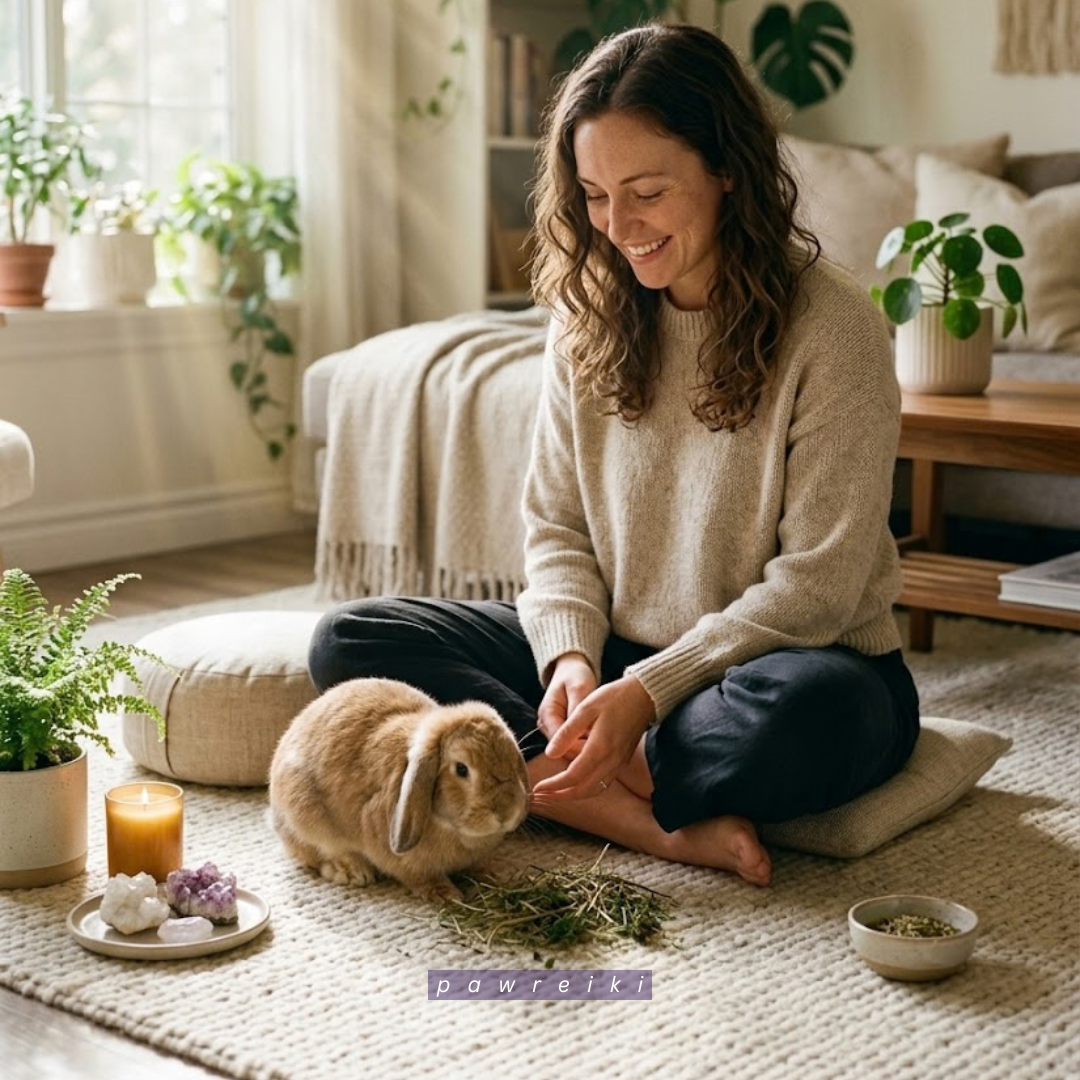
A shy or nervous rabbit may need extra time to feel comfortable with close interaction. Reiki suits this low-pressure approach because physical contact stays optional, and your rabbit remains free to keep their preferred distance.
Sit quietly at a comfortable distance and allow your rabbit to explore, rest, hide, or approach without pressure. Over time, your calm and consistent presence may become familiar during Reiki sessions.
For nervous rabbits, a supportive Reiki approach to anxiety and stress works best alongside hiding spaces, enrichment, predictable routines, and attentive everyday care.
Veterinary guidance is also important when anxiety, fear, or unusual behaviour is persistent or appears suddenly. Early attention helps ensure you don’t overlook possible health or welfare concerns.
7. Fits Naturally Into Your Rabbit’s Familiar Routine
Rabbits often feel most comfortable when their daily lives follow familiar patterns. Reiki fits into those routines because it does not require special equipment, physical handling, or major changes to your rabbit’s environment.
Choose a naturally quiet part of the day when your rabbit is already settled and comfortable. Sitting nearby for a short Reiki session keeps the experience simple while respecting their usual activities and preferred resting times.
Regular sessions may gradually become another familiar part of your time together. Your rabbit remains free to eat, groom, rest, explore, or move away while you maintain a quiet Reiki presence.
8. Offers A Hands-Off Way To Share Reiki
Rabbits do not need to be touched for a Reiki session. A hands-off approach lets you sit nearby and offer Reiki while your rabbit stays wherever they feel most comfortable.
This approach is particularly useful for rabbits that dislike being picked up or prefer limited physical contact. Your rabbit remains free to approach, move away, rest, eat, or explore throughout the session.
Keeping touch optional also removes pressure from the interaction. Instead of trying to position or hold your rabbit, follow their lead and let the Reiki session unfold around their natural behaviour.
9. Encourages A Calmer Presence Around Your Rabbit
Rabbits are highly attentive to movement, sounds, and activity around them. A Reiki session encourages you to slow down, settle your breathing, and approach your rabbit without rushing.
Moving calmly and sitting quietly feels different from feeding, grooming, cleaning, or other hands-on care. Your attention remains focused on simply being present while your rabbit chooses what to do.
This quieter approach may also influence how you interact with your rabbit outside Reiki sessions. Greater patience and awareness support the peaceful, respectful handling that sensitive rabbits deserve.
10. Provides A Comfortable Way To Offer Companionship
Not every rabbit enjoys being cuddled or carried, yet many still appreciate having a trusted person nearby. Reiki offers a peaceful way to spend time together without requiring your rabbit to sit on your lap or accept physical contact.
Sit on the floor, keep your hands relaxed, and allow your rabbit to move naturally around you. This approach is especially meaningful for rabbits that prefer companionship on their own terms.
Rather than measuring a successful session by how closely your rabbit stays, focus on whether the interaction remains peaceful, voluntary, and comfortable. Simply sharing quiet space together is a meaningful form of companionship.
How To Practice Reiki For Rabbits At Home
Every rabbit has their own personality, preferences, and comfort level, so each Reiki session will look a little different. Some rabbits may stay nearby, while others prefer more distance or move around during the session.
The goal is not to keep your rabbit still or encourage a particular response. Instead, create a peaceful setting, stay relaxed, and let your rabbit decide how they participate.
Use the following steps as a peaceful framework, not a strict sequence. Follow your rabbit’s body language and adjust the session whenever they show a preference for more space, movement, or rest.
Step 1: Choose A Familiar And Peaceful Space
Choose an area where your rabbit already feels safe and settled. Their usual environment is preferable to moving them somewhere unfamiliar simply for a Reiki session.
Reduce unnecessary noise from televisions, loud conversations, and household activity. Keep your rabbit’s hay, water, litter area, hiding places, and favourite resting spots easily accessible.
The goal is to maintain a peaceful environment without disrupting your rabbit’s normal routine. They should remain free to eat, rest, explore, hide, or move around throughout the session.
Step 2: Ensure That Your Rabbit Is Comfortable
Before you begin, take a moment to observe your rabbit. Look for their usual signs of comfort, such as calmly eating hay, grooming, exploring, resting, or settling into a favourite spot.
Avoid beginning a session when your rabbit appears frightened, agitated, unusually withdrawn, or focused on getting away. Reiki should never become another activity you expect your rabbit to participate in.
Let your rabbit’s behaviour determine whether the timing feels right. When they appear comfortable and free to behave normally, settle nearby and begin your Reiki practice.
Step 3: Make Yourself Comfortable And Start Without Touching
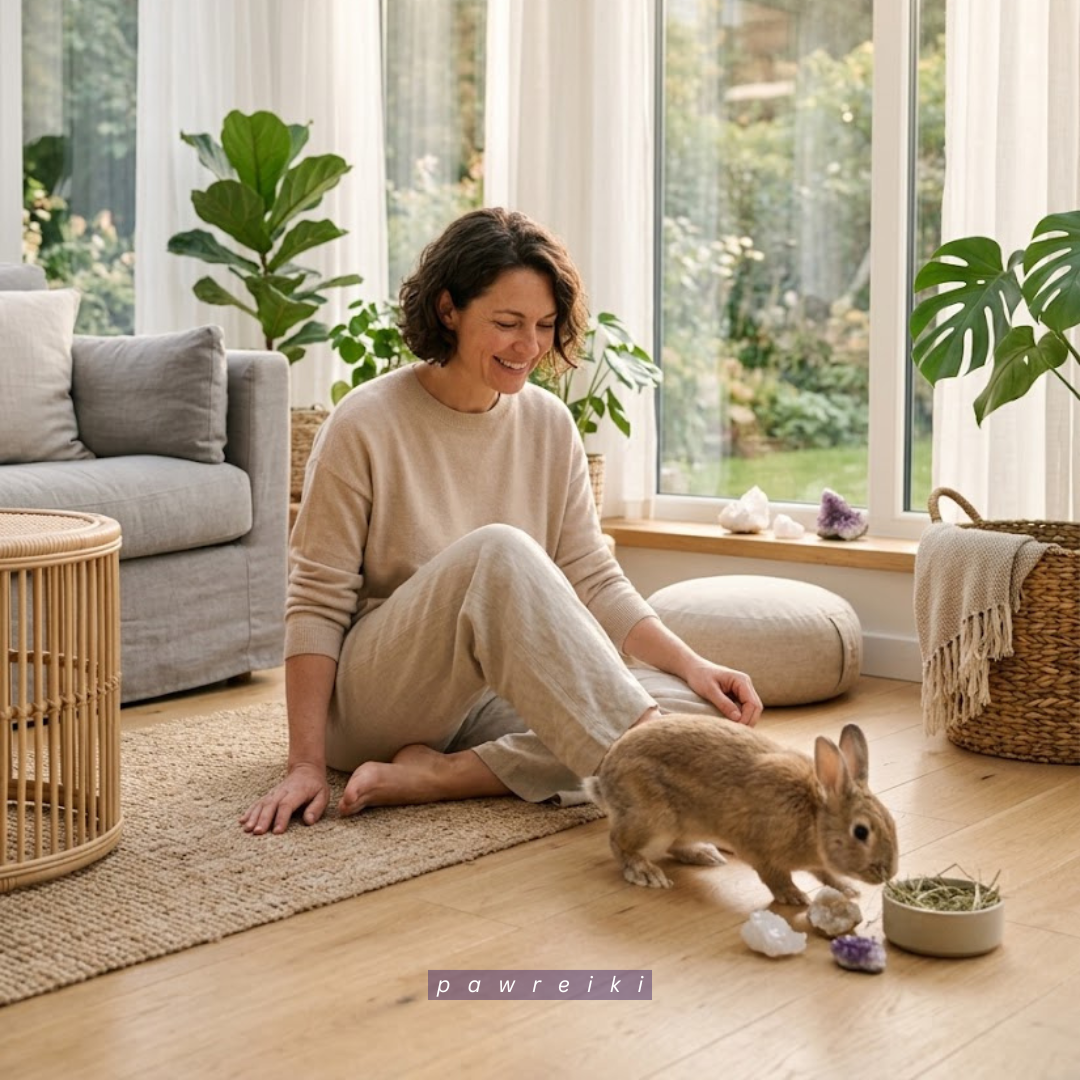
Sit comfortably on the floor or another safe spot near your rabbit’s level. Avoid looming over them, and leave enough space for your rabbit to move freely.
Relax your shoulders, rest your hands naturally on your lap, and take several slow breaths. Once settled, begin the session without reaching toward or touching your rabbit.
Remain quietly in place while your rabbit decides what happens next. They may investigate you, eat hay, groom, rest nearby, or move elsewhere while you continue your Reiki practice.
Step 4: Focus Your Attention On A Relaxed Presence
Once you are settled, bring your attention to your rabbit without staring at them or expecting a particular response. Keep your breathing steady, your posture relaxed, and your movements slow.
Allow other distractions to fade into the background while you remain quietly present. You might focus on a peaceful intention, such as comfort, trust, or sharing an unhurried moment together.
Avoid trying to direct your rabbit’s behaviour during this time. Let them eat, groom, explore, rest, or move away while you maintain the same steady presence.
The goal is not to produce a particular reaction. Stay attentive while giving your rabbit complete freedom throughout the session. Your role is to remain present and let the experience unfold without trying to influence your rabbit’s behaviour.
Step 5: Let Your Rabbit Decide Whether To Approach
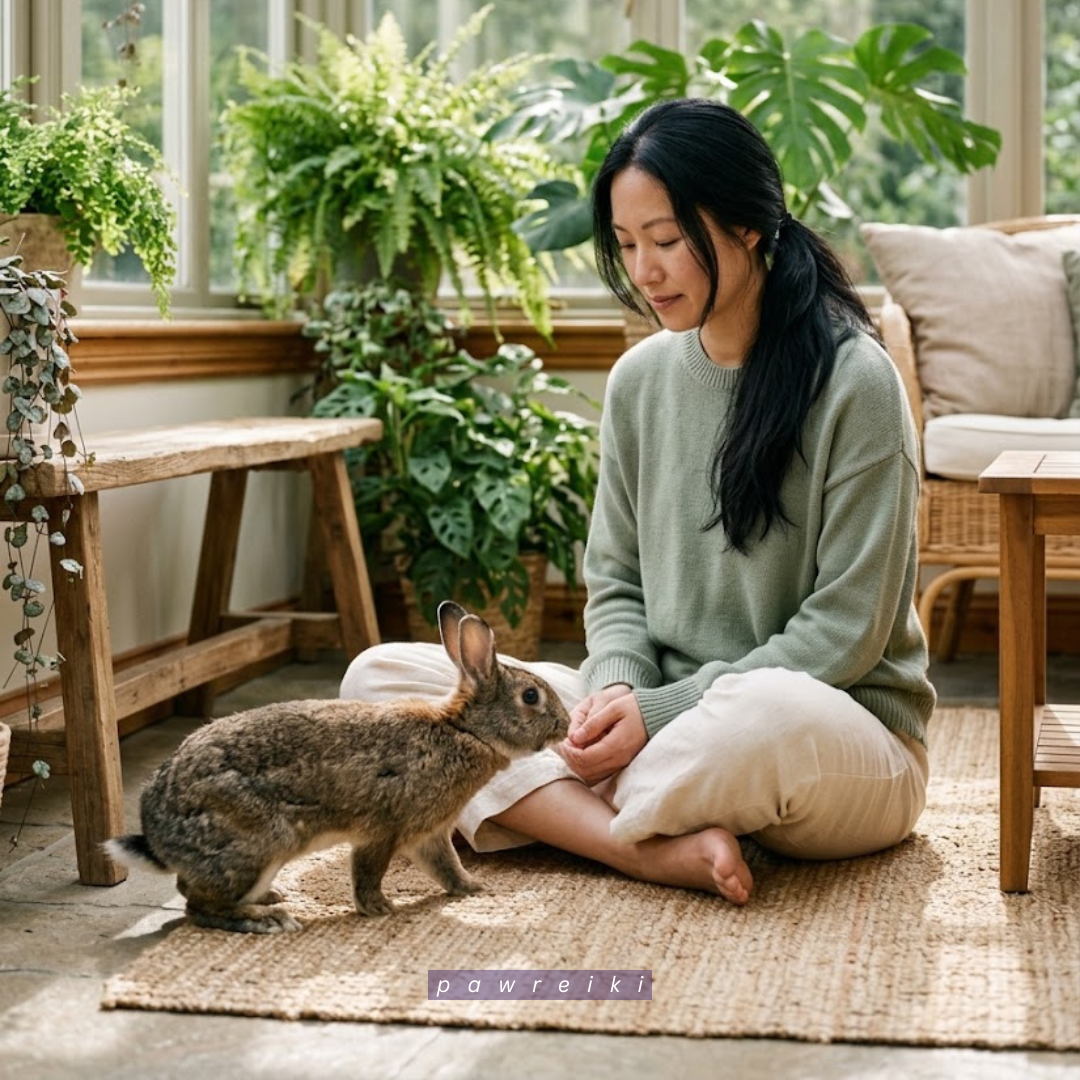
Stay still when your rabbit begins moving toward you, and resist the temptation to reach out immediately. Give them time to sniff, investigate, circle around you, or settle nearby.
Keep your hands relaxed and let your rabbit decide the distance. Some rabbits may approach briefly and then continue exploring, while others may stay close longer.
Treat every response as acceptable rather than measuring the session by proximity. Continue your quiet Reiki practice whether your rabbit stays beside you, moves around the room, or wanders away
Step 6: Use Reiki Hand Positions When Your Rabbit Enjoys Touch
When your rabbit already enjoys being petted, rest your hands lightly in an area where they normally welcome touch. Keep your movements slow and follow the same boundaries your rabbit shows during everyday interactions.
Some rabbits enjoy light contact around the forehead, while others prefer little or no touch. You may also keep your hands slightly above the body or rest them comfortably in your lap during the Reiki session.
Watch your rabbit’s response throughout the interaction. If they move away, become restless, change position, or show discomfort, stop touching them and give them the space they’re asking for.
Step 7: Watch Your Rabbit’s Body Language
Pay attention to your rabbit throughout the session and let their behaviour guide your next action. Watching for signs they are receiving Reiki may help you recognize their individual responses.
Relaxed eating, comfortable grooming, exploring, stretching out, or settling into a familiar position may indicate that they are comfortable. These subtle behaviours help you understand how your rabbit responds to the quiet Reiki experience.
Watch equally closely for signs that your rabbit wants more distance. Repeatedly moving away, hiding, becoming tense, flattening their ears, or appearing restless are reasons to reduce interaction and give them more space.
Don’t expect a particular response just because you are offering Reiki. Every rabbit communicates differently, so respond to the individual animal in front of you rather than following a predetermined routine.
Curious About Reiki For Your Pet?
Exploring gentle ways to support your pet’s well-being can naturally lead you to Reiki, another peaceful approach centred around relaxation, connection, and quiet time together.
✨ Please Read: A Beginner’s Guide To Reiki Healing For AnimalsStep 8: Give Your Rabbit Complete Freedom To Leave
Allow your rabbit to leave whenever they choose. When they get up and move away, don’t follow them or try to restart the interaction. Giving them space lets the session end without turning their movement into another interaction.
Stay quietly in place for a moment, or end the Reiki session. A short Reiki session is perfectly appropriate when that matches your rabbit’s preference and comfort level.
Let your rabbit’s behaviour determine when the interaction ends, rather than aiming for a specific length of time. Ending peacefully respects their choice and keeps the experience calm.
Step 9: End The Session Naturally
When the session feels complete, gradually bring your attention back to your surroundings. Relax your hands, take a final quiet breath, and allow yourself a moment before returning to your normal routine.
No elaborate closing ritual or particular response from your rabbit is needed. They may remain nearby, continue resting, begin exploring, or turn their attention to another activity.
Finish the session as calmly as you began it, without trying to extend the interaction. A few peaceful minutes shared together are enough, especially when your rabbit has remained free to make their own choices throughout.
Step 10: Return To Your Routine And Reflect On The Session
After the session, let your rabbit return naturally to eating, exploring, grooming, or resting while keeping their usual food, water, litter area, hiding spots, and enrichment available. Over time, notice what your rabbit prefers.
They may enjoy sitting nearby, soft forehead strokes, or hands-off interaction. These small patterns help you understand your rabbit’s personality and adapt future sessions around their comfort rather than following a rigid routine.
Take a moment to reflect on the session before returning to your day. Think about how your rabbit responded, which interactions they seemed to prefer, and anything you might approach differently next time.
Each Reiki session may look a little different. Ending with respect for your rabbit’s choices leaves you with a simple foundation for the next quiet moment you share together.
Frequently Asked Questions
Q1: Is Reiki Safe For Rabbits?
A non-restraining Reiki practice offers a quiet way to spend time with your rabbit. Your rabbit should always remain free to move away, while physical contact stays limited to touches they already enjoy.
Respect their body language throughout the session. Stop physical contact whenever your rabbit appears uncomfortable or chooses more distance.
Q2: What Is The Best Position For Reiki With A Rabbit?
Sit on the floor or in another comfortable position near your rabbit’s level without blocking their movement. Leave enough space for them to approach, explore, rest, or move away freely.
Keep your hands relaxed in your lap at first. When your rabbit already enjoys physical contact, you may use familiar hand positions while continuing to follow their preferences.
Q3: How Do I Practice Reiki With My Rabbit At Home?
Choose a familiar, peaceful space and sit quietly near your rabbit without expecting them to remain beside you. Relax your posture, settle your breathing, and allow your rabbit to determine the distance.
Keep physical contact optional and follow your rabbit’s body language throughout the session. Their comfort and freedom of movement should guide the experience.
Q4: Does Reiki Require Touching A Rabbit?
No. Reiki does not require direct physical contact with your rabbit. You may rest your hands in your lap or keep them away from the body throughout the session.
This hands-off approach is particularly suitable for rabbits that dislike handling or prefer greater personal space. Let their response guide whether you maintain contact or return your hands to your lap.
Q5: How Long Should A Rabbit Reiki Session Last?
The ideal session length depends on your individual rabbit. Begin with a short session and watch your rabbit’s behaviour rather than focusing on the clock.
Continue as long as the interaction remains comfortable and voluntary. When your rabbit moves away or seems ready for another activity, let the session end naturally.
Q6: Is Reiki Suitable For A Nervous Rabbit?
Reiki offers a quiet, low-pressure form of interaction that does not require handling or close physical contact. A nervous rabbit remains free to approach, hide, explore, or keep their distance.
Reiki has not been established as a treatment for anxiety. Persistent fear, anxiety, or sudden behavioural changes deserve appropriate veterinary attention.
Q7: Should I Use Reiki Alongside Veterinary Treatment?
You may include Reiki as a complementary relaxation and bonding practice while your rabbit receives veterinary treatment. Keep your veterinarian informed about any changes in your rabbit’s health or behaviour.
Reiki should never replace veterinary diagnosis, prescribed medication, treatment, or other professional care. Instead, it may provide a peaceful way to spend supportive time with your rabbit alongside their regular care.
Q8: What Should I Do If My Rabbit Walks Away During Reiki?
Let your rabbit leave without following, calling them back, or trying to restart the interaction. Moving away is one way your rabbit communicates a preference for more space.
You may remain seated quietly for a moment or simply finish the session. Respecting that choice keeps your rabbit in control of their participation.
Helpful External Resources
If you’d like to explore pet wellness, behaviour support, or gentle healing practices further, here are trusted organizations and educational resources you may find helpful:
- American Veterinary Medical Association (AVMA) – General pet health, behaviour guidance, and care resources.
- ASPCA Pet Care Library – Behaviour tips, anxiety support, and animal-care information.
- VCA Animal Hospitals: Know Your Pet – Comprehensive articles written by veterinarians.
- International Center for Reiki Training (ICRT): Animal Reiki – Introductory information and classes for working with animals.
- Shelter Animal Reiki Association (SARA) – Ethical, animal-led Reiki practices and training.
Conclusion
Reiki for rabbits offers a peaceful way to slow down and share quiet, focused time with your rabbit. The practice does not depend on touch, a particular response, or keeping your rabbit in one place.
Instead, your rabbit can approach, rest nearby, explore, or move away while you maintain a calm, respectful presence. Their choices shape the experience from beginning to end.
Over time, these sessions may help you become more attentive to your rabbit’s preferences, boundaries, and individual personality. Each session may look different because your rabbit decides how they wish to participate.
Reiki is not a replacement for veterinary care, but it may become a meaningful part of the time you share together. Sometimes quietly sharing space with your rabbit and respecting their choices is enough.
I trust you enjoyed this article on the [blog name]. Please stay tuned for more Reiki insights, pet wellness tips, and holistic lifestyle ideas.
Take care!
— JeannetteZ 🐾💜
💬 Your Opinion Is Important To Me
Do you have thoughts, ideas, or questions? I’d love to hear from you. Please leave your comments below or email me directly at Jeannette@pawreiki.com.
📚 More PawReiki Reads — Discover Energy Healing & Holistic Pet Wellness
💜 My #1 Recommendation for Online Success
Reiki has brought so much peace and purpose to my life, and sharing it online has been a true blessing. If you’ve ever dreamed of creating a gentle income stream around your love for animals and holistic healing, this platform gives you all the tools, training, and community support you need — no tech experience required.
🌟 See How Reiki Lovers Build Online Income — Try WA FreeNo credit card required · Free starter training included
Disclosure
This post may contain affiliate links. As an Amazon Associate and participant in other affiliate programs, I earn from qualifying purchases at no extra cost to you. Please read my full affiliate disclosure.