Reiki For Puppies: A Complete 14-Step Guide
Reiki for puppies is a gentle and natural way to support your puppy’s emotional well-being. It encourages relaxation and helps create a calm, peaceful environment.
Puppies are full of curiosity, excitement, and endless energy. They are also sensitive to new experiences, unfamiliar surroundings, and changes in their daily routine.
When puppies feel overwhelmed, they may bark, whine, chew, or struggle to settle. These behaviours are often signs of stress rather than disobedience.
Reiki offers a gentle, non-invasive approach that many pet owners use alongside positive training and regular veterinary care. It helps promote relaxation and emotional balance without adding stress to your puppy’s day.
This guide explores how Reiki can support your puppy during its early stages of life. You’ll also discover simple techniques to strengthen your bond and help your puppy feel safe, calm, and loved.
What Is Reiki And Why It Works For Puppies
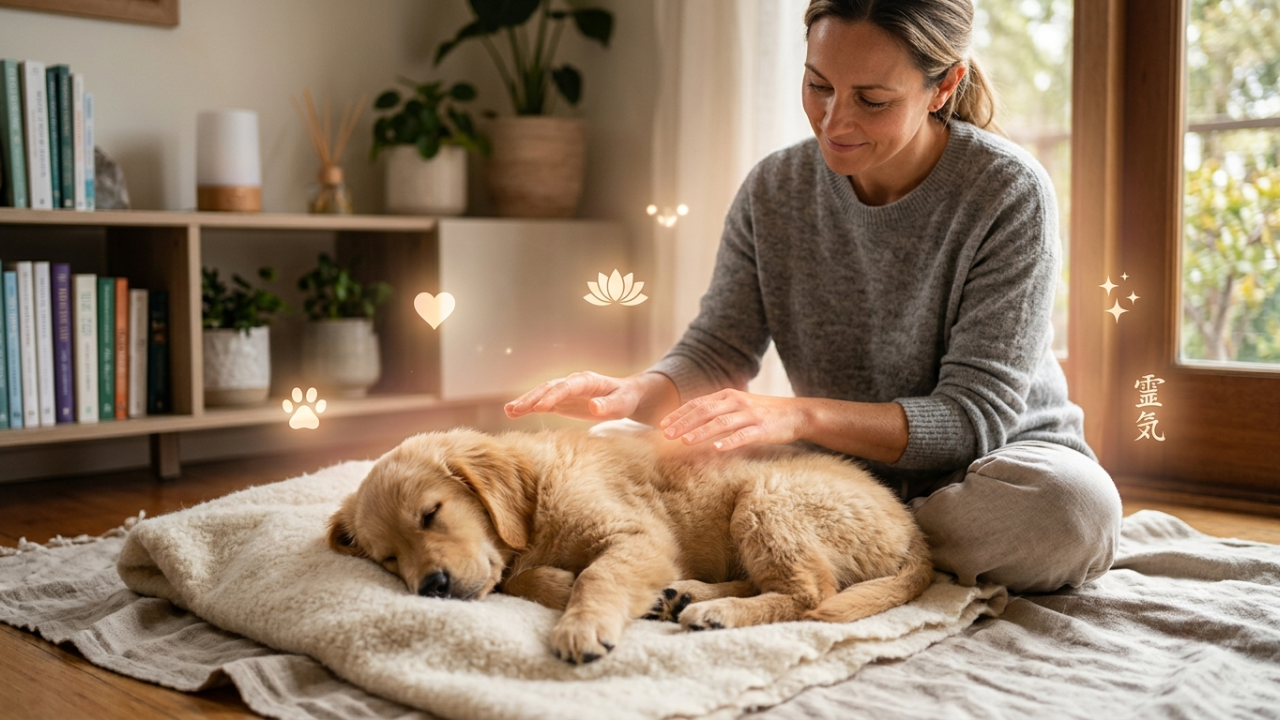
Reiki is a gentle Japanese energy healing practice that promotes relaxation and emotional balance. During a Reiki session, gentle hands are placed on or just above the puppy’s body.
The session is always calm and peaceful, guided by the puppy’s comfort level. Reiki is based on the belief that all living beings have a natural life-force energy. When this energy flows freely, animals may appear calmer and more balanced.
While scientific evidence remains limited, many pet owners report that Reiki helps their puppies feel more relaxed in stressful situations.
Puppies are especially sensitive to new experiences, unfamiliar surroundings, and changes in routine. They can quickly become overwhelmed by loud noises, busy environments, or meeting new people and animals.
Because Reiki is gentle and non-invasive, it can provide quiet support during these important stages of development. It works well alongside positive training, socialization, and regular veterinary care to help create a calm and reassuring environment.
Benefits Of Reiki For Puppies
Reiki offers gentle support during your puppy’s early stages of growth and development. While every puppy responds differently, many pet owners use Reiki to promote relaxation, emotional balance, and greater comfort.
The following benefits show how Reiki may help your puppy feel calmer and more settled. It works best alongside positive training, socialization, and regular veterinary care.
1. Promotes Relaxation And Calmness During Stressful Situations
Puppies can become overwhelmed by new experiences, loud noises, travel, or changes in their daily routine. Reiki provides a calm and peaceful environment where they can relax without pressure or physical manipulation.
Many pet owners use Reiki to help their puppies feel more settled during stressful situations. While scientific evidence is limited, some owners report that regular Reiki sessions encourage relaxation and emotional balance.
2. May Help Reduce Anxiety From Travel, Vet Visits, Or New Environments
Car rides, veterinary visits, and unfamiliar places can feel overwhelming for young puppies. These new experiences may cause anxiety and make it difficult for them to relax.
Reiki encourages a calm and peaceful environment that may help puppies feel more secure during stressful situations. While it is not a substitute for veterinary care, many pet owners use Reiki to support their puppy’s emotional well-being.
3. Encourages Emotional Balance And A Sense Of Security
A puppy’s early experiences play an important role in its emotional development. Feeling safe and secure helps build confidence and encourages healthy social interactions.
Reiki is believed to support emotional balance by creating a calm and reassuring environment. Many pet owners include Reiki in their daily routine to help their puppies feel more relaxed, grounded, and secure.
4. Supports Overall Well-Being
Reiki is based on the belief that balanced energy supports overall well-being. For puppies, Reiki may complement a healthy lifestyle that includes proper nutrition, regular exercise, and veterinary care.
Although scientific evidence remains limited, many pet owners report that Reiki sessions help their puppies feel more comfortable and relaxed. Reiki should always be used as a complementary practice alongside professional veterinary treatment.
5. Can Strengthen The Bond Between You And Your Puppy
Reiki sessions encourage quiet time, focused attention, and gentle interaction. Spending this peaceful time together allows you to better understand your puppy’s needs, body language, and behaviour.
According to a study by Marcela Luiza Godoy and colleagues, Reiki therapy had positive effects on dogs’ well-being and may support healthy interactions between dogs and their caregivers.
Sharing calm, uninterrupted time together may strengthen trust and deepen the emotional connection between you and your puppy.
Although scientific evidence is still evolving, many pet owners value Reiki as an opportunity to build a positive relationship based on comfort, patience, and mutual trust.
6. Can Create A Calm Environment For Rest And Recovery
Rest is essential for a puppy’s healthy growth and development. After a busy day of learning, playing, and exploring, puppies need plenty of quiet time to recover and recharge.
Some studies suggest that Reiki may help dogs relax and feel less stressed. By creating a calm and peaceful environment, Reiki may make it easier for puppies to settle and rest.
Whether your puppy is adjusting to a new home, recovering from an active day, or simply enjoying some quiet time, Reiki can provide gentle support. It works alongside loving care and regular veterinary guidance to promote comfort, relaxation, and restorative sleep.
Preparing For Your First Reiki Session With Your Puppy
Before you begin Reiki with your puppy, take a few moments to prepare. A calm environment and realistic expectations can help create a more enjoyable experience for both of you. Remember that every puppy is unique, so the goal is to make each session peaceful, comfortable, and free from pressure.
1. Choose The Right Time
Pick a time when your puppy is naturally calm. After a short walk, play session, or potty break is often ideal. Avoid practicing when your puppy is overly excited or full of energy.
2. Create A Quiet Environment
Choose a familiar space where your puppy already feels safe. Turn off the television, silence your phone, and reduce unnecessary distractions whenever possible.
3. Keep Your Expectations Realistic
Every puppy responds differently to Reiki. Some relax almost immediately, while others need several sessions before they feel completely comfortable. Allow your puppy to progress at its own pace.
4. Let Your Puppy Choose
Never force your puppy to participate. If your puppy walks away, simply respect its choice and try again another day. Animal Reiki works best when the animal is free to decide how much interaction it wants.
5. Keep Your First Session Short
Your first few sessions only need to last a few minutes. Short, positive experiences help your puppy associate Reiki with comfort and relaxation rather than something unfamiliar.
How To Perform Reiki For Your Puppy In 14 Steps
Learning Reiki doesn’t have to be complicated. The most important part is creating a calm environment where your puppy feels safe, relaxed, and free to move away if it chooses.
The following steps will help you prepare for a simple Reiki session at home. Work at your puppy’s pace, stay present, and remember that every puppy responds differently. The goal is to offer gentle support while respecting your puppy’s comfort and individual needs.
Step 1: Prepare Yourself Calmly
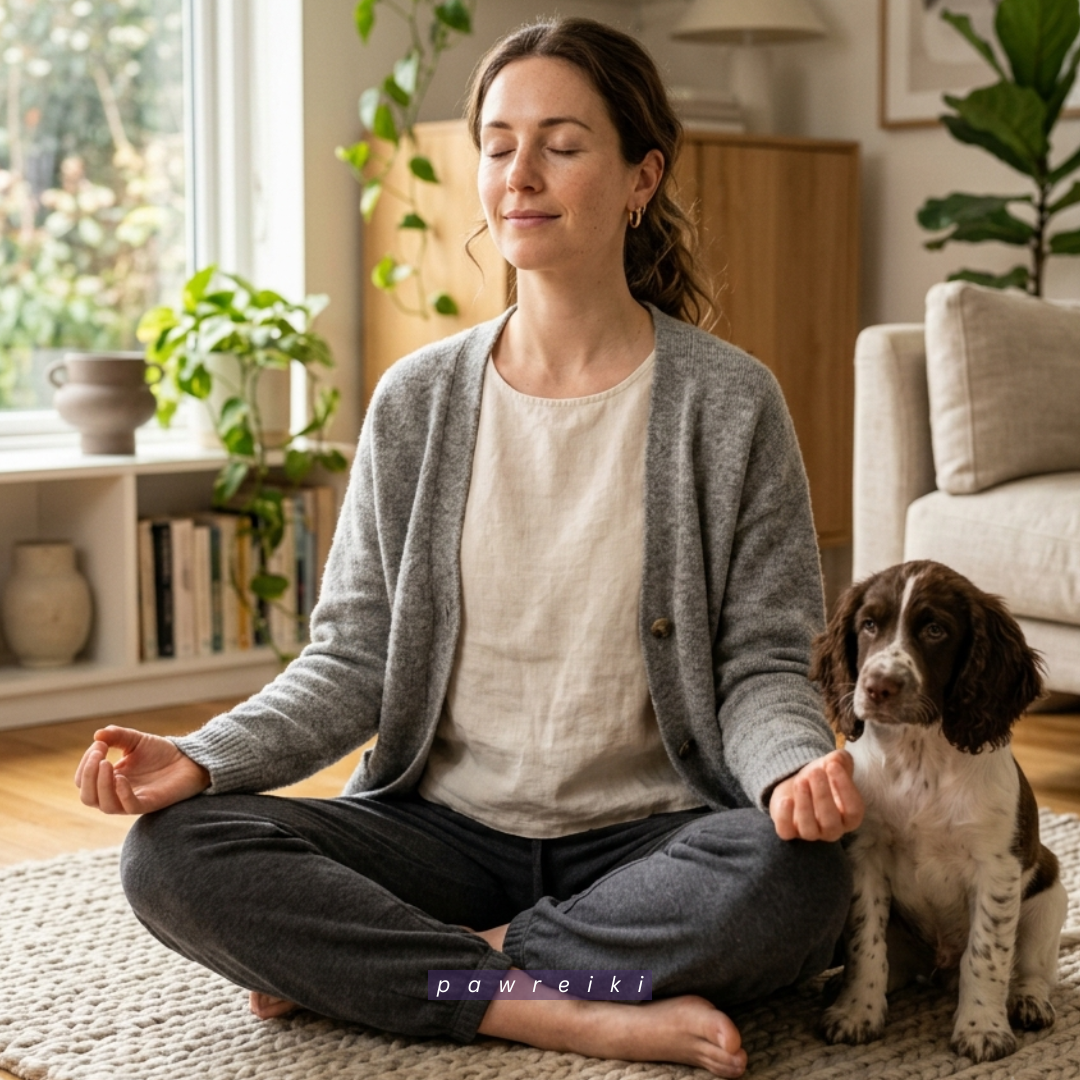
Before you begin Reiki, take a few quiet moments to settle yourself. Sit comfortably and breathe slowly. Let go of any stress or distractions, and allow yourself to feel calm and present.
Puppies are sensitive to the energy around them. When you are relaxed, they are often more willing to settle and feel at ease. Your calm presence is more important than performing every step perfectly.
What You May Notice
Your puppy may move closer, lie down, or sit quietly beside you. Some puppies become noticeably calmer, while others simply appear more comfortable. Every puppy responds in its own way, so allow the session to unfold naturally.
Step 2: Choose A Comfortable Space
Choose a quiet, familiar place where your puppy already feels safe. This could be a favourite bed, a soft blanket, or a peaceful corner of your home.
A calm environment helps reduce distractions and allows your puppy to relax more easily. Try to avoid noisy or unfamiliar areas that may make your puppy feel uneasy or overstimulated.
What You May Notice
Your puppy may settle more quickly, lie down comfortably, or pay less attention to everyday noises. Feeling safe in a familiar space often helps puppies relax naturally during a Reiki session.
Step 3: Let Your Puppy Approach Naturally
Rather than calling your puppy or picking it up, sit quietly nearby and allow it to come to you. Keep your posture relaxed and give your puppy the freedom to explore at its own pace.
Puppies are naturally curious and often approach when they feel safe and comfortable. If your puppy chooses to stay back, be patient and allow the session to unfold naturally. Reiki does not require physical contact, especially during the first few minutes.
What You May Notice
Your puppy may move closer, sniff your hands, or sit quietly beside you. Even small signs of curiosity or trust can show that your puppy is becoming more comfortable with your calm presence.
Step 4: Set An Intention
Before placing your hands, take a quiet moment to set a simple intention for the session. You might hope your puppy feels calm, safe, relaxed, or comforted.
There is no need for special words or a perfect technique. A calm, caring mindset helps create a peaceful atmosphere for both you and your puppy.
What You May Notice
Your puppy may settle down, become quieter, or simply rest comfortably beside you. Every puppy responds differently, so allow the session to unfold at its own pace.
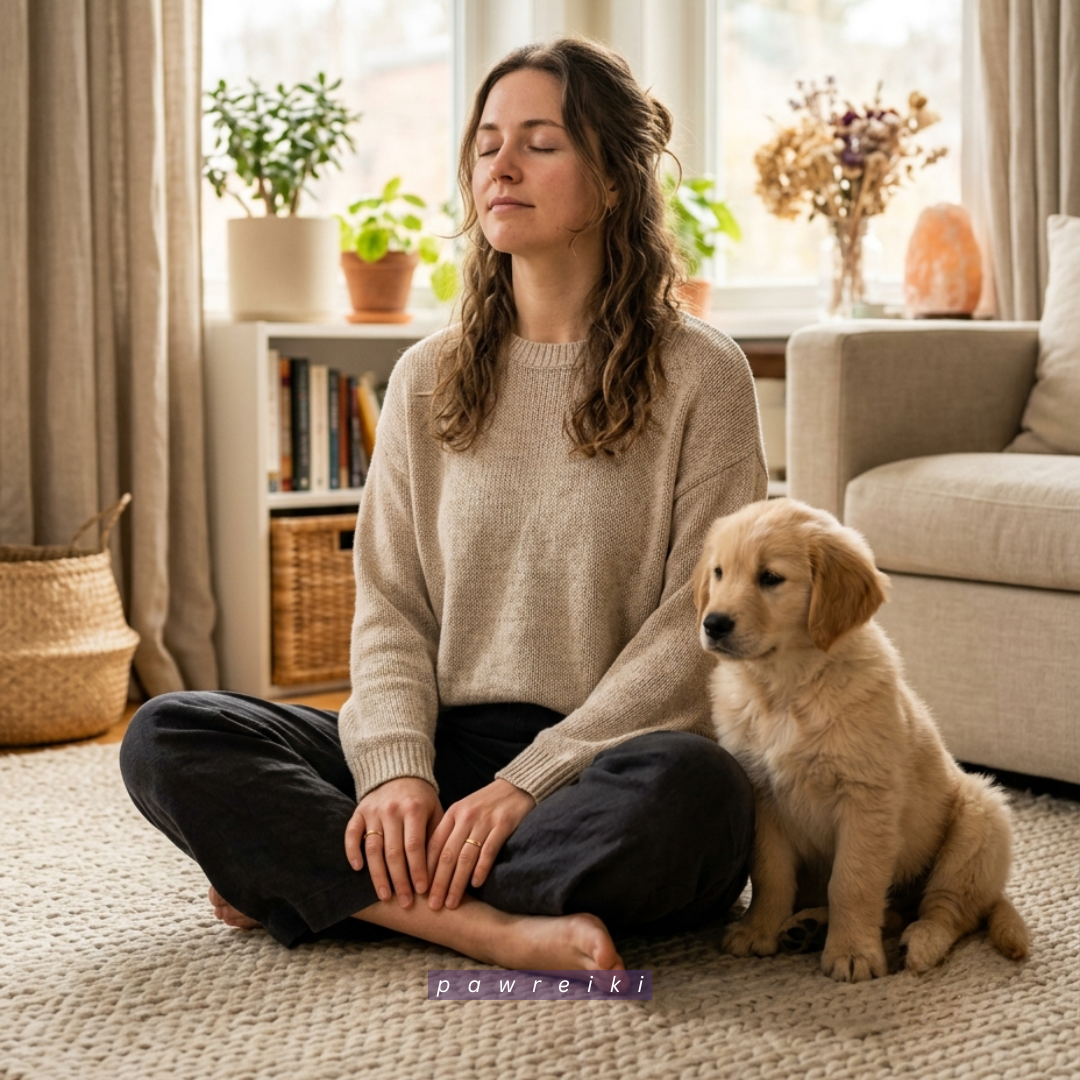
Step 5: Place Your Hands Gently
Place your hands gently on your puppy’s head, back, or chest. If your puppy prefers more space, hold your hands just above the body instead. Reiki does not require direct physical contact.
Keep your touch light and allow your puppy to guide the session. If your puppy moves away or seems uncomfortable, simply adjust your hands and continue without pressure.
What You May Notice
Your puppy may relax its body, close its eyes, or remain still for a little longer. Some puppies may lean into your hand or lie down, showing they feel calm and comfortable
Step 6: Maintain Slow Breathing
As you begin the Reiki session, focus on slow, steady breathing. Breathe naturally and allow yourself to relax without forcing your breath into a particular rhythm.
Your calm breathing helps create a peaceful atmosphere for the session. Remaining relaxed also helps you stay present and focused on your puppy.
What You May Notice
Your puppy may settle down, lie quietly, or breathe more slowly. Some puppies simply appear more relaxed, while others may rest comfortably beside you.
Step 7: Stay Present
During the Reiki session, give your puppy your full attention. Set aside distractions, such as your phone or other tasks, and enjoy this quiet time together.
If your mind begins to wander, simply bring your attention back to your puppy. Your calm presence helps create a peaceful and relaxing experience for both of you.
What You May Notice
Your puppy may stay close, lie down, or settle quietly beside you. Some puppies become more relaxed, while others simply enjoy resting near you. Every puppy responds differently, so allow the session to unfold naturally.
Step 8: Observe Your Puppy’s Response
Watch how your puppy responds during the Reiki session. There is no need to analyze every movement. Simply notice your puppy’s natural behaviour and allow the session to unfold at its own pace.
Your puppy may yawn, stretch, lie down, move closer, or quietly change positions. Every response is different, so remain patient and adjust your approach only if your puppy appears uncomfortable.
What You May Notice
Your puppy may yawn, blink slowly, stretch, or settle into a comfortable position. These small changes can be signs that your puppy feels relaxed and at ease during the session.
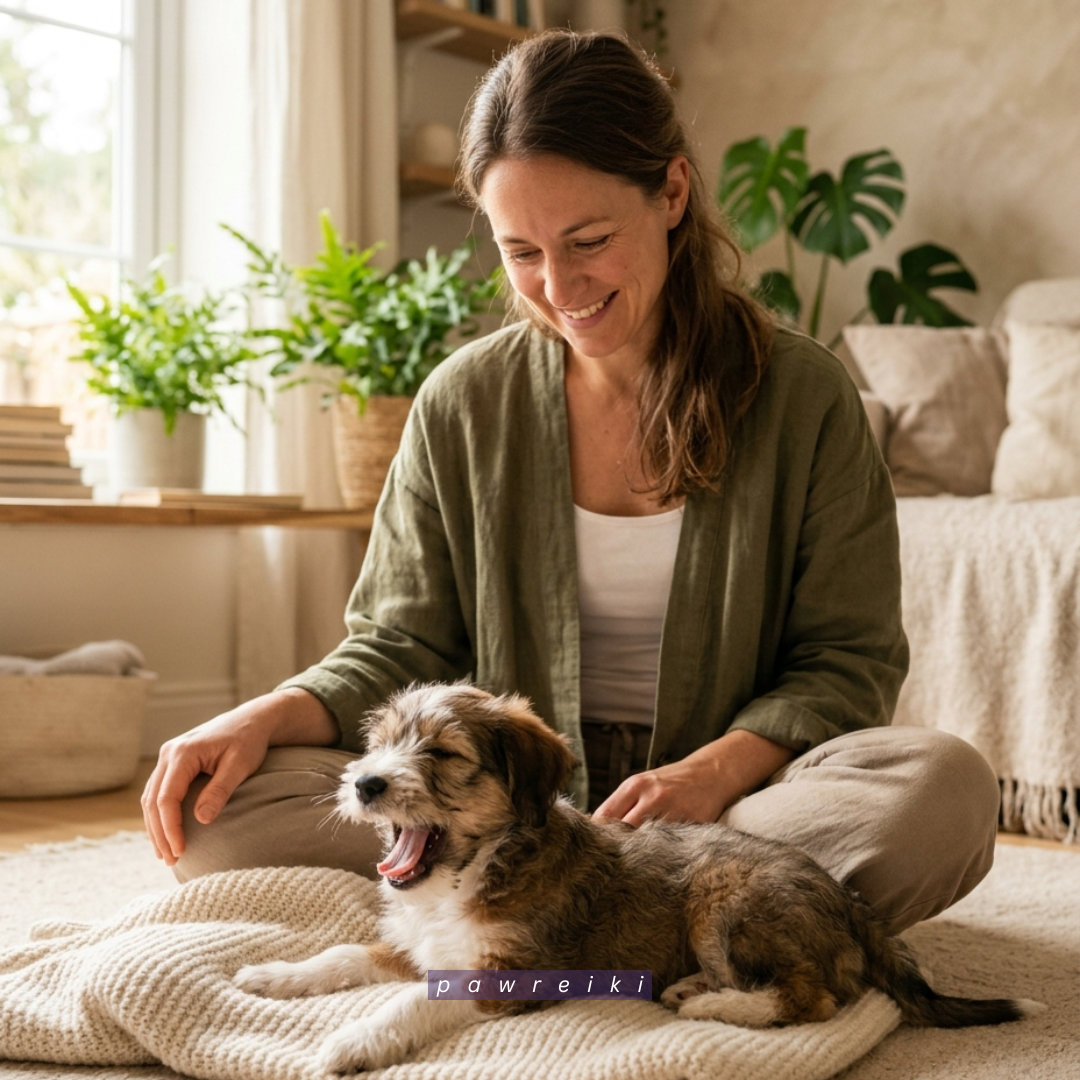
Step 9: Adjust Your Hand Positions
After a few minutes, gently move your hands to another area of your puppy’s body. You might place them over the back, shoulders, or sides. Move slowly and avoid sudden movements that could startle your puppy.
Allow your puppy to guide the session. Some puppies naturally change position when they’re ready, while others prefer to remain still. Follow your puppy’s comfort rather than keeping your hands in one place throughout the session.
What You May Notice
Your puppy may adjust its position, lean into your hands, or remain relaxed as you move. These small responses often show that your puppy feels comfortable and at ease.
Step 10: Keep Sessions Short
Keep your Reiki sessions short, especially when your puppy is new to Reiki. A few calm minutes are often enough to help your puppy relax without becoming restless or overwhelmed.
According to Reiki Ema, animal Reiki sessions may last anywhere from 20 minutes to an hour, depending on the animal’s comfort level.
Research published in the journal Animals also suggests that ending sessions while dogs are still calm and comfortable supports their overall well-being.
What You May Notice
Your puppy may remain calm during the session and continue to relax afterward. Finishing the session before your puppy becomes restless helps create a positive and comforting experience.
Step 11: Respect Your Puppy’s Movement
During a Reiki session, your puppy may choose to move away or change positions. Allow your puppy the freedom to do so without trying to guide it back. Reiki does not depend on constant physical contact.
Some puppies move because they are curious, while others may simply need a short break. Respecting your puppy’s choices helps create a calm, positive experience built on trust and comfort.
What You May Notice
Your puppy may walk away, sit a short distance from you, or return a few moments later. These natural responses show that your puppy is comfortable making its own choices during the session.
Step 12: End The Session Slowly
When you feel the Reiki session is complete, slowly remove your hands from your puppy or move them gently away. Avoid sudden movements and allow the session to end naturally.
Sit quietly beside your puppy for a few moments. You can speak softly or simply enjoy the peaceful time together before returning to your normal routine.
What You May Notice
Your puppy may remain relaxed, look at you calmly, or stay in the same position for a few moments. Some puppies may stretch, yawn, or slowly get up as the session comes to an end.
Step 13: Allow Rest And Recovery
After the Reiki session, give your puppy time to rest. Some puppies may feel sleepy or deeply relaxed, while others may simply enjoy lying quietly for a while.
Avoid interrupting this quiet time if possible. Allow your puppy to sleep, rest, or move around at its own pace. A calm environment helps your puppy remain comfortable and relaxed after the session.
What You May Notice
Your puppy may fall asleep, lie quietly, or appear deeply relaxed. Others may simply seem calmer and more settled as they return to their normal routine.
Step 14: Stay Patient And Observant
Every puppy responds to Reiki in its own way. Some puppies may relax during the first session, while others need more time to become comfortable with the experience.
Be patient and pay attention to small changes in your puppy’s behaviour over time. Regular Reiki sessions, combined with loving care and veterinary guidance, can help create a calm and positive routine for both of you.
What You May Notice
You may notice gradual changes, such as a calmer attitude, better relaxation, or greater comfort during Reiki sessions. Every puppy is different, so allow progress to happen at its own pace.
Common Mistakes To Avoid When Practicing Reiki With Puppies
Learning Reiki is a gradual process, and it’s perfectly normal to make mistakes along the way. The good news is that most beginners can avoid common problems simply by remaining patient and allowing their puppy to guide the session.
1. Expecting Immediate Results
Every puppy responds differently. Some may relax during the first session, while others take more time to become comfortable. Focus on consistency rather than expecting immediate changes.
2. Trying To Keep Your Puppy Still
Puppies are naturally curious and active. Allow them to move around, change positions, or walk away if they choose. Respecting their choices helps build trust and creates a more positive experience.
3. Practicing For Too Long
Long sessions can become tiring for young puppies. Short, relaxed sessions are often more enjoyable and help your puppy stay comfortable throughout the experience.
4. Becoming Frustrated
If your puppy seems distracted or uninterested, don’t worry. End the session calmly and try again another day. Reiki should always be a peaceful experience for both of you.
5. Replacing Veterinary Care With Reiki
Reiki is a complementary practice that supports your puppy’s overall well-being. It should never replace professional veterinary care, routine check-ups, vaccinations, or prescribed treatments.
6. Forgetting To Enjoy The Experience
Reiki is more than a technique. It is also an opportunity to slow down and spend uninterrupted time with your puppy. Even quiet moments together can strengthen your bond and help create a sense of trust and security.
FAQs
Q1: Can I Do Reiki On My Puppy Without Training?
Yes. You can practice simple Reiki at home without formal training. Focus on staying calm, setting a positive intention, and respecting your puppy’s comfort throughout the session.
Q2: How Often Should I Practice Reiki With My Puppy?
Start with short sessions a few times a week and follow your puppy’s comfort level. According to the UK Reiki Federation, professional animal Reiki sessions often last between 30 and 60 minutes, but home sessions with puppies are usually much shorter, especially when they are new to Reiki.
Q3: What If My Puppy Doesn’t Stay Still During Reiki?
That’s completely normal. Puppies are naturally curious and active. Allow your puppy to move around freely and return if it chooses. Reiki does not require your puppy to remain still throughout the session.
Q4: Is Reiki Safe For Puppies?
Reiki is generally considered a gentle, non-invasive complementary practice. It should never replace veterinary care, but many pet owners use it alongside regular check-ups, proper nutrition, and positive training to support their puppy’s overall well-being.
Q5: How Long Does It Take For A Puppy To Get Used To Reiki?
Every puppy is different. Some puppies appear calm and relaxed during their first Reiki session, while others need several sessions before they feel completely comfortable. Be patient and allow your puppy to adjust at its own pace without forcing the experience.
Q6: Can Reiki Be Used Alongside Puppy Training?
Yes. Reiki can complement positive reinforcement training by creating a calm and relaxed environment. It may help your puppy feel more comfortable during training and socialization.
Reiki is not a substitute for proper training or professional veterinary care. Many pet owners use it alongside obedience training, daily routines, and regular veterinary check-ups to support their puppy’s overall well-being.
Helpful External Resources
If you’d like to explore pet wellness, behaviour support, or gentle healing practices further, here are trusted organizations and educational resources you may find helpful:
- American Veterinary Medical Association (AVMA) – General pet health, behaviour guidance, and care resources.
- ASPCA Pet Care Library – Behaviour tips, anxiety support, and animal-care information.
- VCA Animal Hospitals: Know Your Pet – Comprehensive articles written by veterinarians.
- International Center for Reiki Training (ICRT): Animal Reiki – Introductory information and classes for working with animals.
- Shelter Animal Reiki Association (SARA) – Ethical, animal-led Reiki practices and training.
Conclusion
Reiki for puppies is a simple way to spend calm, meaningful time with your young dog. You don’t need special skills to begin. Patience, consistency, and a caring presence are the most important parts of every session.
As you continue practicing, you may notice small changes in your puppy’s comfort, confidence, or ability to relax. Every puppy responds differently, so enjoy the experience at your puppy’s pace.
With time, Reiki can become a peaceful part of your daily routine and help strengthen the bond you share. Even a few quiet minutes together can build trust and create moments of comfort that both you and your puppy will appreciate.
I trust you enjoyed this article on the [blog name]. Please stay tuned for more Reiki insights, pet wellness tips, and holistic lifestyle ideas.
Take care!
— JeannetteZ 🐾💜
💬 Your Opinion Is Important To Me
Do you have thoughts, ideas, or questions? I’d love to hear from you. Please leave your comments below or email me directly at Jeannette@pawreiki.com.
📚 More PawReiki Reads — Discover Energy Healing & Holistic Pet Wellness
💜 My #1 Recommendation for Online Success
Reiki has brought so much peace and purpose to my life, and sharing it online has been a true blessing. If you’ve ever dreamed of creating a gentle income stream around your love for animals and holistic healing, this platform gives you all the tools, training, and community support you need — no tech experience required.
🌟 See How Reiki Lovers Build Online Income — Try WA FreeNo credit card required · Free starter training included
Disclosure
This post may contain affiliate links. As an Amazon Associate and participant in other affiliate programs, I earn from qualifying purchases at no extra cost to you. Please read my full affiliate disclosure.