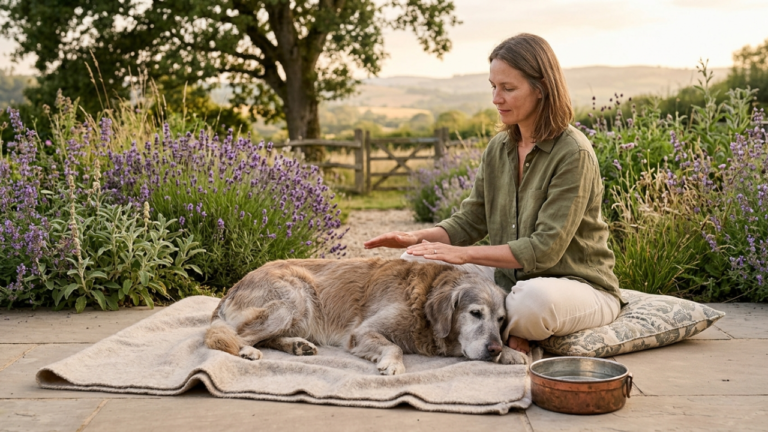
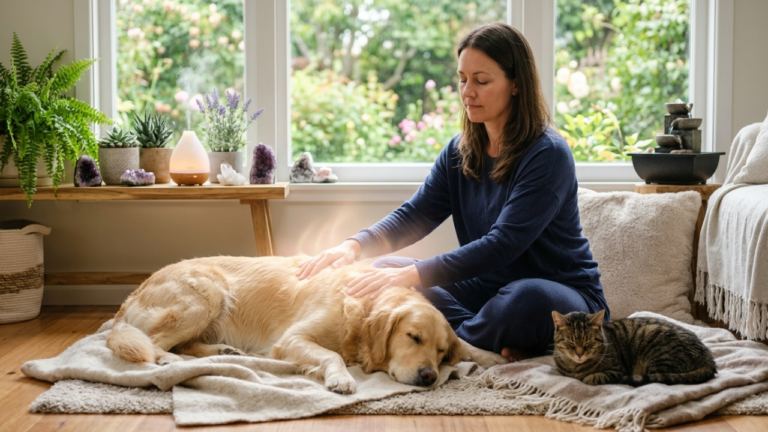
Reiki For Sick Puppies: A Natural Way To Support Recovery
Reiki for sick puppies offers a complementary way to support your puppy during illness or recovery. While it should never replace professional veterinary care, Reiki may help promote relaxation, reduce stress, and create a calm environment that supports healing.
Caring for a sick puppy can be an emotional and sometimes overwhelming experience. Alongside professional veterinary care, many pet parents choose Reiki as a complementary practice to help create a calm and comforting environment during recovery.
Although every puppy responds differently, Reiki encourages quiet moments of connection that may help reduce stress and promote relaxation for both you and your puppy.
This guide explains what Reiki is, how it may benefit sick or recovering puppies, and how to practice this gentle energy healing technique safely at home.
You’ll also discover practical tips for creating a peaceful healing space while supporting your puppy with patience, compassion, and love.
What Is Reiki? Can It Really Help A Sick Puppy?
Reiki is a gentle Japanese energy healing practice. The word comes from the Japanese terms rei, meaning “universal,” and ki, meaning “life energy.”
According to Reiki philosophy, this life energy flows through all living beings, including people, animals, and puppies. Practitioners believe that illness, stress, or a slow recovery may affect the balance of this energy.
Reiki gently supports the body’s natural energy using light touch or hands held just above the body. Because it is quiet, non-invasive, and deeply relaxing, many animals, including puppies, respond well to Reiki sessions.
There is no medication, no invasive procedure, and no loud equipment. Instead, Reiki offers a calm, peaceful experience.
However, Reiki is not a replacement for veterinary care. If your puppy is sick, your veterinarian should always provide the diagnosis and treatment plan.
Reiki works best as a complementary therapy alongside conventional veterinary care, helping promote relaxation, reduce stress, and provide comfort during the healing process.
How To Do Reiki At Home For Your Sick Puppy
This is the part many pet parents find most meaningful because you don’t need a certification or a complicated setup to get started. With gentle intention, patience, and your hands, you can offer Reiki to your puppy in the comfort of your home.
The following beginner-friendly steps will help you create a calm healing environment and practice Reiki safely alongside your puppy’s veterinary care.
1. Set The Space First
Choose a quiet area where your puppy already feels safe and relaxed. A favourite bed, blanket, or resting spot often works best. Keeping the environment familiar can help your puppy feel more comfortable.
Reduce distractions by lowering the television volume, silencing notifications, and creating a peaceful atmosphere. Soft lighting may also help your puppy feel more at ease.
The goal isn’t to create a perfect healing room but to provide a comfortable space where your puppy can relax. Allow them to choose their own position rather than directing them.
When puppies feel safe and unhurried, they are often more receptive to a calm and gentle Reiki session. This helps create a peaceful experience for both you and your puppy.
2. Ground Yourself Before You Begin
Before offering Reiki, take a few moments to centre yourself. Take several slow breaths and allow your body to relax. If you feel worried about your puppy’s condition, acknowledge those feelings and let them gently settle.
Approach the session with a calm and peaceful mindset. Set a simple intention, such as offering comfort, relaxation, and support. There is no need to force the experience or strive for perfection.
Reiki does not require intense concentration or effort. A quiet intention and a caring presence are enough. Many pet parents find this simple grounding practice helps them feel more connected throughout the session.
3. Connect With Your Puppy First
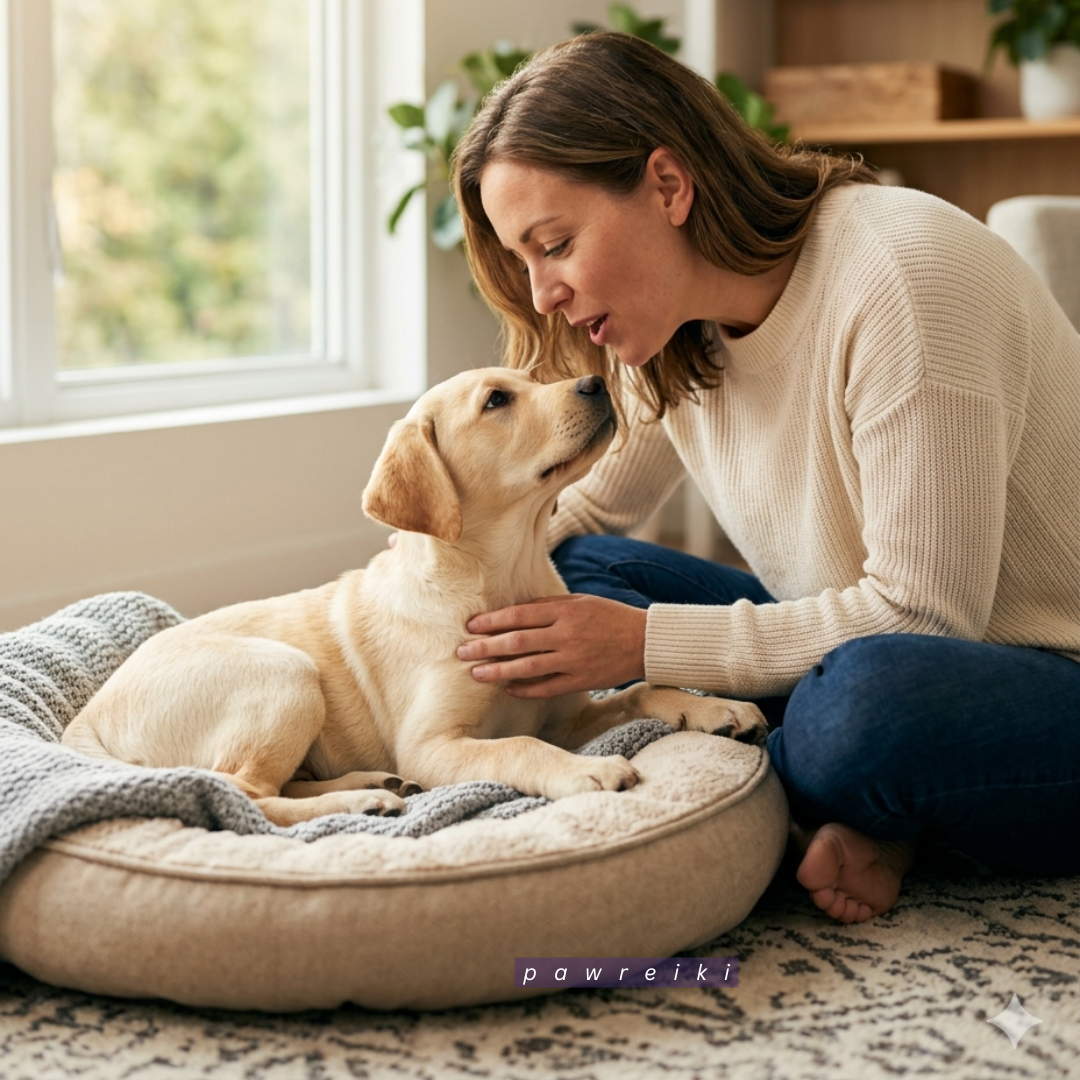
Before placing your hands, spend a few moments simply being present with your puppy. Sit beside them, speak softly, or gently stroke their fur if they enjoy being touched.
This quiet time helps build trust and allows your puppy to become comfortable with your presence. It also helps both of you relax before the session begins.
Watch your puppy’s body language closely. A relaxed posture, slow breathing, and soft eyes often show they feel safe and comfortable.
Starting with connection rather than immediate hand placements creates a more natural experience. It also allows the session to unfold at your puppy’s own pace.
4. Start With Gentle Presence
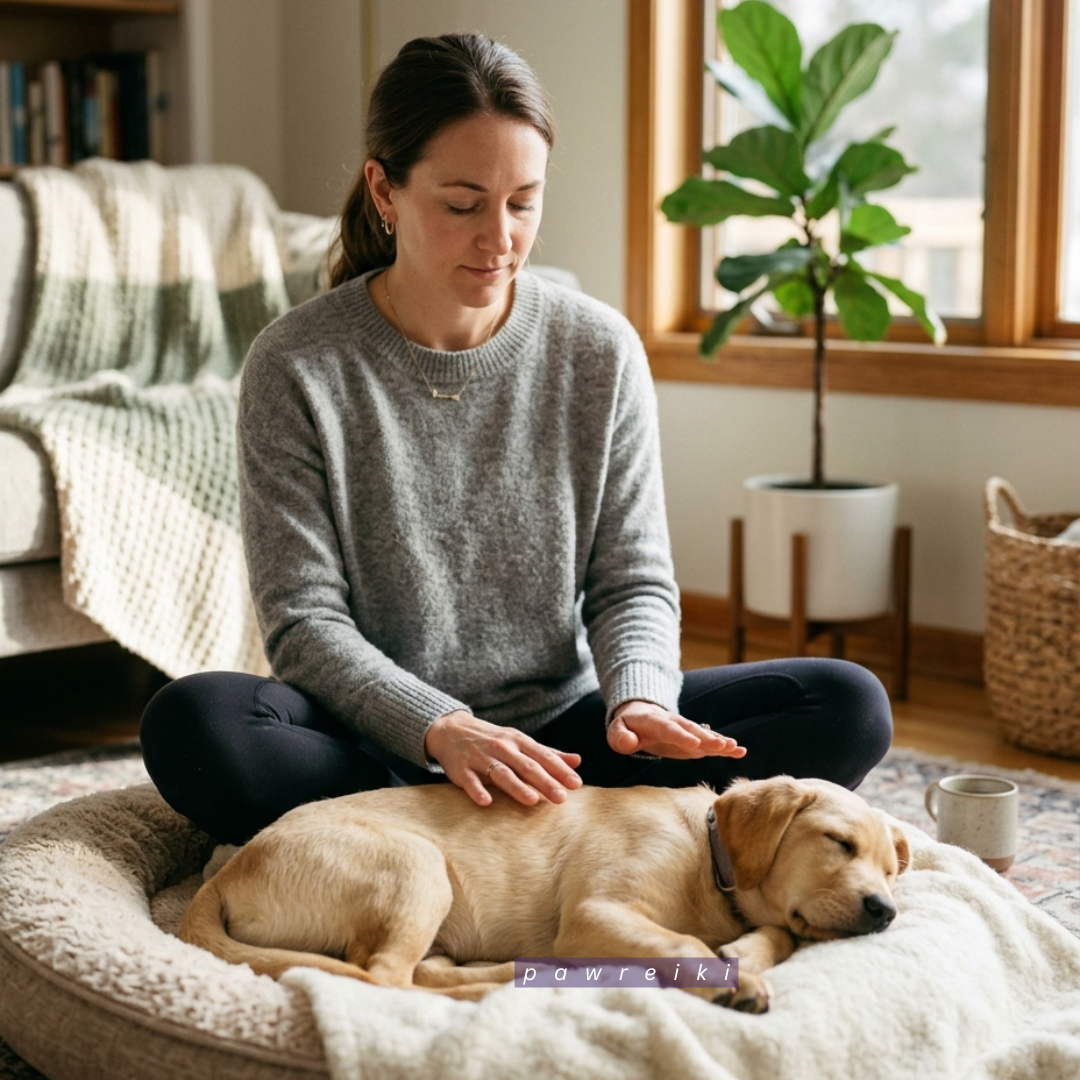
Place your hands lightly on or just above your puppy’s body, depending on what they seem most comfortable with. Common starting areas include the shoulders, upper back, chest, and sides of the body.
Keep your hands relaxed and avoid applying pressure. Reiki is not a massage, so there is no need to rub or manipulate the muscles.
Remain still and allow the Reiki session to unfold naturally. During this time, many pet parents report feeling warm, calm, or relaxed.
Instead of focusing on reaching a specific goal, simply enjoy the quiet time together. The emphasis should remain on creating a peaceful and comforting experience.
5. Use Comfortable Hand Positions
As the session continues, you can gently move your hands to different areas of your puppy’s body. Common hand positions include the forehead, shoulders, heart area, back, hips, and hind legs.
Hold each position for several minutes or until you feel it’s time to move. There is no strict sequence to follow. Let your puppy guide the pace of the session.
Some puppies respond best to one or two hand positions, while others enjoy longer sessions with several placements. Stay flexible and adjust as needed based on your puppy’s comfort. Their response is more important than following a set routine.
6. Follow Your Puppy’s Lead
One unique aspect of Reiki with animals is that the animal often guides the session. Your puppy may move closer to your hands, roll onto a different side, stretch, or change position entirely.
These responses can help you understand where your puppy feels most comfortable receiving Reiki. If they move away, respect their choice and give them space.
Some puppies prefer your hands to hover just above their bodies rather than making direct contact. This can be especially true if they are recovering from illness or feeling uncomfortable.
Allowing your puppy to guide the session helps build trust and creates a positive experience for both of you. Respecting their choices helps keep the experience calm, gentle, and stress-free.
7. Observe Signs Of Relaxation
During Reiki, many puppies display behaviours that suggest they are becoming more relaxed. They may sigh deeply, yawn, blink slowly, stretch, or settle into a comfortable sleeping position.
Some puppies also breathe more slowly and rest more deeply as the session continues. These responses often show that they feel safe and comfortable.
Rather than constantly evaluating the session, simply observe your puppy’s responses. Relaxation alone can be valuable for a puppy recovering from illness, stress, or temporary discomfort.
8. Focus On Areas Of Concern
If your puppy is recovering from a specific health concern, you may choose to spend a little more time near that area while remaining gentle and respectful.
For example, you might place your hands near the hips, joints, abdomen, or chest, depending on your puppy’s needs. Avoid forcing contact with sensitive areas. Instead, hold your hands just above the area if direct touch seems uncomfortable.
This gentle approach allows you to offer supportive care while respecting your puppy’s comfort and personal boundaries. Always let your puppy’s response guide the session.
9. Keep Sessions Short And Consistent
Consistency is often more beneficial than occasional long sessions. For a sick or recovering puppy, a 10- to 20-minute session once or twice a day may be easier than one extended session.
Short, regular Reiki sessions fit naturally into your daily routine. They also help create a calm and supportive environment for your puppy.
Some puppies may only stay engaged for a few minutes, and that’s perfectly acceptable. Follow their attention span and energy level rather than trying to reach a specific time goal.
10. End The Session Gently
When the session feels complete, slowly lift your hands away and take a few calming breaths. Avoid sudden movements or loud activity immediately afterwards.
Allow your puppy to continue resting if they choose. Offer fresh water and sit quietly nearby for a few moments. This gentle transition helps maintain the calm atmosphere created during the session.
Many puppies enjoy remaining relaxed after a Reiki session. Take this opportunity to enjoy a few peaceful moments together and strengthen your bond.
11. Make Reiki Part Of Your Daily Care Routine
Think of Reiki as one part of your puppy’s overall wellness routine. It can be practiced alongside regular veterinary care, nutritious food, fresh water, plenty of rest, and lots of love.
Even a few minutes of Reiki each day can become a meaningful way to strengthen the bond with your puppy. Many pet parents find these quiet moments of focused attention comforting for both themselves and their pets.
Over time, this gentle routine can create a greater sense of calm, comfort, and emotional connection. Every shared session is another opportunity to support your puppy with patience, compassion, and care.
12. Be Patient With The Process
Every puppy responds to Reiki in their own way. Some may relax during the very first session, while others may need more time to become comfortable with the experience.
Avoid comparing your puppy’s response to that of other animals, and don’t expect immediate changes. Instead, focus on creating a calm, loving environment where your puppy feels safe and supported.
Consistency, patience, and realistic expectations are all important parts of the journey. Remember that Reiki is intended to complement your puppy’s veterinary care, not replace it.
By allowing each session to unfold naturally, you create opportunities to strengthen your bond while supporting your puppy’s overall well-being.
Want to Grow Your Reiki Practice?
If you feel called to share your healing gifts with more pets and their families, there are heart-centred ways to turn your passion into a sustainable income. This guide explores ethical, meaningful ways to earn within the Pet Reiki niche without losing your spiritual focus.
🌟 Please read: How To Start An Animal Reiki BusinessCombining Reiki With Other Natural Recovery Support
Supporting a sick puppy involves much more than Reiki alone. Following your veterinarian’s advice, providing a calm environment, and meeting your puppy’s daily needs all play an important role in recovery.
These simple practices can work alongside Reiki to provide comfort, reassurance, and holistic support. Every small act of care contributes to your puppy’s comfort and overall well-being.
1. Rest And Warmth
A comfortable resting space is one of the most valuable gifts you can offer a sick puppy. Recovery often requires extra sleep, and a warm, cozy environment encourages relaxation.
Place soft bedding in a quiet area away from household noise and activity. Many puppies naturally seek out quiet places when they aren’t feeling well.
If your puppy is already resting comfortably, you may choose to offer a gentle Reiki session. Always allow them to remain relaxed and avoid disturbing their rest.
A warm, peaceful environment helps your puppy feel safe and supported. Together with veterinary care, Reiki may provide additional comfort during the recovery process.
2. Hydration Support
Proper hydration is important for your puppy’s overall health and well-being. Some puppies may drink less than usual when they are feeling unwell, so it’s helpful to monitor their water intake closely.
Fresh water should always be available. If your veterinarian recommends it, puppy-safe broths or hydration supplements may encourage them to drink more.
You can also offer Reiki while your puppy is resting near their water bowl if they seem comfortable. Keep fresh water available at all times and contact your veterinarian if you’re concerned about dehydration.
3. Creating A Calm Environment
A peaceful environment can help your puppy feel more relaxed during recovery and Reiki sessions. Puppies are sensitive to their surroundings, so reducing noise and unnecessary activity may help them feel more comfortable.
If you choose to use herbal products or calming scents, always seek guidance from your veterinarian first. Some products that are safe for people may not be suitable for puppies.
Focus on creating a fresh, clean, and comfortable space. A calm environment can complement Reiki and help your puppy feel safe and supported.
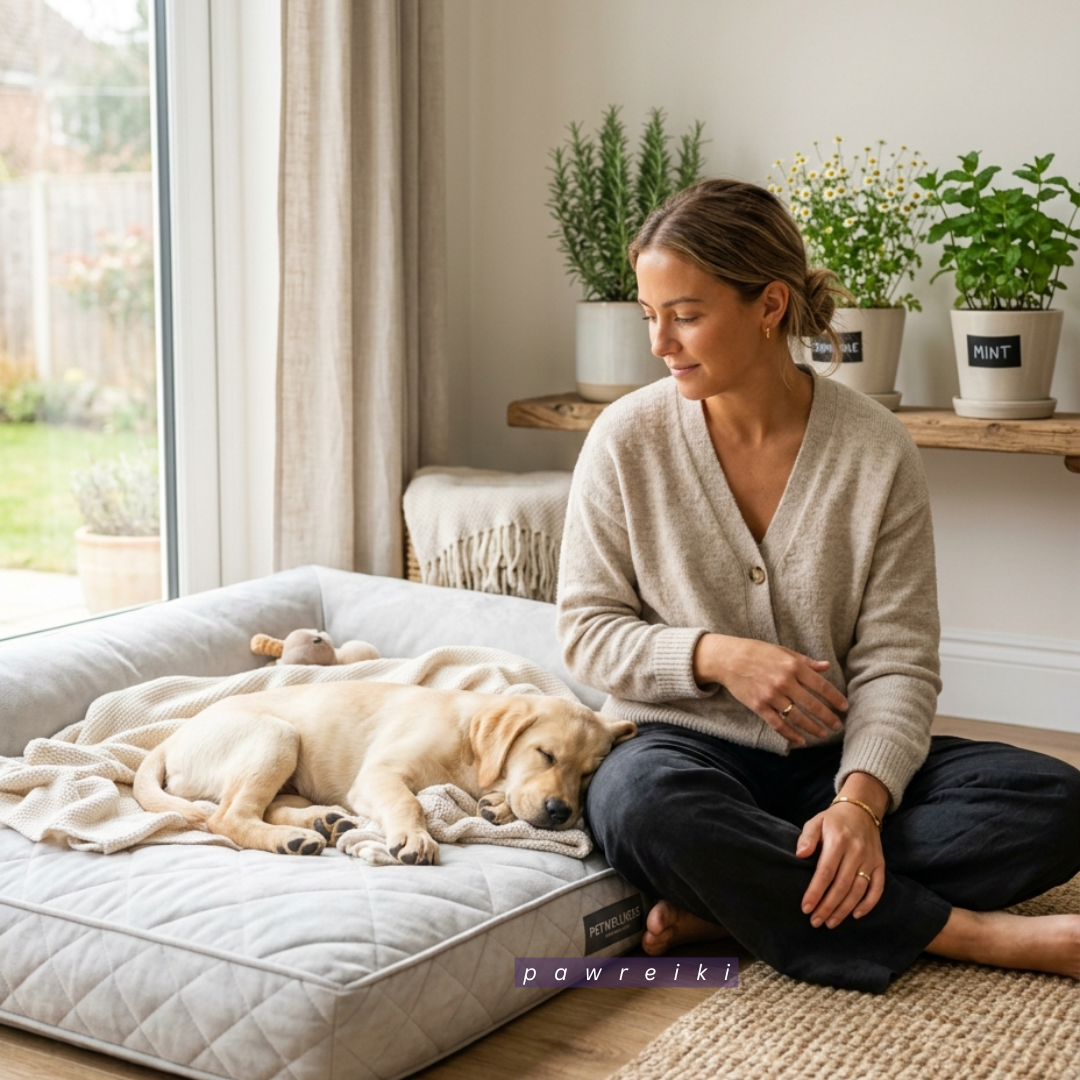
4. Gentle Touch And Massage
Soft, mindful touch naturally complements Reiki. Gentle strokes along the back, shoulders, or chest can help your puppy feel secure while strengthening the bond you share.
Unlike deep massage, the goal is to provide gentle and comforting physical contact. Many puppies enjoy slow, steady movements that encourage relaxation without overstimulation.
Combining Reiki with gentle touch also allows you to observe your puppy’s comfort level and body language. These quiet moments of connection can become a meaningful part of your puppy’s recovery routine.
5. Nutritious, Easy-To-Digest Meals
Good nutrition provides the body with the resources it needs during recovery. When a puppy is feeling unwell, smaller, easy-to-digest meals may be more appealing than larger portions.
Choose a high-quality diet that meets your puppy’s needs and follow your veterinarian’s feeding recommendations. Consistent nourishment is an important part of the healing process.
Some pet parents choose to offer Reiki before or after mealtimes as part of a calm daily routine. Combined with loving care, good nutrition helps support your puppy’s comfort and overall well-being.
6. Fresh Air And Gentle Outdoor Time
If your puppy feels comfortable and your veterinarian approves, short periods outdoors can provide gentle mental stimulation and relaxation.
Fresh air, natural sunlight, and quiet surroundings may help your puppy feel calmer. You don’t need long walks during recovery. Simply sitting together in a quiet garden or shaded outdoor area may be enough.
Reiki can also be offered while your puppy rests outdoors. The peaceful combination of nature, companionship, and focused attention creates a gentle and calming experience.
7. Emotional Support And Quiet Companionship
Never underestimate the value of simply being present with your puppy. Sitting nearby, speaking softly, and offering gentle reassurance can provide meaningful comfort.
Many puppies respond positively to calm companionship, especially when they aren’t feeling their best. Reiki naturally complements these quiet moments by encouraging mindfulness and focused attention.
Rather than trying to fix everything, focus on offering love, patience, and support. These peaceful moments strengthen the bond you share and help your puppy feel safe throughout their recovery.
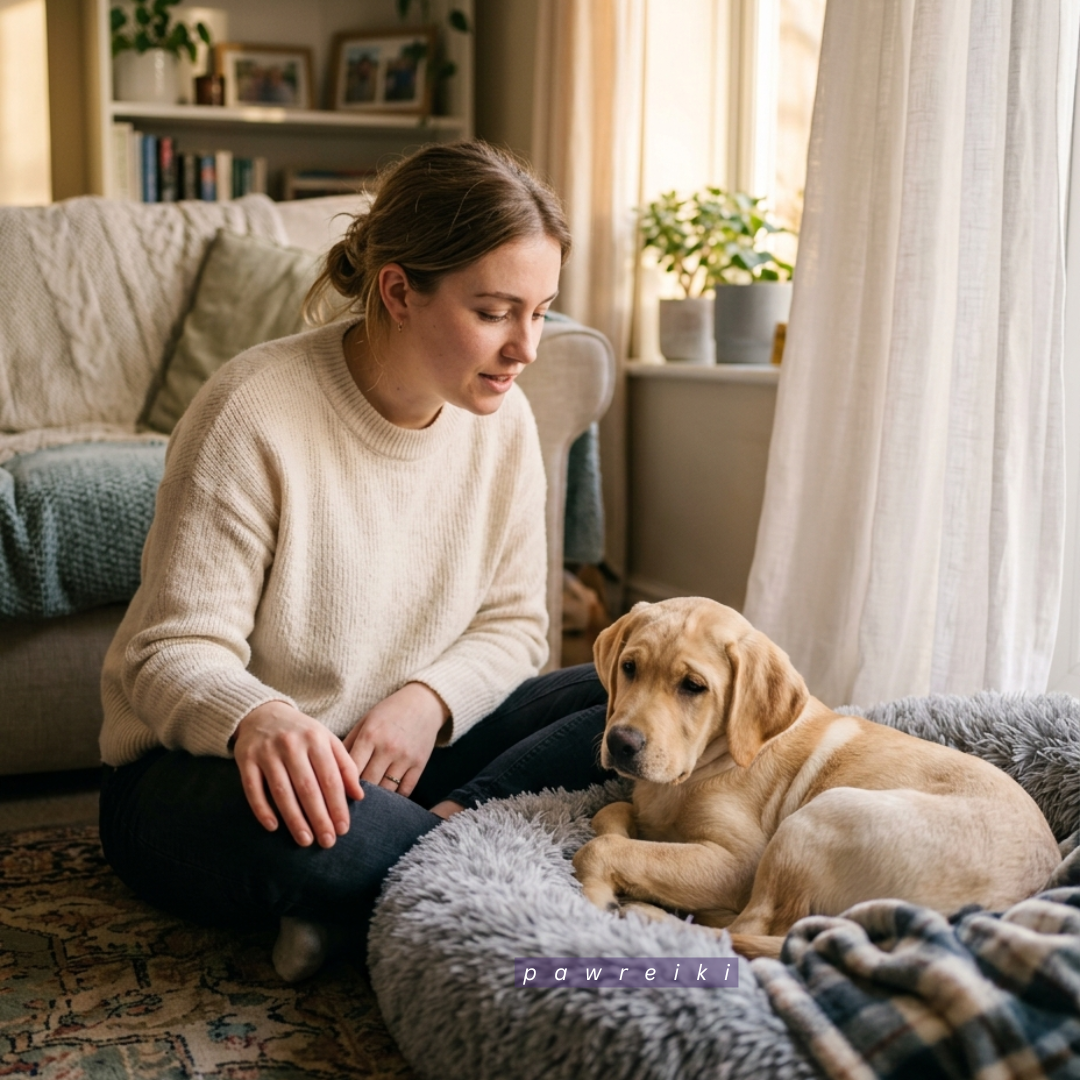
Common Mistakes To Avoid When Using Reiki For Sick Puppies
Reiki is a gentle and supportive practice, but it’s natural to wonder if you’re doing everything correctly. By avoiding a few common mistakes, you can create a calmer and more positive experience for both you and your puppy.
Remember that every puppy is unique and will respond differently to Reiki. Stay patient, follow your puppy’s cues, and allow each session to unfold naturally without expectations.
1. Delaying Veterinary Care
Reiki should never replace professional veterinary care. If your puppy is sick, injured, or showing unusual symptoms, always seek advice from your veterinarian before beginning Reiki.
Once your puppy has been examined, Reiki can be used alongside their treatment plan. It provides gentle complementary support while your puppy receives the medical care they need.
2. Expecting Immediate Results
Every puppy responds to Reiki in their own way. Some may appear relaxed during the first session, while others need more time to become comfortable with the experience.
Focus on creating a peaceful and supportive environment rather than looking for immediate changes. Patience, consistency, and realistic expectations are all part of the healing journey.
3. Forcing Your Puppy To Participate
Animal Reiki is based on choice. If your puppy walks away, changes position, or simply isn’t interested, respect their decision rather than encouraging them to stay.
You can always try another day when your puppy feels more comfortable. Allowing your puppy to guide the session helps build trust and creates a positive experience.
4. Making Sessions Too Long
Longer sessions are not always better. Sick puppies often tire quickly and may only enjoy Reiki for a few minutes before needing to rest.
Watch your puppy’s body language and energy level throughout the session. Ending at the right time is often more beneficial than trying to continue for longer.
5. Ignoring Your Puppy’s Body Language
Your puppy’s behaviour provides valuable guidance throughout each Reiki session. Relaxed breathing, soft eyes, stretching, or quiet rest often indicate they are comfortable.
If your puppy seems restless, uncomfortable, or wants to leave, simply end the session. Respecting their choices helps keep Reiki calm, gentle, and free from pressure.
6. Forgetting To Care For Yourself
Your puppy benefits from your calm and relaxed presence. Taking a few slow breaths before each session can help you feel centred and ready to focus on your puppy.
Reiki can become a peaceful routine for both of you. These quiet moments strengthen your bond and create a calm, supportive experience together.
FAQs
Q1: Can I Do Reiki On My Puppy If I’ve Never Been Trained?
Yes. You can offer your puppy gentle, loving Reiki at home without formal training. The basic principles are simple to learn and easy to practice at home.
If you’d like to deepen your knowledge and confidence, beginner Reiki courses are widely available online and through qualified practitioners.
Q2: How Often Should I Give My Sick Puppy Reiki?
Short, regular sessions are often more suitable than one long weekly session. A 10 to 20-minute session once or twice a day may work well for a sick or recovering puppy.
Allow your puppy’s comfort and energy level to guide each session. Some puppies may only want a few minutes, and that’s perfectly fine.
Q3: What If My Puppy Won’t Stay Still?
That’s perfectly okay. You can offer Reiki without direct contact by holding your hands just above your puppy if they seem more comfortable that way.
If your puppy moves around or walks away, simply respect their choice. You can always try again later when they feel more relaxed.
Q4: Is There Any Situation Where I Should Avoid Reiki?
Reiki is generally considered a gentle and non-invasive complementary practice. However, it should never replace professional veterinary care.
If your puppy is seriously ill or injured, always seek advice and treatment from your veterinarian first. Reiki can then be used alongside their recommended care.
Q5: Can Reiki Help With Emotional Recovery Too?
Yes. Puppies that have experienced trauma, neglect, or a difficult illness may benefit from the calm and supportive environment that Reiki encourages.
Many pet parents find that these quiet sessions help strengthen the bond they share with their puppy. They can also create peaceful moments during the recovery process.
Q6: Can I Use Reiki Alongside My Puppy’s Medication?
Yes. Reiki can be practiced alongside medications and treatments prescribed by your veterinarian. It is intended to complement professional veterinary care, not replace it.
If you have any questions about your puppy’s treatment plan, always speak with your veterinarian before making changes. Working closely with your veterinarian helps ensure your puppy receives the safest and most appropriate care throughout their recovery.
Helpful External Resources
If you’d like to explore pet wellness, behaviour support, or gentle healing practices further, here are trusted organizations and educational resources you may find helpful:
- American Veterinary Medical Association (AVMA) – General pet health, behaviour guidance, and care resources.
- ASPCA Pet Care Library – Behaviour tips, anxiety support, and animal-care information.
- VCA Animal Hospitals: Know Your Pet – Comprehensive articles written by veterinarians.
- International Center for Reiki Training (ICRT): Animal Reiki – Introductory information and classes for working with animals.
- Shelter Animal Reiki Association (SARA) – Ethical, animal-led Reiki practices and training.
Conclusion
Reiki for sick puppies offers a gentle way to support your puppy alongside professional veterinary care. While it isn’t a substitute for medical treatment, it may help create a calmer and more relaxing environment during illness or recovery.
Practising Reiki with patience and compassion can strengthen the bond you share with your puppy. Every puppy is different, so let them guide each session at their own pace. Always follow your veterinarian’s advice throughout their recovery.
Whether your puppy is recovering from surgery, coping with an illness, or simply needs extra comfort, Reiki can provide peaceful moments together. Sometimes your calm presence and loving attention can be just as meaningful as the Reiki session itself.
I trust you enjoyed this article on the [blog name]. Please stay tuned for more Reiki insights, pet wellness tips, and holistic lifestyle ideas.
Take care!
— JeannetteZ 🐾💜
💬 Your Opinion Is Important To Me
Do you have thoughts, ideas, or questions? I’d love to hear from you. Please leave your comments below or email me directly at Jeannette@pawreiki.com.
📚 More PawReiki Reads — Discover Energy Healing & Holistic Pet Wellness
💜 My #1 Recommendation for Online Success
Reiki has brought so much peace and purpose to my life, and sharing it online has been a true blessing. If you’ve ever dreamed of creating a gentle income stream around your love for animals and holistic healing, this platform gives you all the tools, training, and community support you need — no tech experience required.
🌟 See How Reiki Lovers Build Online Income — Try WA FreeNo credit card required · Free starter training included
Disclosure
This post may contain affiliate links. As an Amazon Associate and participant in other affiliate programs, I earn from qualifying purchases at no extra cost to you. Please read my full affiliate disclosure.