Horse Chakra Healing: A Complete Guide
Horse Chakra Healing is a holistic approach that focuses on balancing your horse’s energy centres to support overall well-being. Just like people, horses are believed to have chakras that influence their physical, emotional, and energetic health.
When these energy centres are balanced, they may help promote relaxation, comfort, and a stronger connection between you and your horse.
Learning about the equine chakra system can also help you better understand changes in your horse’s behaviour, emotions, and energy levels.
While chakra healing should never replace professional veterinary care, many horse owners include Reiki and other complementary therapies as part of their horse’s overall wellness routine.
This complete Horse Chakra Healing guide explores each chakra, explains its purpose, and highlights common signs of balance or imbalance.
You’ll also discover gentle techniques that may help support healthy energy flow and strengthen the bond you share with your horse.
What Is Horse Chakra Healing?
Horse chakra healing is a holistic practice that focuses on your horse’s energy system. It is based on the belief that horses have energy centres, known as chakras, that influence their physical, emotional, and spiritual well-being.
When these chakras are balanced, energy is believed to flow more freely throughout your horse’s body. When they become blocked or unbalanced, they may contribute to stress, tension, behavioural changes, or emotional discomfort.
Chakra healing is not a substitute for veterinary care or professional medical treatment. Instead, it is considered a complementary wellness practice that may support relaxation, emotional balance, and your horse’s overall well-being.
Many horse owners include chakra healing alongside other holistic approaches, such as Reiki, massage, and bodywork, to support their horse’s comfort and strengthen the bond they share.
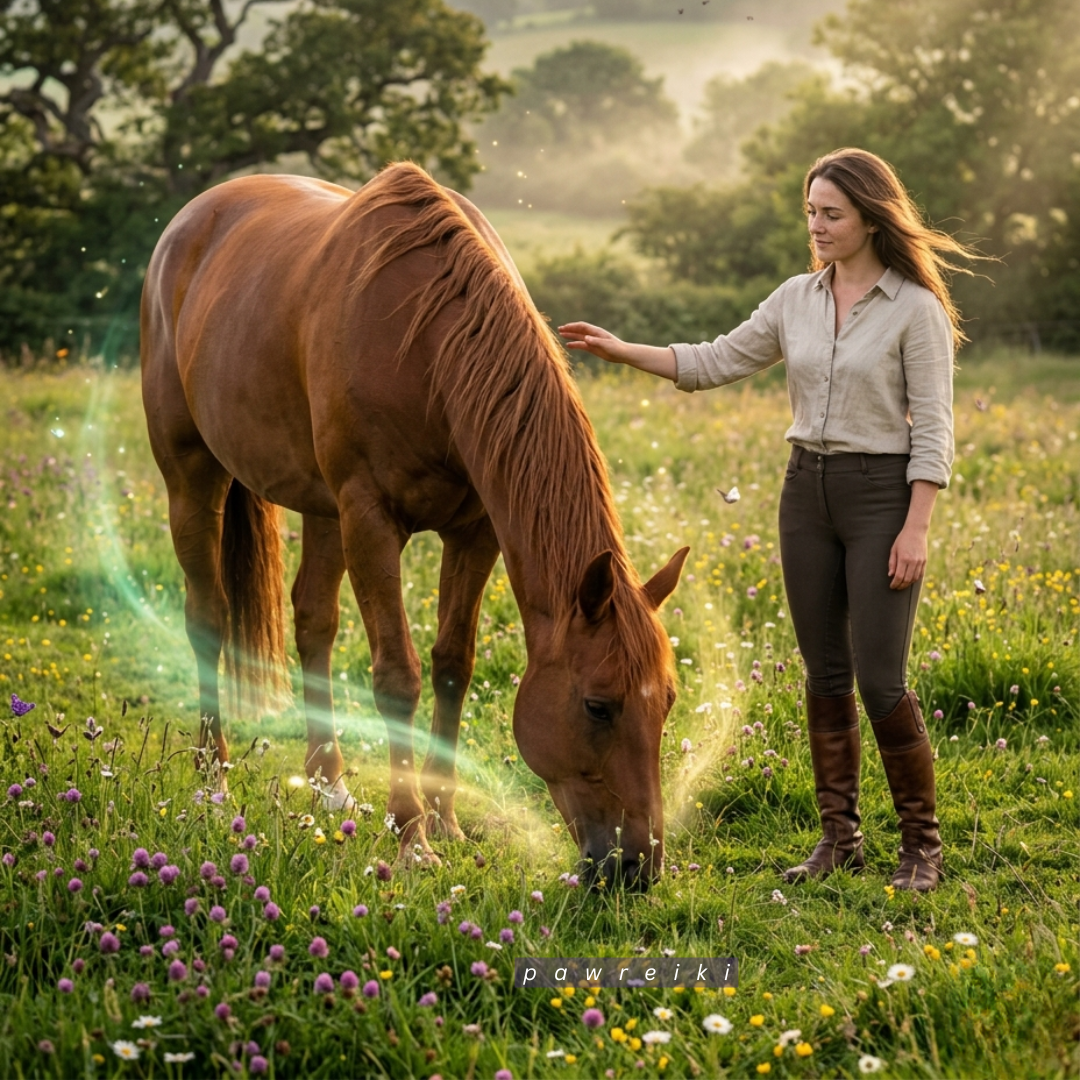
Understanding Horse Chakras
Horse chakra healing is based on the belief that energy flows through a series of energy centres within the body. In many holistic traditions, these chakras are thought to influence a horse’s physical, emotional, mental, and spiritual well-being.
Every horse is unique. Some horses may show several of the signs described in this guide, while others may not display any noticeable changes.
Chakra healing should always be viewed as a complementary practice and never as a substitute for professional veterinary care.
Rather than focusing on a single sign, observe your horse’s overall behaviour, personality, and daily routines. Small changes over time often provide a better understanding of your horse’s emotional and physical well-being.
The 8 Main Chakras Of A Horse
This guide focuses on the eight main chakras commonly discussed in Horse Chakra Healing, including the traditional seven chakras and the Brachial Chakra. Each chakra is associated with different aspects of your horse’s physical, emotional, mental, and spiritual well-being.
The following guide explains the purpose of each chakra, common signs of balance or imbalance, and simple ways to support your horse through mindful care and Horse Chakra Healing.
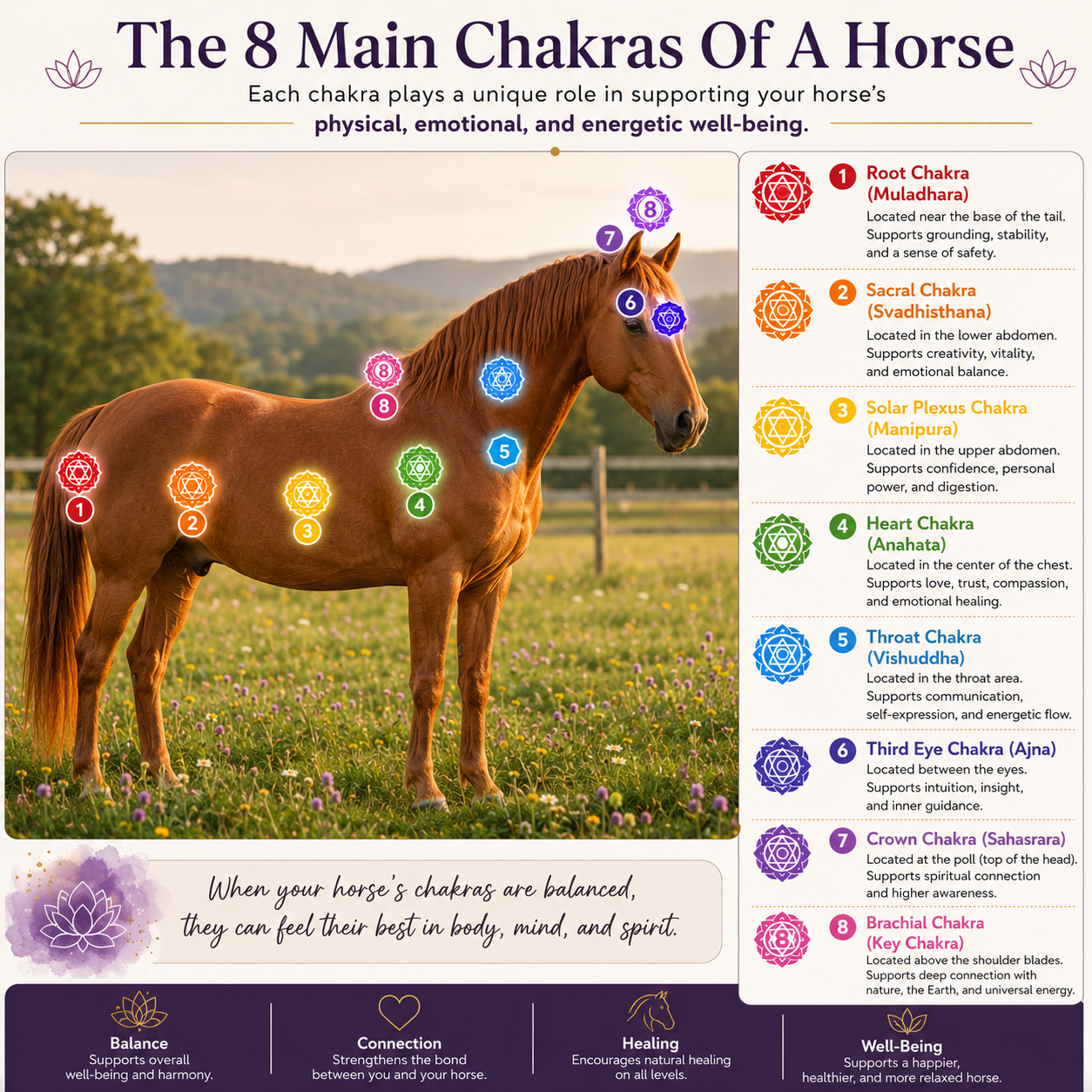
1. Root Chakra (Muladhara)
The Root Chakra is located at the base of your horse’s spine. It is associated with grounding, stability, and a sense of safety. This chakra is believed to influence how secure and confident a horse feels in its surroundings.
When the Root Chakra is balanced, a horse may appear calm, relaxed, and more willing to trust people and other horses. An imbalance may be reflected in nervousness, insecurity, or hesitation when facing unfamiliar situations.
You can support the Root Chakra by providing consistent routines, regular turnout, and opportunities for natural movement. Spending quiet time together and creating a calm environment may also help your horse feel more secure.
Reiki is another gentle way to support your horse’s overall wellness. When combined with good care and patient handling, it may encourage relaxation and help strengthen the bond you share.
2. Sacral Chakra (Svadhisthana)
The Sacral Chakra is located just above the Root Chakra in the lower pelvic area. It is associated with emotions, creativity, relationships, and adaptability.
This chakra is believed to influence how a horse responds to people, other horses, and new experiences. When it is balanced, a horse may appear calm, curious, and emotionally relaxed.
It may also feel more confident when facing unfamiliar situations. An imbalance may be reflected in anxiety, mood changes, withdrawal, or resistance to change.
You can support the Sacral Chakra by encouraging positive interactions and allowing time for play and exploration. A calm, predictable environment may also help your horse feel more secure.
Reiki can be included as part of a holistic wellness routine to encourage relaxation. Combined with patience and positive experiences, it may help your horse feel more confident and emotionally balanced.
3. Solar Plexus Chakra (Manipura)
The Solar Plexus Chakra is located in the abdominal area. It is associated with confidence, self-worth, motivation, and inner strength. This chakra is believed to influence how willing a horse is to learn, explore, and respond to training.
When the Solar Plexus Chakra is balanced, a horse may appear confident, focused, and eager to participate in daily activities. It may also approach new challenges with curiosity and confidence.
An imbalance may be reflected in nervousness, hesitation, or a lack of confidence. Some horses may become reluctant to try new things or appear uncertain during training.
You can support the Solar Plexus Chakra through patient handling, positive reinforcement, and consistent training. Allowing your horse to learn at its own pace can help build confidence and trust.
Reiki can be included as part of a holistic wellness routine to encourage relaxation. Combined with kind, consistent guidance, it may help your horse feel more confident and ready to face new experiences.
4. Heart Chakra (Anahata)
The Heart Chakra is located in the centre of the chest. It is associated with love, compassion, trust, and emotional connection. This chakra is believed to influence the bond between horses, their herd companions, and the people who care for them.
When the Heart Chakra is balanced, a horse may appear calm, trusting, and comfortable around others. It may also be more willing to build positive relationships and accept gentle handling.
An imbalance may be reflected in fear, withdrawal, or difficulty forming trusting connections. Some horses may become hesitant to interact or seem less comfortable around people or other horses.
You can support the Heart Chakra by spending quality time with your horse and building trust through patient, consistent care. Mindful grooming, quiet companionship, and gentle interactions can also help strengthen your bond.
Reiki can be included as part of a holistic wellness routine to encourage relaxation. When combined with kindness and understanding, it may help deepen the connection you share with your horse.
5. Throat Chakra (Vishuddha)
The Throat Chakra is located in the throat and neck area. It is associated with communication, self-expression, and understanding. Although horses do not communicate with words, this chakra is believed to influence how they express their needs, emotions, and intentions through body language and behaviour.
When the Throat Chakra is balanced, a horse may appear calm, responsive, and comfortable communicating with people and other horses. It may also be more willing to engage, respond to gentle cues, and express itself with confidence.
An imbalance may be reflected in frustration, withdrawal, or difficulty responding to familiar cues. Some horses may appear unsettled or find it harder to communicate their needs clearly.
You can support the Throat Chakra by paying close attention to your horse’s body language and responding with patience and consistency. Calm interactions, clear cues, and quiet encouragement can help strengthen communication and build trust.
Reiki can be included as part of a holistic wellness routine to encourage relaxation. When combined with kind, respectful communication, it may help create a stronger understanding between you and your horse.
6. Third Eye Chakra (Ajna)
The Third Eye Chakra is located between the eyes. It is associated with intuition, awareness, perception, and insight. This chakra is believed to influence how a horse responds to its surroundings and connects with the people and animals around it.
When the Third Eye Chakra is balanced, a horse may appear calm, attentive, and aware of its environment. It may also seem more focused during training and more responsive to gentle guidance.
An imbalance may be reflected in confusion, distraction, or difficulty concentrating. Some horses may appear unsettled or become more reactive to unfamiliar people, places, or situations.
You can support the Third Eye Chakra by spending quiet time with your horse and allowing opportunities to explore its surroundings. Calm handling, mindful observation, and a peaceful environment may also encourage confidence and awareness.
Reiki can be included as part of a holistic wellness routine to encourage relaxation. When combined with patience and attentive care, it may help strengthen the intuitive connection you share with your horse.
7. Crown Chakra (Sahasrara)
The Crown Chakra is located at the top of the head. It is associated with spiritual awareness, inner peace, wisdom, and overall energetic harmony. This chakra is believed to connect the body’s energy centres and support a sense of balance and well-being.
When the Crown Chakra is balanced, a horse may appear peaceful, relaxed, and content in its surroundings. It may also seem more settled during quiet moments and more receptive to gentle interactions.
An imbalance may be reflected in restlessness, tension, or difficulty settling down. Some horses may appear distracted or find it harder to relax in unfamiliar environments.
You can support the Crown Chakra by providing a calm, peaceful environment and spending quiet time with your horse. Gentle meditation, mindful companionship, and unhurried moments together may also encourage relaxation and emotional well-being.
Reiki can be included as part of a holistic wellness routine to encourage relaxation. When combined with a caring, peaceful approach, it may help nurture a deeper sense of trust, harmony, and connection.

8. Brachial Chakra
The Brachial Chakra is an additional energy centre recognized in many animal Reiki and holistic healing traditions. It is located near the shoulder area and is believed to strengthen the energetic connection between animals and the people who care for them.
When the Brachial Chakra is balanced, a horse may appear trusting, relaxed, and comfortable interacting with people. It may also be more receptive to gentle handling and enjoy spending time with its caregiver.
An imbalance may be reflected in fear, withdrawal, or reluctance to accept touch or close interaction. Some horses may appear uneasy around people or find it more difficult to build trusting relationships.
You can support the Brachial Chakra by spending quality time with your horse and building trust through patient, consistent care. Gentle grooming, calm interactions, and positive experiences can also help strengthen your bond.
Reiki can be included as part of a holistic wellness routine to encourage relaxation. When combined with kindness, respect, and understanding, it may help deepen the connection you share with your horse.
Beyond The Traditional Horse Chakras
Most holistic horse care systems focus on the seven traditional chakras together with the Brachial Chakra, which is widely recognized in animal energy healing.
Some practitioners also describe additional energy centres, such as the Animal Soul Connection Chakra, Wisdom Chakra, Harmony Chakra, Nature Connection Chakra, Tejas Chakra, and Shanti Chakra.
These chakras are not universally recognized and may vary between healing traditions. Many of the qualities associated with these additional energy centres—including trust, harmony, vitality, intuition, and inner peace—are already reflected in the traditional chakras discussed above.
Rather than treating them as separate chakras, many practitioners choose to incorporate these concepts into their overall Reiki and holistic care routines.
Common Mistakes Beginners Make In Horse Chakra Healing
Learning Horse Chakra Healing is a journey, and it’s natural to make a few mistakes along the way. The good news is that most beginners improve with practice, patience, and a better understanding of their horse’s individual needs.
Avoiding these common mistakes can help you create more relaxed, enjoyable, and meaningful healing sessions for both you and your horse.
1. Expecting Immediate Results
Many beginners hope to see noticeable changes after a single chakra healing session. While some horses may respond quickly, energy work often takes time. Small changes in behaviour or relaxation can be just as meaningful as dramatic improvements.
Be patient and focus on consistency rather than immediate results. Keeping a simple journal of your horse’s mood, behaviour, and energy levels can help you notice gradual changes over time.
2. Rushing Through A Chakra Session
It can be tempting to move quickly through each chakra, especially when you’re still learning. However, horses often respond best when sessions are calm and unhurried.
Spend a few minutes with each chakra and pay attention to your horse’s body language. Giving your horse time to relax and process the session can create a more positive experience for both of you.
3. Overlooking Physical Health Concerns
Not every change in behaviour is related to an energy imbalance. Pain, illness, or discomfort can also affect your horse’s mood and reactions.
Horse Chakra Healing should always be viewed as a complementary practice rather than a replacement for veterinary care. If your horse develops persistent symptoms or sudden behavioural changes, consult your veterinarian before continuing with energy work.
4. Trying To Do Everything Perfectly
Many beginners worry about perfect hand placement or remembering every detail about the chakras. This can create unnecessary pressure and make it harder to relax.
Your horse is more likely to respond to your calm presence than perfect technique. Focus on creating a peaceful environment and let your confidence grow with experience.
5. Bringing Stress Into The Session
Horses are highly sensitive and often notice the emotions of the people around them. If you begin a session feeling rushed, anxious, or distracted, your horse may respond to that tension.
Take a few slow breaths before you begin. Approaching the session with a calm mindset can help both you and your horse feel more relaxed.
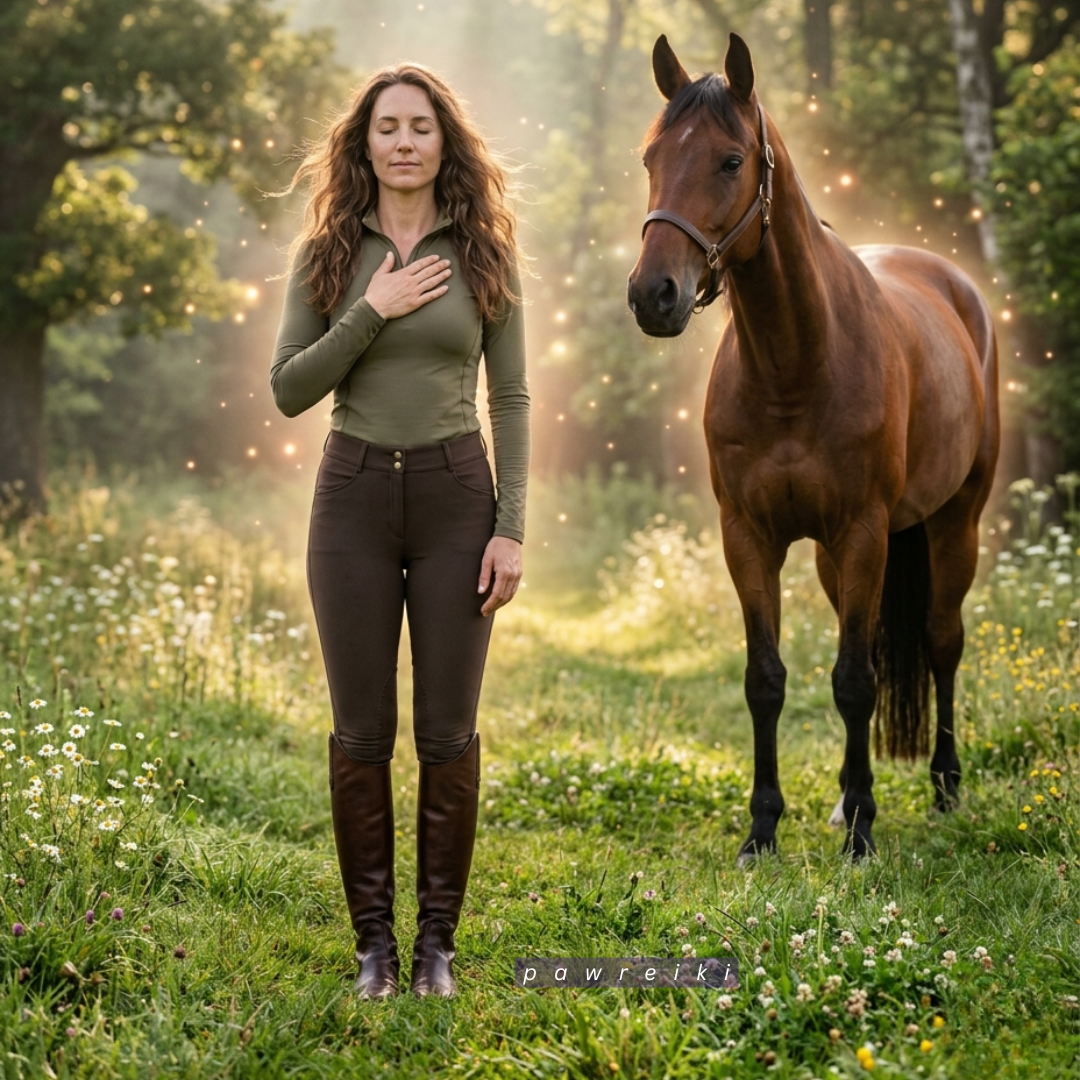
6. Practicing In A Distracting Environment
A noisy or unfamiliar environment can make it difficult for your horse to settle during a chakra healing session. Frequent interruptions may also affect your own ability to stay focused.
Whenever possible, choose a quiet and familiar location. Even a short session in a peaceful setting can be more beneficial than a longer session filled with distractions.
7. Practicing Inconsistently
Many people try Horse Chakra Healing once or twice before deciding whether it works. Like many holistic practices, consistency is often more important than frequency.
Setting aside time for regular sessions or mindful grooming can help you build trust and observe gradual changes. Over time, these quiet moments may become an enjoyable part of your horse’s overall wellness routine.
8. Ignoring Your Horse’s Body Language
Your horse is constantly communicating through its posture, facial expressions, breathing, and movement. Ignoring these subtle signals can make a chakra healing session less comfortable and less effective.
Watch for signs that your horse is relaxed, curious, or ready to move away. Respecting your horse’s responses helps build trust and creates a more positive healing experience.
9. Comparing Your Horse To Others
Every horse responds differently to energy work. Some may relax during the first session, while others need more time to become comfortable with the process.
Avoid comparing your horse’s progress with stories from other owners. Focus on your horse’s individual personality, needs, and pace. Building trust is more important than achieving quick results.
10. Forgetting To Enjoy The Experience
Horse Chakra Healing is about more than balancing energy centres. It is also an opportunity to slow down and spend meaningful time with your horse.
Approach each session with curiosity instead of expectations. The quiet moments you share can strengthen your relationship and become just as valuable as the healing practice itself.
FAQs
Q1: What Is Horse Chakra Healing?
Horse Chakra Healing is a holistic practice that focuses on balancing a horse’s energy centres, known as chakras. Many horse owners use it to encourage relaxation, emotional well-being, and a stronger bond with their horse alongside regular veterinary care.
Q2: Can I Practice Horse Chakra Healing At Home?
Yes. Many beginners practice Horse Chakra Healing at home using gentle touch, meditation, visualization, or mindful grooming. A quiet, relaxed environment helps create a positive experience for both you and your horse.
Q3: How Often Should I Perform Horse Chakra Healing?
There is no fixed schedule. Some owners practice weekly sessions, while others include chakra healing during regular grooming or quiet bonding time. Consistency is often more important than session length.
Q4: Do I Need Special Tools For Horse Chakra Healing?
No. Horse Chakra Healing can be practiced using intention, gentle touch, and focused awareness. Some owners also use crystals, meditation, or calming music, but these are entirely optional.
Q5: What Are The Signs Of An Imbalanced Chakra In Horses?
Some horse owners associate chakra imbalances with nervousness, restlessness, emotional sensitivity, or changes in behaviour. Because these signs can also have physical causes, it is important to consider your horse’s overall health and seek veterinary advice when needed.
Q6: Can Horse Chakra Healing Replace Veterinary Care?
No. Horse Chakra Healing is a complementary wellness practice and should never replace professional veterinary diagnosis or treatment. It works best alongside appropriate medical care.
Q7: How Long Does A Horse Chakra Healing Session Take?
Most sessions last between 10 and 30 minutes, depending on your horse’s comfort level and attention span. Some horses benefit from shorter, more frequent sessions.
Q8: Can Beginners Learn Horse Chakra Healing?
Absolutely. Horse Chakra Healing is suitable for beginners. Learning about the chakras, observing your horse, and practicing regularly can help you build confidence and strengthen your connection over time.
Q9: Which Chakra Is Most Important In Horse Chakra Healing?
Each chakra supports a different aspect of your horse’s well-being. Rather than focusing on a single chakra, many practitioners aim to encourage balance throughout the entire energy system.
Q10: Does My Horse Need To Stand Still During A Chakra Healing Session?
No. Horses should never be forced to remain still during a session. Some horses prefer to relax quietly, while others may move around, change position, or walk away. Allowing your horse to respond naturally helps create a more comfortable and positive experience.
Helpful External Resources
If you’d like to learn more about horse health, behaviour, Reiki, and holistic animal care, these trusted organizations offer reliable information and educational resources:
- American Veterinary Medical Association (AVMA) – General pet health, behaviour guidance, and care resources.
- ASPCA Pet Care Library – Behaviour tips, anxiety support, and animal-care information.
- VCA Animal Hospitals: Know Your Pet – Comprehensive articles written by veterinarians.
- International Center for Reiki Training (ICRT): Animal Reiki – Introductory information and classes for working with animals.
- Shelter Animal Reiki Association (SARA) – Ethical, animal-led Reiki practices and training.
Conclusion
Horse Chakra Healing offers a gentle, holistic approach to supporting your horse’s overall well-being while strengthening the bond you share.
By understanding the main chakras and observing your horse with patience and care, you can create calming experiences that promote trust, relaxation, and emotional balance.
Remember that every horse is unique and may respond differently to energy work. When combined with proper nutrition, regular exercise, and professional veterinary care, Horse Chakra Healing can become a valuable part of your horse’s overall wellness routine.
Whether you’re just beginning your journey or building on existing experience, the most important step is spending quality time with your horse. Those quiet moments of connection can be just as meaningful as the chakra healing practice itself.
I trust you enjoyed this article on the Horse Chakra Healing: A Complete Guide. Please stay tuned for more Reiki insights, pet wellness tips, and holistic lifestyle ideas.
Take care!
— JeannetteZ 🐾💜
💬 Your Opinion Is Important To Me
Do you have thoughts, ideas, or questions? I’d love to hear from you. Please leave your comments below or email me directly at Jeannette@pawreiki.com.
📚 More PawReiki Reads — Discover Energy Healing & Holistic Pet Wellness
💜 My #1 Recommendation for Online Success
Reiki has brought so much peace and purpose to my life, and sharing it online has been a true blessing. If you’ve ever dreamed of creating a gentle income stream around your love for animals and holistic healing, this platform gives you all the tools, training, and community support you need — no tech experience required.
🌟 See How Reiki Lovers Build Online Income — Try WA FreeNo credit card required · Free starter training included
Disclosure
This post may contain affiliate links. As an Amazon Associate and participant in other affiliate programs, I earn from qualifying purchases at no extra cost to you. Please read my full affiliate disclosure.