Root Chakra In Dogs: Supporting Security And Stability
The Root Chakra In Dogs is believed to influence feelings of safety, stability, and confidence. Within holistic traditions, it is associated with a dog’s sense of security and its ability to feel calm, grounded, and emotionally balanced.
While these practices should never replace veterinary care, many pet owners choose to include chakra work alongside traditional care as part of a gentle wellness routine.
This guide explains the purpose of the Root Chakra, common signs of imbalance, and practical ways to support healthy energy flow in your dog’s daily life.
It also introduces simple techniques that may encourage relaxation, build confidence, and help strengthen the bond you share with your dog.
What Is The Root Chakra In Dogs?
In holistic traditions, the Root Chakra is often described as the first of the seven major energy centres. It is also known as the Muladhara Chakra.
This energy centre is associated with safety, stability, trust, and confidence. It is often viewed as the foundation of a dog’s overall energy system.
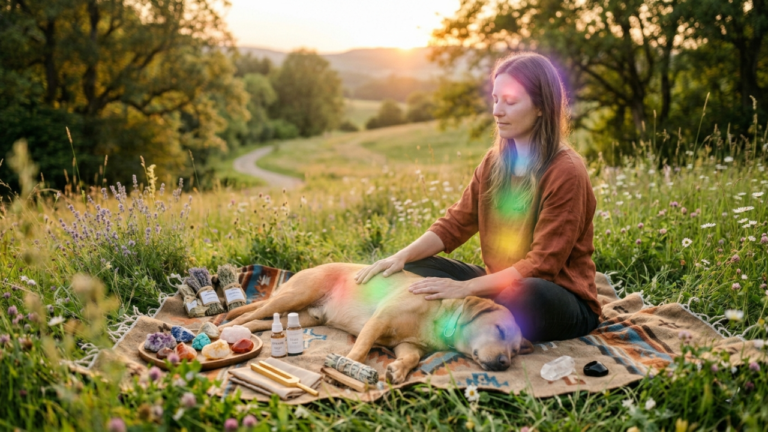
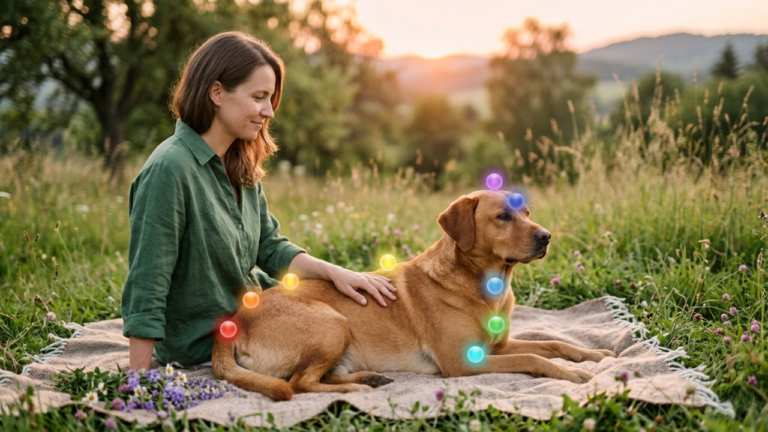
The Root Chakra is commonly linked to the colour red and the earth element. In dogs, it is traditionally believed to be located near the base of the spine and tail area.
Supporters of energy healing believe a balanced Root Chakra may help a dog feel calm, secure, and comfortable in familiar surroundings.
Chakra concepts come from spiritual traditions and are not supported by established scientific evidence. However, some pet owners include chakra-focused activities in a broader holistic wellness routine.
Reiki, outdoor time, a predictable schedule, and a peaceful home environment may help promote relaxation and emotional comfort. Many pet owners include these gentle practices as part of their dog’s overall wellness routine.
These approaches work best alongside regular veterinary care, nutritious food, daily exercise, and plenty of love. Together, they can support your dog’s physical, emotional, and overall well-being.
Ways To Support The Root Chakra In Dogs
There are many ways to support your dog’s Root Chakra as part of a holistic wellness routine. Gentle, everyday practices can help create a calm environment where your dog feels safe, secure, and confident.
Every dog responds differently, and there is no single approach that works for everyone. Paying attention to your dog’s behaviour and comfort level can help you choose the techniques that best suit their individual needs.
The following ideas are easy to incorporate into daily life and can complement regular veterinary care, a healthy lifestyle, and the loving bond you already share with your dog.
1. Spending Time Outdoors
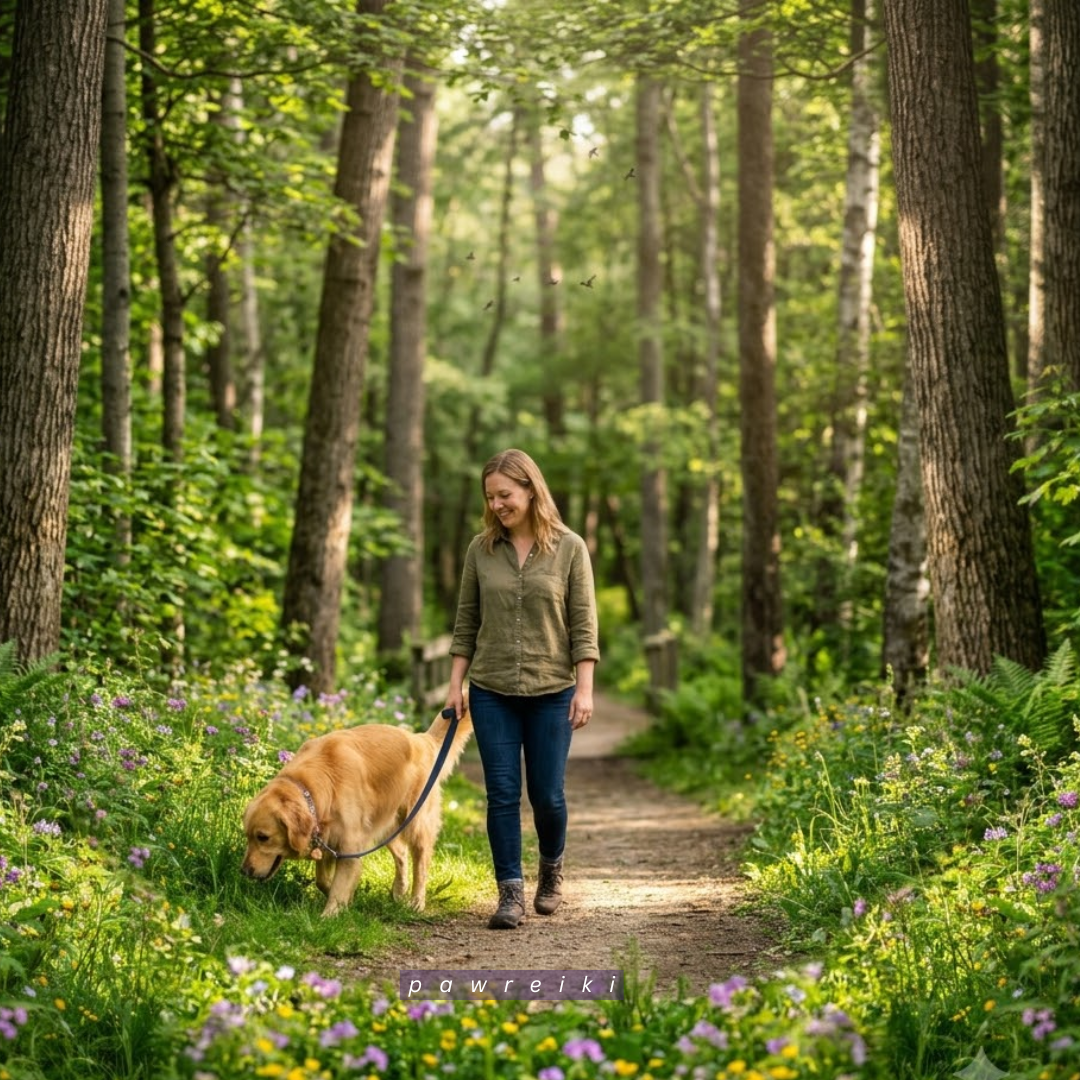
Spending time outdoors is one of the most effective ways to support the Root Chakra in dogs. Nature provides opportunities for your dog to relax, explore, and engage with their surroundings.
A walk through a quiet park, a stroll around the neighbourhood, or even a few peaceful minutes in the backyard allows your dog to experience different sights, sounds, and scents.
These everyday experiences can help create a greater sense of comfort and familiarity. These outings do more than provide exercise.
They also establish a reassuring routine that helps many dogs feel more connected to their surroundings. Sharing this time together strengthens your bond and turns an ordinary walk into meaningful quality time.
2. Practising Reiki At Home
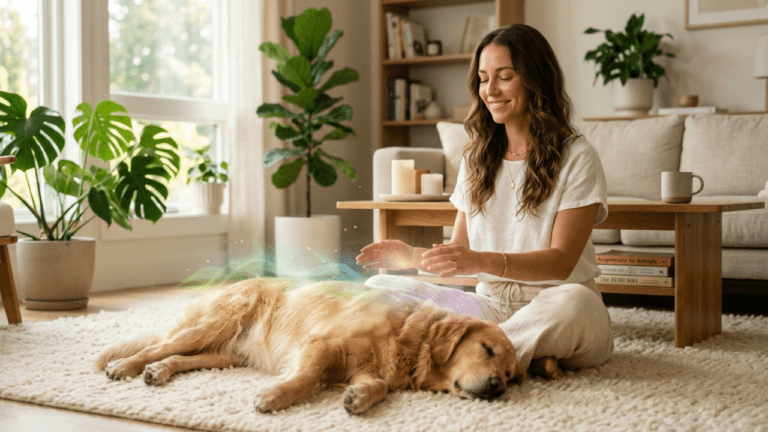
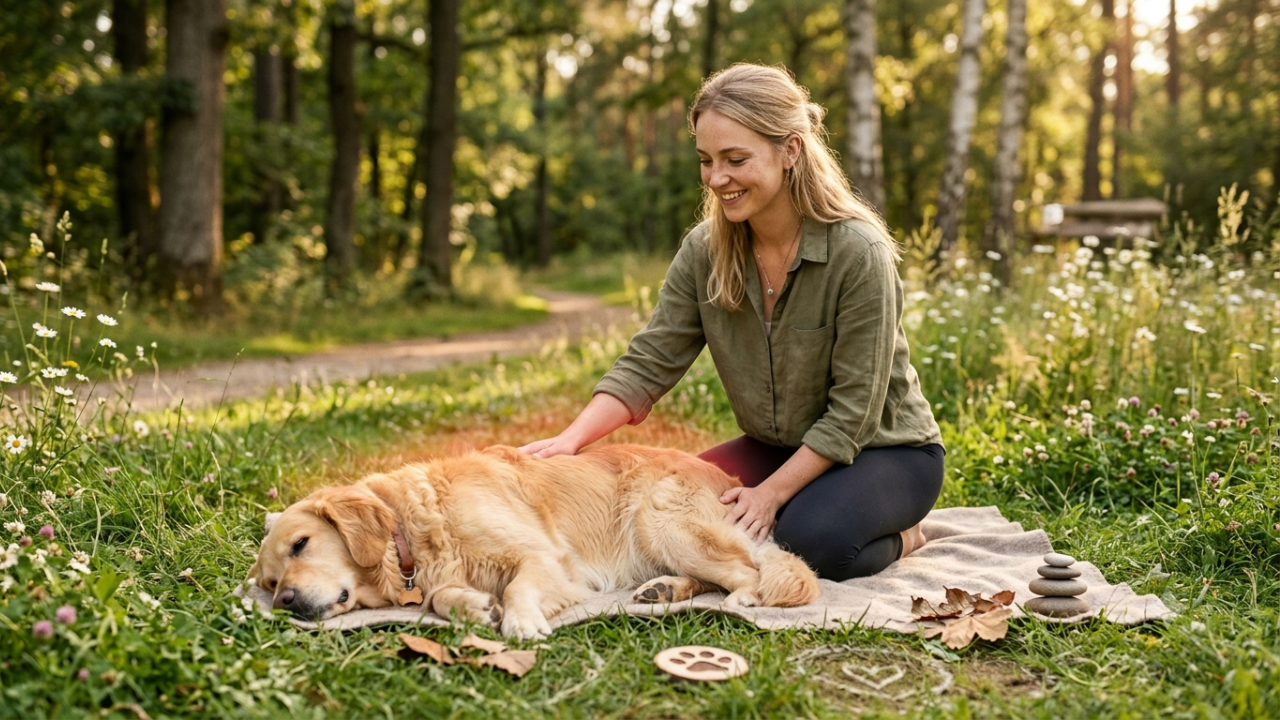
Practising Reiki at home can become a calming part of your daily routine. Choose a quiet time when your dog feels relaxed, and let them decide whether they want to sit close to you or simply rest nearby.
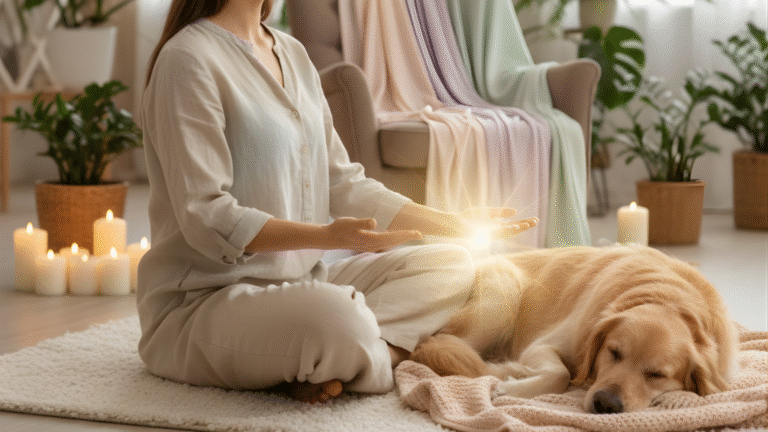
If your dog is comfortable with touch, gently place your hands on an area where they naturally enjoy being stroked, such as the shoulders or back. If they prefer not to be touched, you can still practice Reiki by keeping your hands a short distance away.
The goal isn’t to perform Reiki perfectly, but to create a peaceful, relaxing experience for both of you. Sharing a few quiet minutes each day may strengthen your bond while encouraging comfort and security.
3. Maintaining A Consistent Routine
Maintaining a consistent routine helps many dogs feel more relaxed and secure. Regular meal times, familiar walking schedules, play sessions, and a calming bedtime routine provide structure that many dogs find reassuring.
A predictable daily routine can also make changes and new experiences feel less stressful. When familiar activities happen at similar times each day, dogs often adapt more easily to their surroundings.
Simple habits can make a meaningful difference. Whether it’s a morning walk followed by breakfast or a quiet cuddle before bed, these routines help create a stable environment where your dog can feel comfortable and at ease.
4. Encouraging Regular Exercise
Regular exercise benefits both your dog’s body and mind. Daily walks, gentle games, or exploring a new trail together provide opportunities to stay active while satisfying your dog’s natural curiosity.
Every dog has different exercise needs, so choose activities that suit their age, breed, health, and energy level. The goal isn’t to exercise for long periods but to make physical activity an enjoyable part of your daily routine.
Sharing these moments together helps keep your dog active and engaged while strengthening the bond you share.
5. Creating A Safe And Comfortable Home
A calm, comfortable home environment can help your dog feel secure and relaxed. Providing a cozy bed, fresh water, favourite toys, and a quiet place to rest supports both physical comfort and emotional well-being.
Reducing unnecessary noise and other sources of stress may also help your dog settle more easily. Many dogs appreciate having a quiet space where they can rest undisturbed, especially after walks, playtime, or other activities.
These small adjustments can make your home feel more peaceful and welcoming. Combined with love, patience, and regular care, they help create an environment where your dog can relax and feel at home.
6. Feeding A Balanced Diet
A balanced diet plays an important role in your dog’s overall health. Choosing high-quality food that suits your dog’s age, size, activity level, and individual needs helps support healthy muscles, bones, and energy levels.
Fresh, clean water should always be available throughout the day. While nutrition doesn’t directly influence the Root Chakra, it provides a strong foundation for your dog’s overall health and complements other holistic practices.
When dogs feel physically well, they’re often more comfortable enjoying walks, playtime, rest, and daily activities. Looking after their nutritional needs is an important part of supporting both their physical health and emotional well-being.
7. Strengthening Your Bond Through Positive Interaction
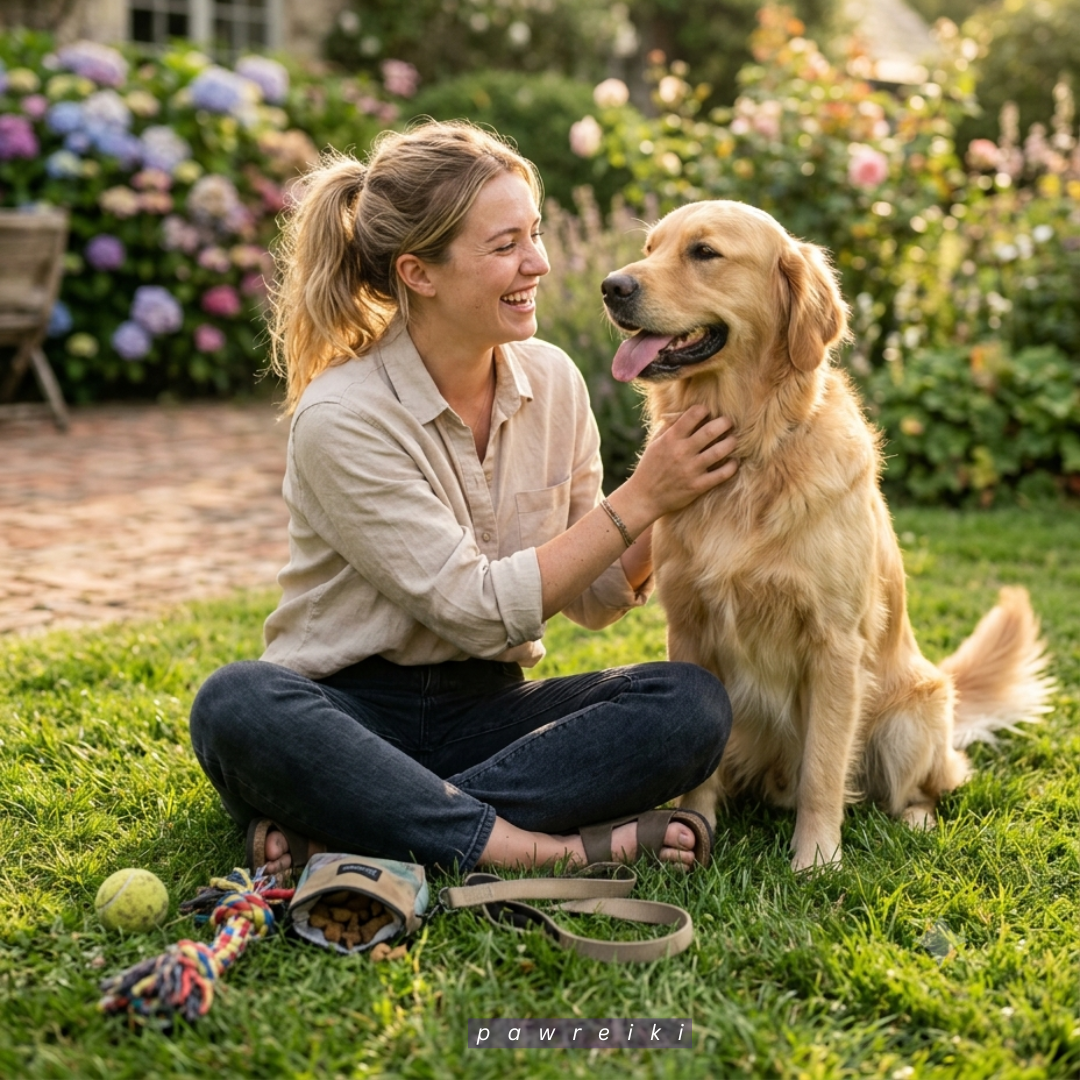
Spending quality time with your dog is one of the best ways to build trust and strengthen your relationship. Gentle petting, interactive play, short training sessions, or simply relaxing together all provide opportunities for positive interaction.
Dogs benefit from regular attention and enjoy sharing activities with the people they know and trust. These everyday moments help reinforce your bond while encouraging your dog to feel comfortable and secure.
Whether you’re playing a favourite game or sitting quietly together after a walk, these shared experiences become part of your daily routine. Combined with patience, consistency, and affection, they help create a positive environment where your dog can thrive.
8. Supporting Wellness With Regular Veterinary Care
Regular veterinary care plays an essential role in your dog’s overall health. Holistic practices such as Reiki should complement professional veterinary care rather than replace it.
Routine checkups, vaccinations, dental care, and parasite prevention help keep your dog healthy throughout every stage of life. Your veterinarian can also identify potential health concerns early and answer any questions you may have about your dog’s care.
If you notice changes in your dog’s behaviour, appetite, energy level, or mobility, it’s important to seek veterinary advice promptly.
Combining professional care with healthy daily habits and holistic practices provides a well-rounded approach to supporting your dog’s overall well-being.
Step-by-Step Guide To The Root Chakra Reiki For Dogs
Once your dog feels calm and comfortable, you can begin a Root Chakra Reiki session. There is no need to rush or follow a rigid process.
Reiki is most effective when both you and your dog are relaxed, allowing the session to unfold naturally. Every dog responds to Reiki in their own way.
Some may settle beside you immediately, while others may prefer to lie a short distance away or simply observe before joining in. Respecting your dog’s choices helps create a positive experience built on trust and comfort.
The following step-by-step guide will help you prepare for a Root Chakra Reiki session while allowing your dog to participate at their own pace.
Remember that the goal isn’t to perform Reiki perfectly but to share a calm, peaceful experience that supports your dog’s overall well-being.
Step 1: Creating A Peaceful Space
Before beginning a Reiki session, take a few minutes to create a calm, comfortable environment for your dog. You don’t need a dedicated meditation room or expensive equipment.
A quiet area where your dog already enjoys resting is usually the best place. Familiar surroundings help many dogs relax more easily.
To help your dog settle, try to:
- Choose a quiet time when your home is calm.
- Turn off the TV or reduce background noise.
- Let your dog rest in their favourite spot.
- Play soft instrumental music or gentle nature sounds if your dog enjoys them.
A peaceful environment helps reduce distractions. It also encourages both you and your dog to slow down before the Reiki session begins.
Example
After an evening walk, your Labrador settles onto their favourite blanket in the living room. Instead of moving them, you dim the lights and sit quietly nearby.
You wait until your dog appears relaxed before beginning the Reiki session. Because they’re already comfortable, they can simply settle in and enjoy the experience.
Step 2: Helping Your Dog Feel Comfortable Before You Begin
Before starting Reiki, give your dog a few minutes to settle naturally. Sit nearby and speak softly. If your dog enjoys physical touch, you can gently pet them while they relax.
There’s no need to encourage a particular position. Some dogs prefer lying beside you, while others feel more comfortable a short distance away.
Watch your dog’s body language for signs that they’re relaxed, such as:
- Slow, steady breathing.
- Soft, relaxed eyes.
- A calm body posture.
- A willingness to remain close to you.
Taking a few extra minutes before you begin helps create a peaceful atmosphere. It also allows your dog to settle at their own pace before the Reiki session starts.
Example
Your Beagle spends a few minutes circling before lying down on their bed. Rather than rushing the session, you simply wait until they settle and appear relaxed before you begin.
Step 3: Setting A Positive Intention
Before beginning the Reiki session, take a quiet moment to set a positive intention. You don’t need special words or a formal ritual.
Many pet owners simply focus on their dog’s comfort, peace, or overall well-being. This brief pause helps you slow down and be fully present with your dog.
Reiki is a complementary wellness practice, so there’s no need to expect immediate results. Approaching the session with patience and kindness helps create a calm, relaxed experience for both of you.
Example
Before placing your hands near your dog, you quietly think, “May my dog feel safe, calm, and comfortable during this Reiki session.”
Step 4: Beginning The Reiki Session
If you’ve learned basic Reiki for personal use, gently place your hands on or slightly above your dog’s shoulders, back, or another area where they’re comfortable. Keep your breathing slow and remain relaxed throughout the session.
As you begin, remember to:
- Let your dog choose whether to remain close to you.
- Keep your touch light if your dog enjoys being touched.
- Stay calm and focus on the present moment.
- Allow the session to end naturally if your dog moves away.
Most home Reiki sessions last between five and fifteen minutes. Rather than concentrating on technique, simply enjoy the quiet time you and your dog are sharing.
Example
Your dog lies quietly beside you while you rest your hands lightly over their shoulders. After several peaceful minutes, they stretch, stand up, and wander away, letting you know the Reiki session has come to a natural end.

Step 5: Letting Your Dog Guide The Session
Every dog responds to Reiki in their own way. Some dogs remain beside you for the entire session, while others may stretch, change positions, or wander away after a few minutes.
Allow your dog to decide how long they want to participate. Following their pace helps build trust and keeps Reiki a comfortable part of your routine.
Watch your dog’s body language throughout the session. Respecting their choices helps create a positive, pressure-free experience for both of you.
Example
Your rescue dog enjoys sitting quietly with you for about ten minutes before they walk over to the window. You simply smile, thank them for sharing the experience, and gently bring the Reiki session to a close.
Step 6: Ending The Session With Quiet Bonding Time
After the Reiki session, spend a few quiet moments with your dog. There’s no need to rush back to your daily routine. You might offer fresh water, enjoy gentle cuddles if your dog likes them, or take a slow walk around the yard.
This peaceful ending helps both of you transition naturally from the session. It also strengthens the bond you share. Many pet owners include Reiki as part of a holistic wellness routine.
Healthy nutrition, regular exercise, playtime, and routine veterinary care all support your dog’s overall health. Over time, these quiet moments can become a familiar part of your routine. They also give you another opportunity to enjoy spending time together.
Example
After the Reiki session, your dog stretches and has a drink of water. You spend a few quiet minutes together before continuing with the rest of your day.
Step 7: Spend Time Grounding Outdoors
If the weather is suitable and your dog enjoys being outside, consider spending a little time in nature after the Reiki session or later in the day.
A relaxed walk through a park, along a woodland trail, or simply around your garden gives your dog an opportunity to explore at their own pace.
There’s no need to rush or cover a long distance. Allow your dog to sniff, wander, and enjoy their surroundings while you share the experience together.
Example
After the Reiki session, you take your dog for a quiet walk in a nearby park or in the woods. They spend time sniffing the grass and exploring the area before calmly heading home with you.
Step 8: Keep A Consistent Daily Routine
A consistent daily routine can help your dog feel comfortable and secure. Feeding meals at similar times, enjoying regular walks, and following a familiar bedtime routine all create a sense of stability.
Daily routines can be especially helpful during periods of change, such as moving to a new home or welcoming a new family member. Familiar activities provide reassurance while helping your dog adjust to new situations.
Example
Your dog enjoys breakfast at about the same time each morning, followed by a walk later in the day. In the evening, you spend a few quiet minutes together before bedtime, creating a familiar routine your dog comes to expect.
Step 9: Create A Cozy Resting Area
A comfortable place to rest helps your dog relax throughout the day. A supportive bed, a favourite blanket, and a quiet area away from household activity can become a space where your dog feels comfortable and undisturbed.
Some dogs also enjoy having a favourite toy nearby. Others may prefer a familiar blanket or another item that helps them settle. Providing a quiet place to rest encourages relaxation. It also gives your dog somewhere to unwind whenever they need a break.
Example
You place a comfortable bed in a quiet corner of your home with your dog’s favourite blanket nearby. Throughout the day, your dog returns to this familiar spot whenever they want to rest.
Step 10: Reflect On Your Dog’s Responses
Every dog responds to Reiki in their own way. After each session, take a few moments to observe your dog’s behaviour before returning to your usual routine.
You may notice changes such as:
- A relaxed body posture.
- A longer nap than usual.
- A desire to stay close to you.
- Calm, quiet behaviour after the session.
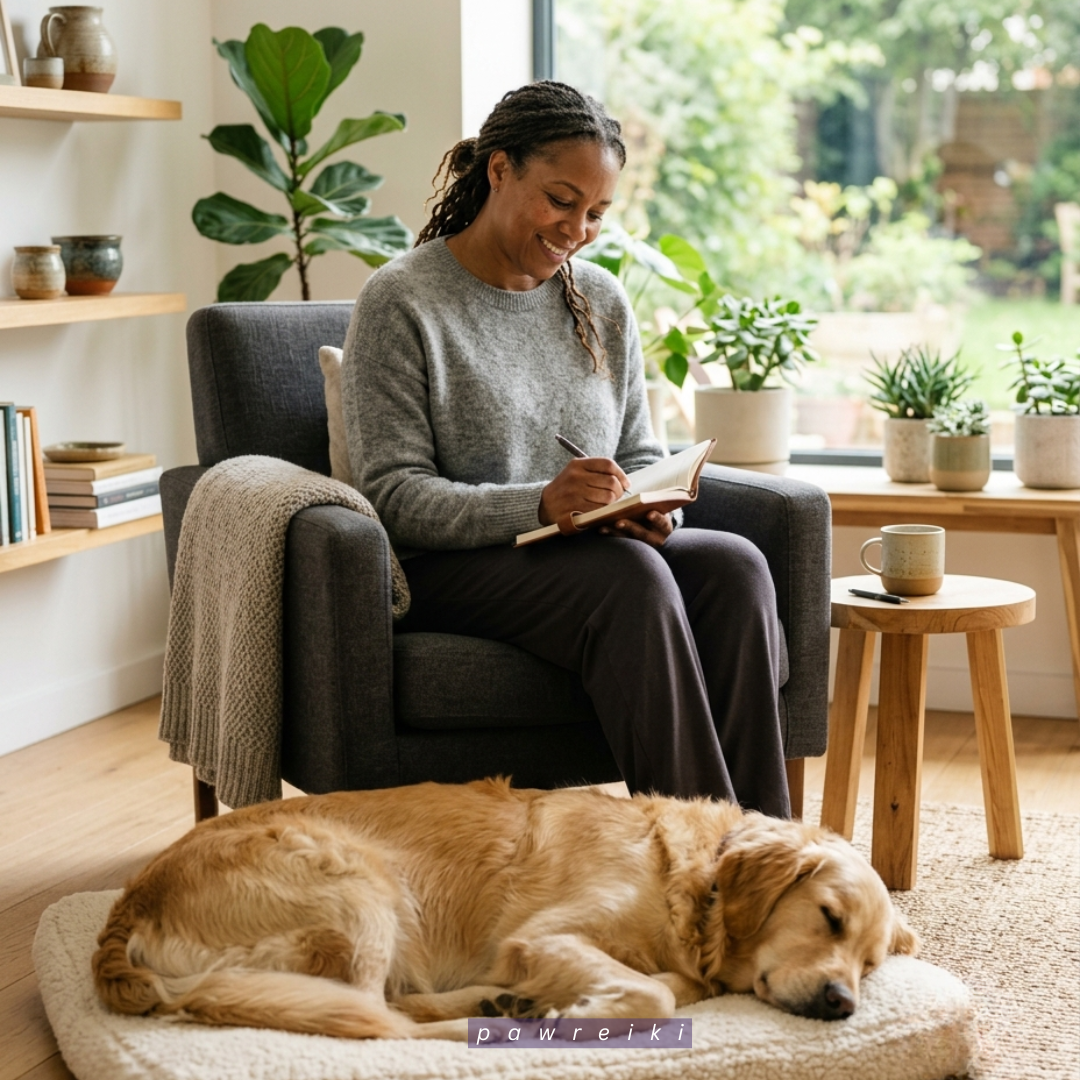
Keeping a simple journal can help you notice patterns over time. Rather than looking for dramatic changes, appreciate the small moments that make each Reiki session unique.
Example
After each Reiki session, you write a few notes about your dog’s behaviour and any observations from the day. Over time, the journal becomes a helpful record of your shared Reiki experiences.
FAQs
Q1: Where Is The Root Chakra Located In Dogs?
It is commonly described as being near the base of the spine or around the tail. In traditional chakra practices, this area is associated with stability, security, and a dog’s connection to the physical world.
Q2: What Are The Signs Of An Imbalanced Root Chakra In Dogs?
Some holistic practitioners believe an imbalance may be linked to nervousness, fearfulness, restlessness, clinginess, or changes in confidence. These behaviours can also have medical or behavioural causes, so it’s important to consult a veterinarian if they persist.
Q3: Can Reiki Help Balance The Root Chakra In Dogs?
Many pet owners use Reiki as a complementary wellness practice to encourage relaxation and strengthen their bond with their dogs. While some report positive experiences, scientific evidence supporting Reiki for chakra balancing in dogs remains limited.
Q4: Which Crystals Are Commonly Associated With The Root Chakra In Dogs?
Crystals such as red jasper, hematite, black tourmaline, smoky quartz, and garnet are commonly associated with the Root Chakra. If you choose to use crystals, always keep them out of your dog’s reach and never allow them to be used as toys.
Q5: How Often Can I Practice Reiki With My Dog At Home?
Many owners choose short Reiki sessions lasting 5 to 15 minutes once or several times a week, depending on their dog’s comfort and interest. Always let your dog’s body language guide the length of each session.
Q6: What Are The Best Ways To Support A Dog’s Root Chakra Naturally?
Simple daily habits often provide the greatest support. Regular exercise, a consistent routine, a nutritious diet, a comfortable resting area, and gentle Reiki sessions can all help your dog feel secure and relaxed.
Q7: Do All Dogs Respond To Root Chakra Reiki In The Same Way?
No. Every dog responds differently. Some may relax and remain close, while others may prefer to move around or end the session early. Let your dog’s body language guide the experience.
Helpful External Resources
If you’d like to explore pet wellness, behaviour support, or gentle healing practices further, here are trusted organizations and educational resources you may find helpful:
- American Veterinary Medical Association (AVMA) – General pet health, behaviour guidance, and care resources.
- ASPCA Pet Care Library – Behaviour tips, anxiety support, and animal-care information.
- VCA Animal Hospitals: Know Your Pet – Comprehensive articles written by veterinarians.
- International Center for Reiki Training (ICRT): Animal Reiki – Introductory information and classes for working with animals.
- Shelter Animal Reiki Association (SARA) – Ethical, animal-led Reiki practices and training.
Conclusion
Learning about the Root Chakra in dogs can help you discover new ways to support your dog’s comfort and emotional well-being. Simple practices can become part of your everyday routine.
Reiki, calming routines, time outdoors, and quiet bonding moments may all help create a peaceful environment for both you and your dog.
Remember that holistic practices are intended to complement, not replace, regular veterinary care. They work best alongside a healthy diet, daily exercise, and routine checkups.
With patience and care, you can create a calm, supportive environment where your dog feels safe, comfortable, and loved every day.
I trust you enjoyed this article on the Root Chakra in Dogs: Supporting Security and Stability. Please stay tuned for more Reiki insights, pet wellness tips, and holistic lifestyle ideas.
Take care!
— JeannetteZ 🐾💜
💬 Your Opinion Is Important To Me
Do you have thoughts, ideas, or questions? I’d love to hear from you. Please leave your comments below or email me directly at Jeannette@pawreiki.com.
📚 More PawReiki Reads — Discover Energy Healing & Holistic Pet Wellness
💜 My #1 Recommendation for Online Success
Reiki has brought so much peace and purpose to my life, and sharing it online has been a true blessing. If you’ve ever dreamed of creating a gentle income stream around your love for animals and holistic healing, this platform gives you all the tools, training, and community support you need — no tech experience required.
🌟 See How Reiki Lovers Build Online Income — Try WA FreeNo credit card required · Free starter training included
Disclosure
This post may contain affiliate links. As an Amazon Associate and participant in other affiliate programs, I earn from qualifying purchases at no extra cost to you. Please read my full affiliate disclosure.