
Using Reiki To Reduce Stress In Rescue Animals
Using Reiki to reduce stress in rescue animals can help these vulnerable pets feel calmer, safer, and more grounded as they adjust to a new environment.
Many rescue animals carry emotional baggage from past uncertainty, trauma, or lack of stability, which can make the transition into a new home feel overwhelming.
Reiki creates a quiet, comforting space where stressed animals can unwind and begin to release the tension they’ve been holding.
Over time, I’ve seen how this gentle practice softens fear, reduces anxious behaviour, and builds trust at a pace the animal chooses.
It’s not meant to replace veterinary guidance or behavioural training; instead, it works alongside them to support emotional healing.
If you’re hoping to ease your rescue pet’s stress and strengthen your bond, using Reiki to reduce stress in rescue animals offers a compassionate and effective way to start.
This guide explains how Reiki fits into a rescue animal’s healing journey, what to expect during sessions, and simple steps you can take to help these sensitive souls feel more at ease.
Understanding Reiki And Animal Stress
Reiki is a Japanese energy practice that uses light touch or hands-off techniques to promote relaxation and balance. It works by creating a calming environment where the nervous system can settle, and the body can unwind from stress.
Rescue animals often carry emotional tension from their past. New environments, unfamiliar people, and sudden changes can overwhelm their nervous system, even when they are finally safe. Stress affects how well they adjust, how deeply they rest, and how easily they build trust.
Reiki offers gentle support during this transition. It creates a calm space where the body and mind can settle. This soft, soothing approach helps rescue animals release some of the fear, uncertainty, or emotional strain they may still be holding.
By understanding how stress works and how Reiki can ease it, you can offer your rescue pet the comfort and reassurance they need to feel grounded and secure.
1. Common Sources Of Stress In Rescue Animals
Rescue animals often come from unpredictable situations. Some lived outdoors with little stability. Others experienced neglect, abandonment, or sudden life changes that left them unsure of people or new environments. Even animals from gentle shelters face daily stress from noise, movement, and constant activity.
Once adopted, everything changes again. New surroundings, unfamiliar smells, different voices, and new routines can feel overwhelming. It takes time for a rescue pet to understand that their new home is safe and dependable.
These stressors are not signs of bad behaviour. They are natural responses to uncertainty. Recognizing them helps you support your animal more effectively.
2. Emotional Patterns Rescue Animals Often Carry
Many rescue animals carry emotional patterns shaped by their past experiences. Some become fearful and hesitant, unsure whether they can trust people.
Others grow overly attached and rely heavily on constant reassurance. A few may shut down emotionally, appearing withdrawn or uninterested in interaction.
These patterns are survival strategies. They helped the animal cope with difficult situations. But once they are in a loving home, they can begin to let go of these behaviours with patience, safety, and calm energy.
Reiki pairs well with this process because it meets the animal where they are, without pressure or expectations.
3. How Stress Shows Up In Daily Life
Stress appears differently in every rescue pet. Some hide, avoiding touch or contact. Others pace or vocalize when they feel unsure. Clinginess, restlessness, or difficulty settling at night can also be signs that the animal is still adjusting.
Changes in appetite are common. Some animals eat too quickly, while others lose interest in food. Sleep patterns may shift as well. Rescue pets often sleep lightly or startle easily until they feel more secure.
These behaviours are messages. They show that the nervous system is working hard to process the new environment. Reiki helps soften these responses by offering a calm, grounding presence.
4. How Stress Affects The Body
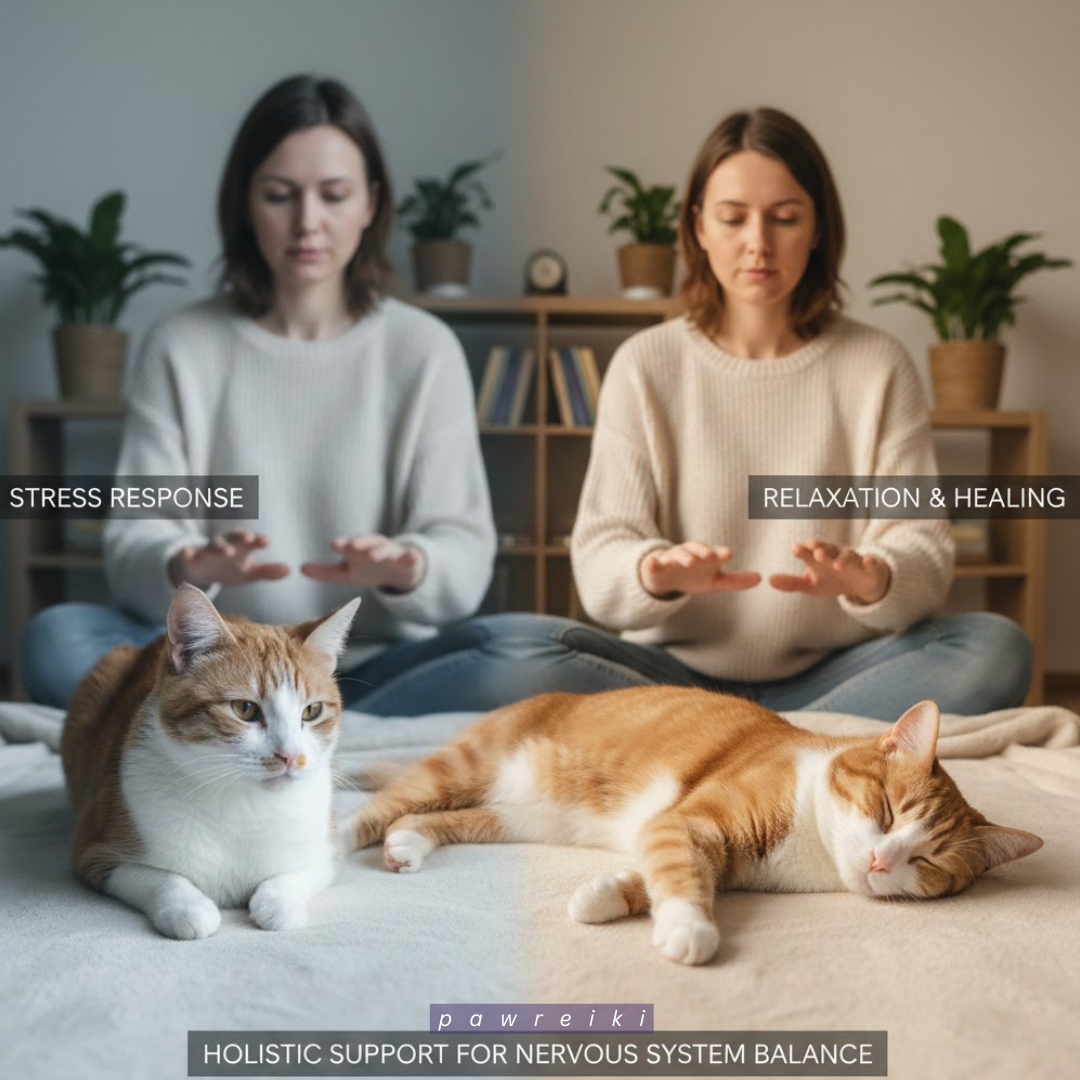
Stress affects a rescue animal’s body in many ways. When an animal feels overwhelmed, the nervous system shifts into alert mode. This increases cortisol levels, which is useful for short-term survival but draining when it stays high.
High stress can weaken the immune system. Animals may get sick more easily or take longer to recover. Digestion can also become unsteady, leading to upset stomach, irregular appetite, or loose stools.
Sleep is often disrupted. Anxious animals may wake frequently or sleep in short bursts, preventing deep rest. Over time, this creates fatigue and emotional strain. Reiki helps calm the nervous system so the body can settle, repair, and regain balance.
5. Why Rescue Animals Need More Time
Rescue animals often need extra time because their bodies and minds have learned to stay alert. Even in a loving home, new experiences can feel unpredictable. Familiarity takes time to build.
Predictable routines make a big difference. When meals, walks, and quiet times follow a steady rhythm, the nervous system begins to relax. The animal learns that life is becoming stable.
Reiki supports this slow adjustment process. It honours the animal’s pace and creates gentle moments of peace. With small, steady steps, many rescue pets begin to trust again.
How Reiki Can Support Rescue Animals
Reiki can make a meaningful difference for rescue animals who carry emotional tension, fear, or uncertainty. Many of these pets are still learning how to feel safe.
Reiki helps soften that emotional load by creating a gentle space where the nervous system can relax. Over time, this helps rescue animals adapt more easily, bond more deeply, and feel more confident in their new home.
1. Promotes Relaxation
Reiki encourages deep calm by helping the body shift out of the fight or flight state that many rescue animals stay stuck in. When an animal relaxes, their breathing slows, their muscles release tension, and their mind becomes more settled.
This calmness makes everyday challenges easier to handle, whether it’s meeting new people, adjusting to a routine, or responding to unfamiliar sounds. A relaxed body is also better able to heal and regain emotional balance.
2. Builds Trust
Trust is a slow process for many rescue animals. Reiki offers a safe and gentle way to develop that trust without pressure. Touch is always optional.
Many rescue pets prefer hands-near techniques at first, and that’s perfectly fine. Over time, animals begin to sense that the session is calm and predictable.
They start approaching on their own, showing curiosity instead of fear. This soft, voluntary engagement becomes one of the first steps toward steady bonding with their caregiver.
3. Supports Healing
While Reiki does not replace veterinary care, it can support natural healing by reducing the stress that often slows physical recovery.
When cortisol levels drop, the body can focus on repairing tissues, improving sleep, and restoring healthy digestion. Rescue animals who have experienced trauma often carry physical tension in their bodies. Reiki helps soften that tension, creating a more favourable environment for the body to recover at its own pace.
4. Helps With Emotional Adjustment
Transitioning into a new home can feel overwhelming, even if the environment is loving and safe. Reiki helps rescue animals navigate these changes with greater ease.
The calm energy helps them process unfamiliar sights, sounds, and routines without becoming overstimulated. Over time, many animals show more confidence, more curiosity, and fewer fear-based reactions. Reiki becomes a steady emotional anchor during a period of big transitions.
5. Eases Behaviour Linked To Stress
Stress often leads to behaviours like pacing, barking, hiding, clinginess, or restlessness. These behaviours are not misbehaviour—they are coping mechanisms.
Reiki helps reduce the intensity of the emotional discomfort behind these patterns. As an animal feels safer, they may bark less, settle more quickly, or explore the home with greater confidence. These gradual improvements help create a healthier, more peaceful daily life for both the animal and the caregiver.
Getting Started With Reiki For Rescue Animals
You do not need to be a professional to begin offering Reiki to a rescue animal. What matters most is creating a calm environment, respecting the animal’s boundaries, and approaching each session with patience and compassion.
Rescue pets often carry emotional baggage from their past, so gentle, slow steps help them feel safe. These basic guidelines can help you build a steady foundation for stress reduction and trust-building.
1. Find A Quiet Setting
Choose a calm, predictable space where the animal already feels comfortable. This may be a favourite room, a soft blanket, or a quiet corner away from household noise.
A peaceful environment helps the animal settle into the session without becoming overwhelmed. Keep movement slow and the atmosphere steady, allowing the animal to explore or rest as they choose.
2. Observe Consent
Rescue animals communicate clearly through body language. If they step toward your hands, settle beside you, or lie down nearby, they are showing interest.
If they turn away, circle the room, or hesitate, they need more space. Following their cues builds trust and prevents added stress.
Consent-based Reiki is especially important for animals with trauma, as it teaches them they have control over the interaction.
3. Keep Sessions Short
Many rescue animals have a shorter tolerance for new experiences. Starting with brief sessions helps avoid overwhelming them. Ten to fifteen minutes is often enough in the beginning.
As trust forms and the animal becomes more comfortable, you can let sessions grow naturally. Short, positive experiences lay the groundwork for deeper relaxation later on.
4. Learn Basic Techniques
You don’t need advanced training to offer meaningful Reiki support. Start by quieting your mind, slowing your breath, and placing your hands lightly on or above the animal.
Hands-near techniques are perfect for animals unsure about touch. Become familiar with how their body reacts. Notice when they soften, stretch, or sigh. These small responses help guide your pace and hand placement.
5. Build Skills Through Observation
If you’re new to Reiki, watching a trained practitioner can help you understand subtle animal cues. Many rescue groups offer workshops or community classes where you can learn by doing. These experiences help you feel more confident, so sessions at home become more natural and effective.
6. Explore Rescue-Oriented Workshops
Some organizations offer Reiki training specifically for shelter and rescue environments. These classes focus on trauma sensitivity, hands-off techniques, and ways to help animals who are fearful or overstimulated. Learning these methods can deepen your ability to support your pet during stressful moments.

Step-By-Step: Reiki Session For A Rescue Animal
If you’re wondering what a Reiki session looks like in real life, the process is simple, gentle, and tailored to the rescue animal’s comfort level.
These steps help you create a consistent routine that feels safe, predictable, and soothing for your pet. Over time, the sequence becomes familiar, which helps reduce anxiety and encourages emotional healing.
1. Preparation
Begin by choosing a calm, quiet space where the animal feels secure. Turn off background noise like phones, televisions, or loud appliances.
Make sure the animal has space to move freely and settle wherever they feel most comfortable. Preparation sets the tone for the entire session and helps the nervous system shift into a more relaxed state before any energy work begins.
2. Ground Yourself
Animals are highly sensitive to human energy. Before you begin, take a few slow breaths and focus on becoming steady and present. A calm state helps the animal feel safe and encourages trust.
Setting an intention, such as offering comfort or supporting the animal’s highest well-being, gently guides the energy of the session without forcing anything.
3. Approach Slowly
Rescue animals may need extra time to assess new experiences. Offer your hand slowly and let them sniff or observe from a distance. If they approach, lie down beside you, or simply relax in your presence, it’s a good sign they feel ready.
If they stay farther away, hovering your hands or sending Reiki from a distance works beautifully. This respectful approach helps build confidence.
4. Send Reiki
Once the animal signals comfort, begin by placing your hands lightly on them or hovering just above their body. Keep your touch very soft, especially for animals with trauma histories.
Some rescue pets may shift positions, sigh, yawn, or even fall asleep. Others may wander around and return on their own terms.
Follow their movements and adjust your hand placement gently. Watch for signs of acceptance such as stillness, soft eyes, or deeper breathing.
5. Close The Session
When the animal moves away, becomes restless, or shows signs of being finished, it is time to end the session. Gently withdraw your hands, thank them, and allow them to transition back into their routine.
Ending at the right moment keeps the experience positive and helps the animal look forward to future sessions. Short, pleasant interactions build trust far more effectively than long, overwhelming ones.

What To Expect Over Time
Rescue animals often show gradual improvements rather than sudden changes. You may notice deeper sleep, calmer behaviour, softer body language, or a greater willingness to engage with family members.
These small shifts reveal that the nervous system is settling and emotional healing is taking place. With consistency, Reiki becomes a familiar source of comfort that helps your pet adjust and thrive in their new environment.
Factors To Keep In Mind With Rescue Animals
Working with rescue animals requires patience, empathy, and a flexible approach. Every rescue pet brings their own history, sensitivities, and boundaries.
Reiki can help them rebuild trust, but the process unfolds at the animal’s pace. These key factors help you create sessions that feel safe and supportive for animals still learning to feel secure again.
1. Pacing
Rescue animals often need more time than other pets to feel comfortable with new experiences. Some may relax into Reiki within minutes, while others take weeks to show signs of openness.
Slow pacing protects their sense of safety. Allow short, gentle sessions and let the animal decide when and how to participate. Consistency matters more than intensity.
2. Trauma Responses
Animals with traumatic backgrounds may react strongly to certain movements, sounds, or forms of touch. A flinch, freeze, or sudden retreat is not resistance but a protective instinct shaped by past experiences.
Hands-off Reiki is ideal in these cases. Simply sitting quietly and offering calm, steady presence can help the animal feel seen, respected, and safe.
3. Other Support
Reiki works best as part of a larger healing plan. For many rescue pets, behavioural work, enrichment activities, medication, or structured routines are equally important.
Combining these with Reiki creates a more stable environment where emotional recovery can begin. Always pair Reiki with appropriate veterinary or behavioural guidance when needed.
4. Observe Changes
Keep an eye on small behavioural patterns before and after sessions. Watch for signs such as deeper sleep, steadier appetite, softer body language, or quicker settling after stress.
These clues help you understand what the animal finds helpful. A journal or notes can show progress over time and guide your approach.
5. Respect Boundaries
Every rescue animal has limits shaped by their history. Some enjoy close contact, while others prefer distance for months. Respecting boundaries builds trust faster than anything else.
When a pet knows you will honour their signals, they become more willing to approach and participate. This mutual respect forms the foundation for the most meaningful Reiki sessions.

Advanced Tips For Maximizing Reiki’s Benefits
Once your rescue animal feels more comfortable with basic Reiki, you can begin weaving in deeper practices that strengthen trust and enhance the calming effects of each session.
These gentle refinements help rescue animals feel more secure, more understood, and more supported as they heal emotionally and adapt to a new home.
1. Integrate Calming Signals
Your body language plays an important role during Reiki sessions. Slow blinking, soft talking, and relaxed posture help communicate safety and reassurance.
Rescue animals often read these signals faster than touch. When they see your calm, open presence, they begin to mirror it and settle into the session more easily.

2. Use Group Reiki When Appropriate
If your rescue animals get along well, shared Reiki can create a comforting group dynamic. Animals often relax more deeply around companions they trust.
One pet’s calmness can influence another’s, helping anxious rescues feel supported by both you and their fellow animals. Always start slowly to ensure everyone is comfortable.
3. Keep A Journal
Progress with rescue animals is often subtle. A journal helps you notice small improvements you might miss day to day. Write down behaviours before and after sessions, notes on sleep, appetite, social interactions, or tension levels. Patterns become clearer over time, helping you fine-tune your approach and celebrate meaningful milestones.
4. Combine Reiki With Positive Reinforcement
Pairing Reiki with gentle training techniques can help reduce fear-based behaviours. Offering small rewards after sessions builds positive associations with calmness and touch.
Using Reiki before a training session can also create a relaxed mindset that makes learning easier and lowers frustration for both you and your rescue pet.
5. Create A Consistent Ritual
Rescue animals gain confidence from predictable routines. Offering Reiki at similar times of day or in the same quiet space helps the animal anticipate what will happen.
This consistency builds familiarity and reduces nervousness. Over time, many rescue animals start approaching the Reiki spot on their own when they need comfort or grounding.
Real-World Cases: What Rescue Caregivers Have Noticed
Many shelter workers, foster families, and adopters have shared their experiences using Reiki with rescue animals. While every animal responds in their own time, certain patterns appear again and again. These gentle shifts often mark the beginning of emotional recovery and deeper connection.
1. Faster Adjustment To New Environments
Rescue pets who receive regular Reiki sessions often settle more quickly into new homes. They become more willing to explore, interact, and relax in unfamiliar spaces.
The calming energy helps soften the overwhelm that usually comes with big changes, making the transition feel safer and less intimidating.
2. More Relaxed Body Language
Caregivers often notice visible reductions in stress behaviours. Pacing slows down. Yawning and panting decrease. Hiding becomes less frequent.
Animals begin resting in the open instead of curled tightly in corners. These subtle signs show that their nervous system is gradually unwinding.

3. Comfort With Daily Handling
Many rescue animals struggle with basic care routines at first. Reiki can help reduce fear around leashes, grooming, or being touched.
As stress levels ease, everyday tasks become simpler and less overwhelming. Some animals even begin seeking gentle contact on their own, showing newfound trust.
4. Improvements In Appetite And Sleep
Stress affects digestion and rest. After several sessions, caregivers often notice better eating habits and deeper, more consistent sleep. A well-rested rescue pet is more receptive to bonding, learning, and forming positive new habits.
5. Support During Recovery
For animals healing from minor injuries, surgery, or rough transitions, Reiki often helps them stay calmer and more comfortable. Reduced stress can make recovery smoother.
Many caregivers describe their rescue pets approaching them for Reiki on tougher days, as if they instinctively understand the soothing support it brings.
6. Stronger Bonding And Trust
One of the most meaningful patterns across real-world cases is the improvement in trust. Rescue animals begin approaching their caregivers more freely, engaging with their surroundings, and showing affection more confidently. Reiki helps build a safe emotional foundation, allowing the relationship to grow at a natural and gentle pace.
Frequently Asked Questions About Using Reiki To Reduce Stress In Rescue Animals
Q1: How Soon Should I Try Reiki After Bringing A Rescue Animal Home?
You can start once your animal feels safe in their environment. Begin with short, hands-off sessions and let trust develop naturally.
Q2: Can Reiki Ever Make A Stressed Animal More Anxious?
When offered gently and at the animal’s pace, Reiki should not increase anxiety. Always let them move away or reposition as needed.
Q3: Does Reiki Work Equally Well For All Types Of Animals?
Yes. Reiki is helpful for dogs, cats, rabbits, horses, birds, and many others. The key is to observe their signals and respect their boundaries.
Q4: Can Reiki Help My Rescue Pet Build Trust With People?
Reiki may help rescue animals feel safer and more comfortable around humans. The gentle, pressure-free approach allows them to explore connection at their own pace. Many pets begin approaching on their own once they associate Reiki with calmness and relief.
Q5: How Do I Know If My Rescue Animal Is Enjoying Reiki?
Look for signs such as softer eyes, slower breathing, stretching, leaning in, or choosing to stay close. Some animals fall asleep, while others simply rest nearby. Any relaxed behaviour usually means your pet is responding positively and finding comfort in the session.
Helpful External Resources
If you’d like to explore pet wellness, behaviour support, or gentle healing practices further, here are trusted organizations and educational resources you may find helpful:
- American Veterinary Medical Association (AVMA) – General pet health, behaviour guidance, and care resources.
- ASPCA Pet Care Library – Behaviour tips, anxiety support, and animal-care information.
- VCA Animal Hospitals: Know Your Pet – Comprehensive articles written by veterinarians.
- International Center for Reiki Training (ICRT): Animal Reiki – Introductory information and classes for working with animals.
- Shelter Animal Reiki Association (SARA) – Ethical, animal-led Reiki practices and training.
Final Thoughts
Reiki offers rescue animals a gentle path toward emotional healing. Many come from backgrounds filled with uncertainty, and it takes time for them to trust new people and environments.
Reiki creates a quiet space where stress softens, and the nervous system can finally relax. With regular sessions, rescue pets often show steady improvements. They become calmer, more open, and more confident in their daily routines.
Even small shifts matter. A deeper breath, a softer expression, or a willingness to rest nearby can be the first signs of meaningful progress.
Reiki works best when paired with compassionate care, good nutrition, enrichment, and veterinary support. Together, these elements create the strong foundation rescue animals need to recover, adjust, and flourish.
With patience and consistency, Reiki can help your rescue pet feel safe, supported, and ready to build a happier, more peaceful life in their forever home.
I trust you enjoyed this article on Using Reiki to Reduce Stress in Rescue Animals. Please stay tuned for more Reiki insights, pet wellness tips, and holistic lifestyle ideas.
Take care!
— JeannetteZ
💬 Your Opinion Is Important To Me
Do you have thoughts, ideas, or questions? I’d love to hear from you. Please leave your comments below or email me directly at Jeannette@pawreiki.com.
📚 More PawReiki Reads — Discover Energy Healing & Holistic Pet Wellness
💜 My #1 Recommendation for Online Success
Reiki has brought so much peace and purpose to my life, and sharing it online has been a true blessing. If you’ve ever dreamed of creating a gentle income stream around your love for animals and holistic healing, this platform gives you all the tools, training, and community support you need — no tech experience required.
🌟 See How Reiki Lovers Build Online Income — Try WA FreeNo credit card required · Free starter training included
Disclosure
This post may contain affiliate links. As an Amazon Associate and participant in other affiliate programs, I earn from qualifying purchases at no extra cost to you. Please read my full affiliate disclosure.