How To Perform A Basic Reiki Session On Your Dog
Reiki isn’t just for people — it can also bring deep comfort to dogs who are feeling anxious, stressed, or physically uncomfortable.
Many pups respond to gentle energy far more than we realize, making Reiki a beautiful way to support their emotional and physical well-being.
Over the years, sharing Reiki with my own dogs has helped them settle during difficult moments, ease tension, and feel more balanced.
These quiet sessions also strengthen the bond between you and your dog, creating a peaceful shared space that feels safe and grounding.
If you’re new to energy work and want to learn how to perform a basic Reiki session on your dog, you’ll find that it’s simpler than it sounds. You don’t need special tools or advanced training — just patience, a calm environment, and an open heart.
In this guide, you’ll learn step-by-step techniques, gentle preparation tips, and real-world insights to help you and your dog enjoy a soothing and meaningful Reiki experience together.
Understanding Reiki For Dogs
Reiki is a Japanese energy-healing method that channels calming, supportive energy through touch or intention. You can learn more about traditional Reiki teachings through the International Center for Reiki Training.
Many pet lovers have found it helpful for dogs dealing with stress, aging, tension, routine changes, or emotional overwhelm.
You don’t need formal training to start. A quiet space, calm presence, and willingness to offer gentle support can go a long way. Dogs naturally sense centred, peaceful energy and often show curiosity or acceptance during sessions.
If your dog wanders, shifts, or stays alert, that’s normal. Reiki adapts easily to each dog’s personality. Follow their lead without pressure.
Getting Ready For A Reiki Session With Your Dog
Preparing for a Reiki session sets the tone for how calm and comfortable your dog will feel. Dogs are incredibly sensitive to their environment.
They notice sounds, energy shifts, and even your mood. A few thoughtful steps beforehand help them settle into the experience more easily.
These small preparations signal safety, predictability, and reassurance — all essential for a relaxing session.
1. Find A Quiet Spot
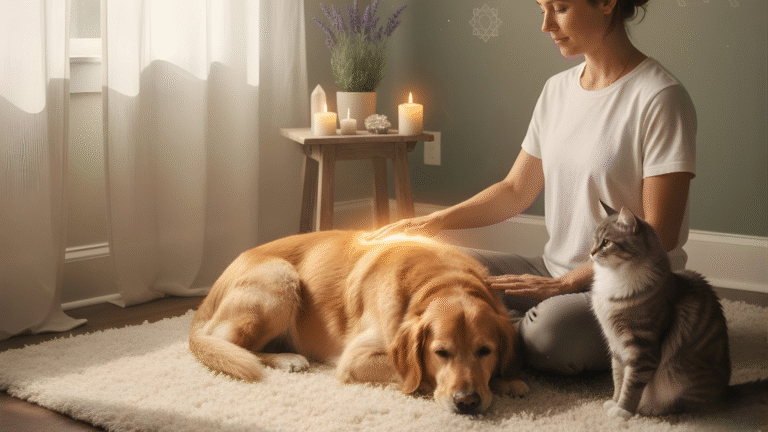
Choose a space where your dog naturally feels at ease. This might be their favourite resting area, a cozy corner, or a quiet room away from busy household noise.
A peaceful environment allows your dog to unwind without distraction, making it easier for them to respond to the calming energy of Reiki. Soft lighting or a familiar blanket can make the space feel even more comforting.
2. Pick A Relaxed Time
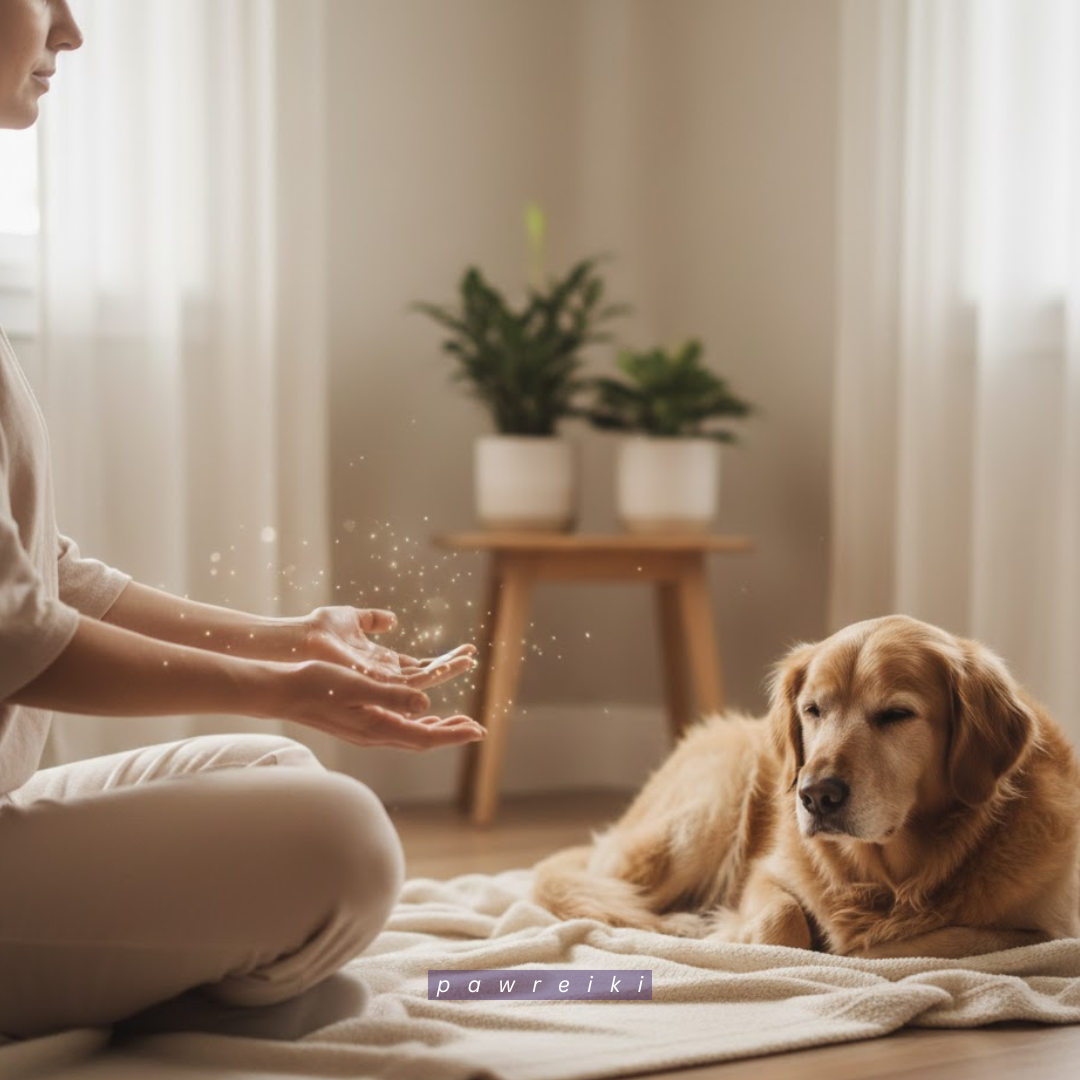
Timing plays a big role in how well dogs respond. After a walk, gentle playtime, or a meal is usually ideal, because their energy is already softer and their mind is less focused on excitement or stimulation.
Avoid starting a session when your dog is hyper, anxious, or expecting activity — a calm starting point helps the session flow naturally and reduces restlessness.
Fear Free Pets also shares science-based tips for creating a calm environment for anxious dogs.
3. Drop Expectations
Reiki works best when both you and your dog feel unpressured. Try not to anticipate a specific reaction or “result.” Some dogs settle instantly, while others explore, shift positions, or move around before relaxing. Let your dog guide the process.
When you release expectations and focus simply on being present, your dog senses that calm openness and mirrors it in their own way.
4. Have Water Nearby
Dogs often become thirsty after a calming Reiki session, especially if they release tension or settle into deep relaxation. Keep fresh water close by so they can drink whenever they feel the need.
This small gesture helps complete the session on a supportive note and gives your dog space to transition gently back into their regular routine.
Step-By-Step: How To Perform A Basic Reiki Session On Your Dog
Reiki is simple and intuitive. Your calm intention matters more than technique. Here’s an easy flow to follow:
1. Ground Yourself
Sit comfortably and take a few slow breaths. Imagine a steady, gentle flow of calm energy moving through your body and into your hands. Being centred helps set the tone for your dog.
2. Set Your Intention
Quietly invite Reiki energy to support your dog. You can think something like, “I offer calm and comfort for Bella’s highest good.” No need to say anything aloud — the intention itself is enough.

3. Offer Your Hands
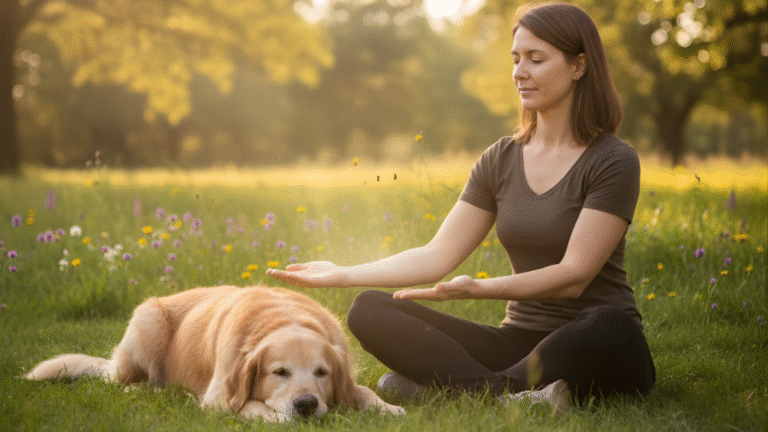
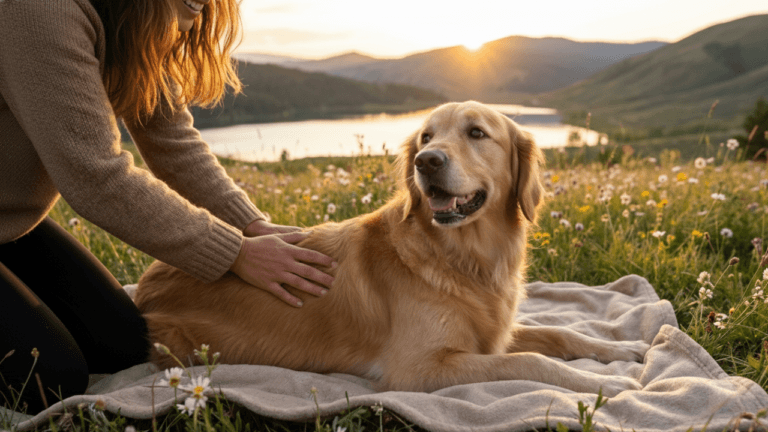
Allow your dog to approach you naturally. If they come closer or lie beside you, gently place your hands on their shoulders, chest, or back. If they prefer space, hover your hands an inch or two above them.
4. Let Your Dog Guide The Session
Dogs communicate through behaviour. They may stretch, sigh, shift positions, get up, or fall asleep. If they walk away, do not follow — Reiki works even from across the room. They’ll return if they want more.
For deeper guidance on animal-led Reiki, Animal Reiki Source offers excellent resources based on the Let Animals Lead® approach.
5. Stay Present
Breathe slowly and keep your attention soft. Notice your dog’s breathing, body language, or the warmth in your palms. Sessions often last 10–20 minutes, but shorter is perfectly fine.
6. Close The Session
Lift your hands gently and thank your dog. Let them move around freely afterward. Offer fresh water and allow a few minutes for the energy to settle.
Want to Share Your Love for Pet Reiki?
Discover how rewarding it can be to bring healing energy and compassion to pets — and to share that passion online with others.
Things To Keep In Mind When Doing Reiki With Your Dog
Reiki with dogs is simple, but a few real-world bumps can show up along the way. These gentle reminders help you stay flexible, patient, and supportive during each session.
1. Your Dog Won’t Calm Down
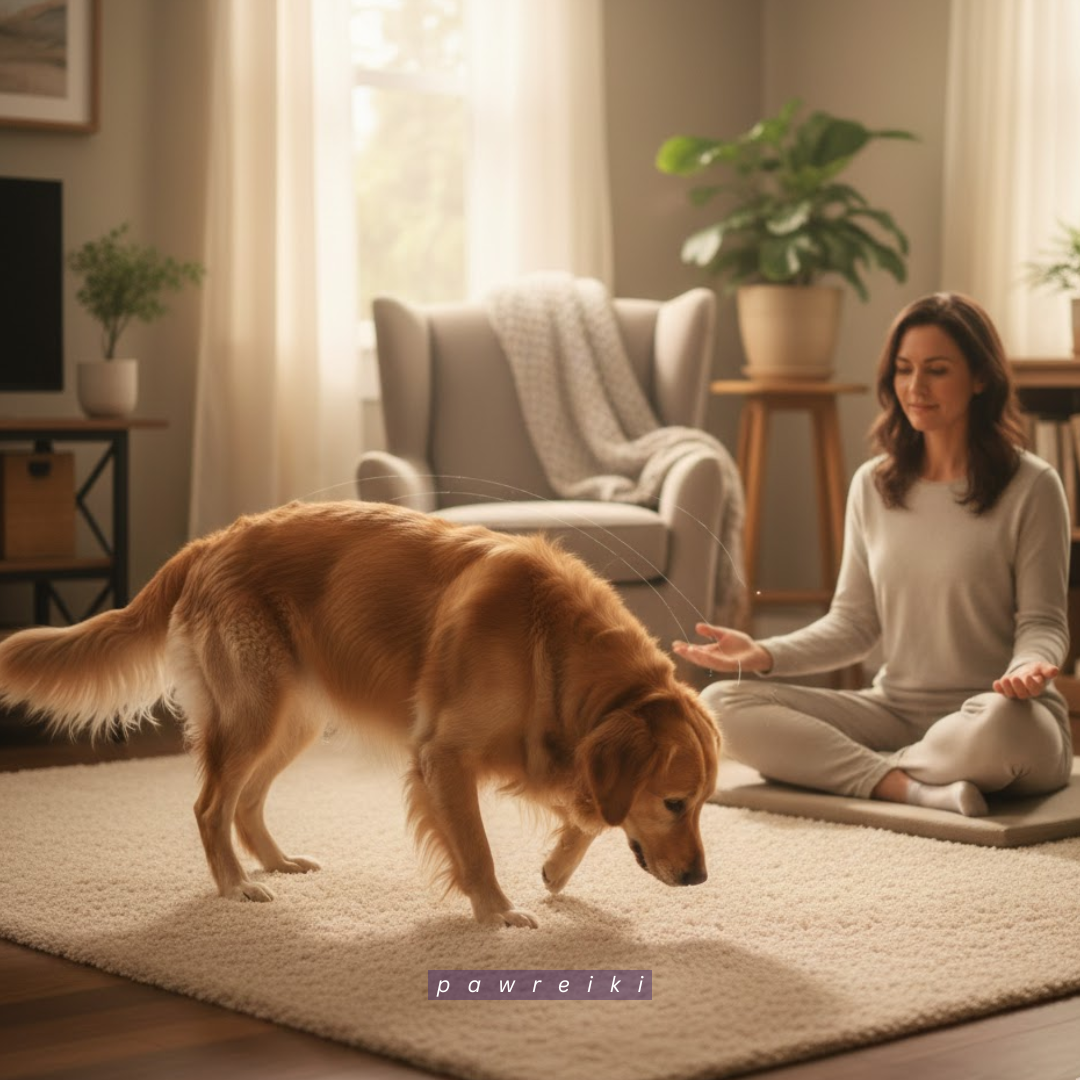
Sometimes your dog may struggle to settle, especially if the environment is noisy or they still have excess energy. This is entirely normal. If your dog keeps pacing, sniffing, or shifting around, pause the session and try again later.
You can also choose a quieter spot or wait until after a walk or potty break. Relaxation can’t be forced — it unfolds naturally when your dog feels ready.
2. Owner Impatience
Dogs pick up on our emotions instantly. If you’re hoping for fast results or feeling unsure about whether it’s “working,” your dog may sense the tension and feel unsettled. Approach the session with softness and simple presence.
Short, gentle moments of calm are often more effective than trying to achieve a long, structured session. Your relaxed mindset becomes the foundation your dog leans on.
3. Physical Discomfort For You
Sitting on the floor isn’t comfortable for everyone, especially during longer sessions. Use pillows, cushions, or a supportive chair.
You can sit beside your dog, near their bed, or anywhere that feels good for your body. Reiki flows just as well when you are comfortable. The more relaxed you are, the easier it is for your dog to relax, too.
4. Safety First
Reiki is a supportive, complementary practice — never a substitute for proper veterinary care. If your dog has an injury, chronic pain, sudden behaviour changes, or any health concern, always consult your veterinarian first.
Reiki pairs beautifully with vet-approved treatment plans by offering emotional ease, gentle comfort, and stress reduction, but medical guidance should always lead the way.
When both approaches work hand-in-hand, your dog benefits from holistic, well-rounded support.
Extra Ideas To Support Your Dog’s Healing With Reiki
Reiki blends easily with simple, holistic practices that help your dog feel calmer, more grounded, and more supported overall. You don’t need to do them all — just choose the ones that feel natural for you and soothing for your pup.
1. Music For Dogs
Soft, calming music can transform your Reiki space into a peaceful haven. Many dogs respond well to gentle melodies, especially classical tracks, ambient soundscapes, and music created specifically for canine relaxation.
These sounds help slow breathing, reduce tension, and make it easier for your dog to settle into stillness. If your pup tends to get nervous during storms or fireworks, music can also provide a comforting layer of security during your Reiki sessions.
2. Crystals Near Your Dog
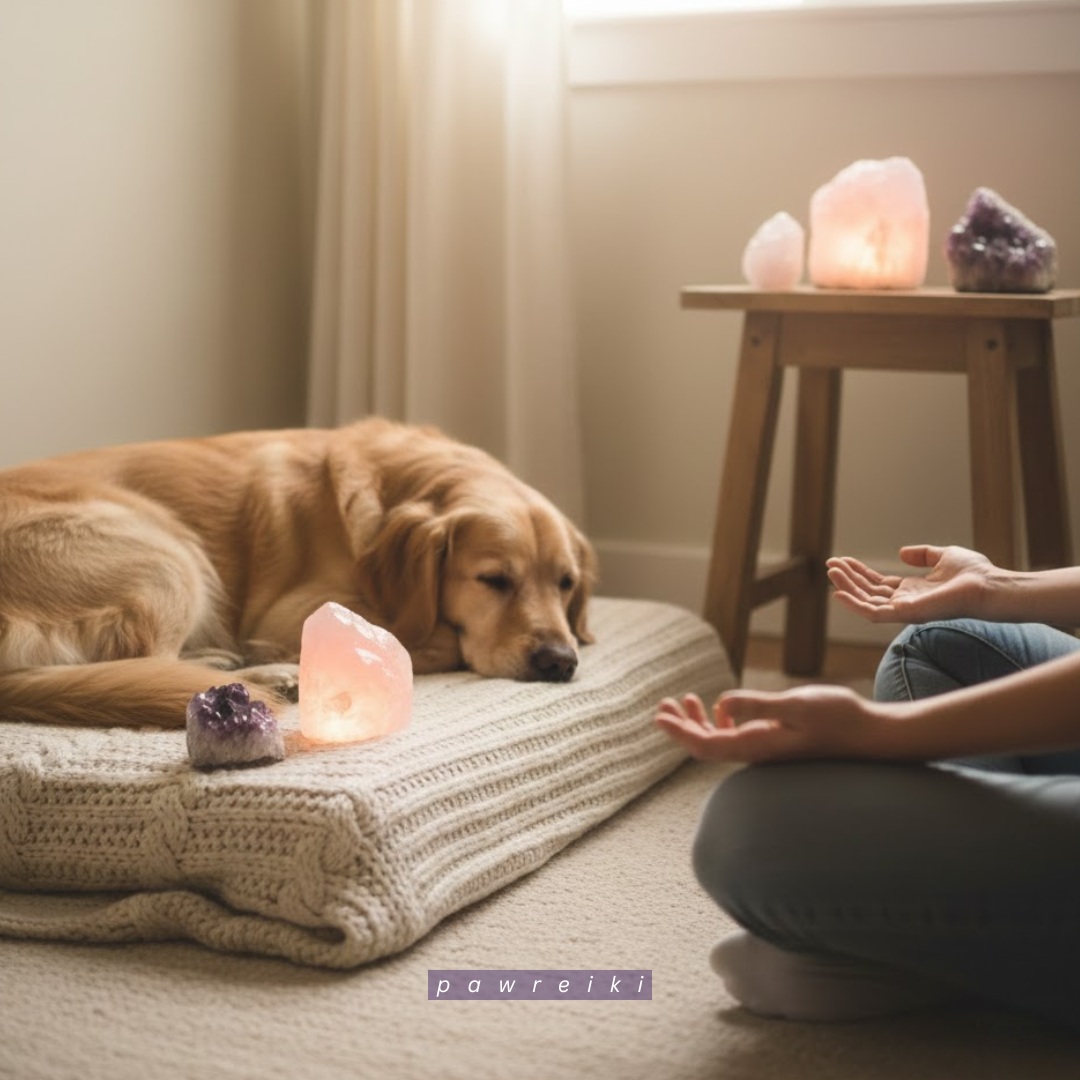
Some pet owners like to place calming crystals, such as rose quartz or amethyst, near their dog’s resting area during Reiki. These crystals aren’t required, but they can add a soft, comforting atmosphere to the session.
Always keep crystals out of chewing range, and place them nearby rather than on your dog’s body. Think of them simply as gentle tools that help create a soothing space where your dog can unwind.
3. Essential Oils (Used With Care)
Aromatherapy can be a lovely addition if used safely and in small amounts. Dogs have powerful senses, so a tiny amount goes a long way.
Choose essential oils known to be safe for dogs — such as lavender — and always dilute them appropriately. Avoid strong scents or diffusers placed near your dog’s nose.
Before trying any oils, check with your veterinarian to ensure they’re safe for your dog’s age, health, and sensitivities. When used respectfully, light aromatherapy can elevate the calmness of a Reiki session.
For additional holistic modalities, the IAAMB directory lists certified practitioners and related animal wellness approaches.
When And Why People Use Reiki For Dogs
Reiki can support dogs in many different life situations. Some dogs benefit from regular sessions, while others need Reiki only during emotional or physical challenges.
Below are the most common reasons pet lovers turn to Reiki, along with gentle explanations to help you recognize when it may help your own pup.
1. Emotional Stress And Anxiety
Many dogs experience stress from loud noises, changes at home, new people, or being left alone. Reiki creates a calming environment that helps their nervous system soften.
Over time, this can reduce pacing, whining, restlessness, or excessive barking. Even a short session can help an anxious dog feel understood and supported, especially during thunderstorms or household upheavals.
Explore more about Animal Reiki for Anxiety and Stress.
2. Support For Senior Dogs
Older pups often face stiffness, soreness, slower movement, or changes in sleep patterns. Reiki offers a gentle way to comfort aging dogs without physical strain.
Many senior dogs respond by relaxing deeply, breathing more slowly, and leaning into the quiet support. Reiki also provides emotional comfort for dogs navigating age-related changes, helping them feel secure and connected.
3. Healing After Illness Or Surgery
Dogs recovering from injury, illness, or surgery may benefit from the emotional and energetic stability Reiki brings. It doesn’t replace medical treatment, but it helps ease tension and supports overall well-being.
Many pet parents use Reiki to create a peaceful atmosphere during recovery, especially when their dog is on restricted movement or feeling unsettled by new routines.
4. Calming Before Stressful Events
Some dogs struggle during vet visits, grooming appointments, car rides, or travel. A short Reiki session before these events can help them enter the situation with more ease.
It won’t eliminate fear completely, but it can reduce intensity and help your dog stay grounded. Even offering Reiki in the waiting room or car can soften the stress they feel.
5. Strengthening The Bond Between You And Your Dog
Reiki isn’t only for difficult moments — it’s also a beautiful way to share quiet time together. Many dog owners practice Reiki to deepen their relationship with their pets.
The peaceful, focused energy invites trust, closeness, and emotional connection. Over time, dogs often begin to associate Reiki sessions with safety, comfort, and positive attention.
6. Routine Relaxation And Emotional Balance
Some dogs simply enjoy Reiki as part of their weekly rhythm. These sessions become gentle “check-ins” that help them unwind and reset.
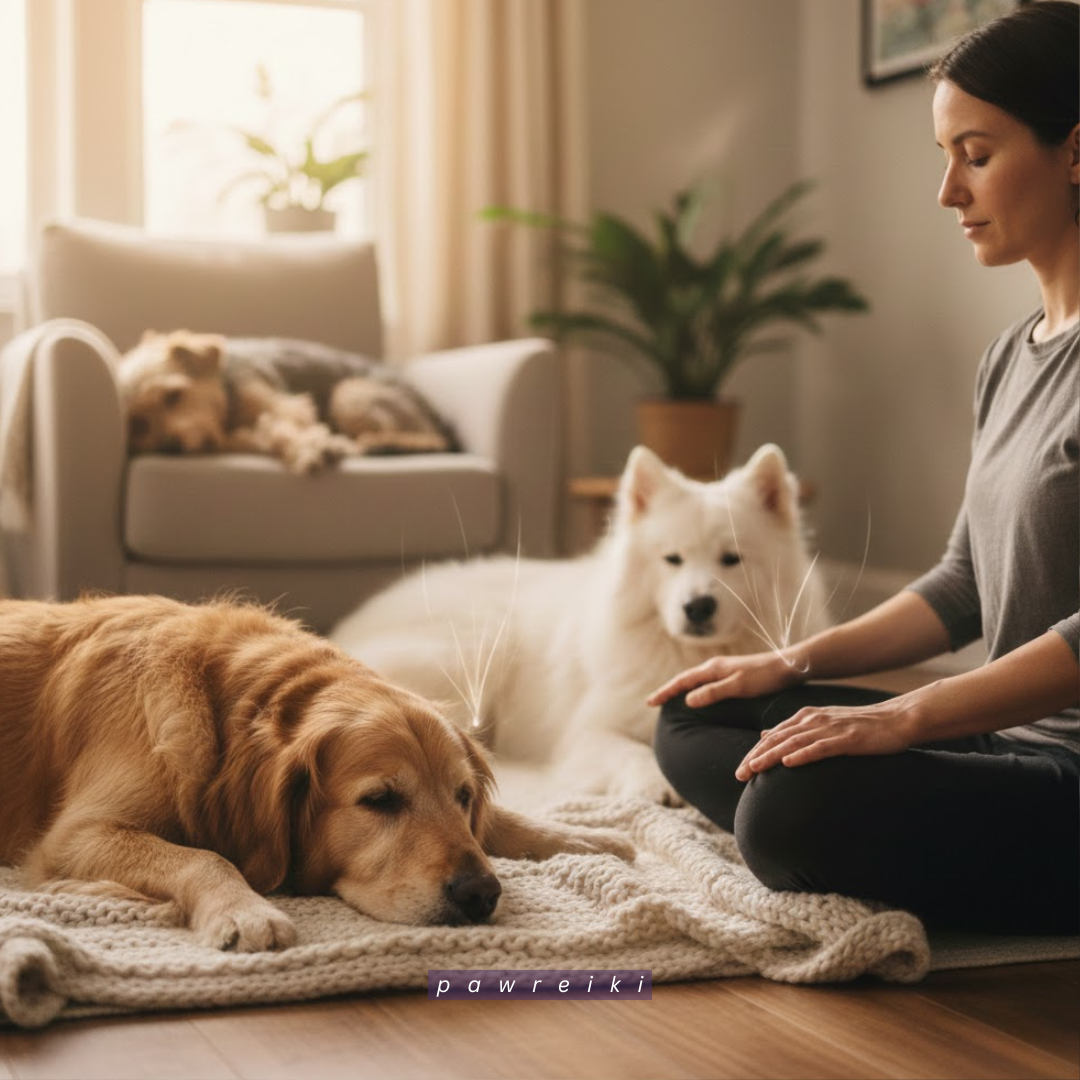
Just as humans benefit from calm rituals, many dogs thrive when Reiki is woven into their routine. It helps maintain balance, especially in multi-dog households or busy environments.
Getting Started With Reiki For Dogs
Offering Reiki to your dog is simple and doesn’t require special tools or extended sessions. What matters most is approaching the experience gently, respecting your dog’s boundaries, and letting them guide the pace.
You may find your dog becomes more relaxed, more trusting, or simply enjoys your calm presence. Many pet parents also notice they feel calmer themselves — Reiki naturally supports both sides of the relationship.
With practice, these quiet moments can deepen the bond between you and your dog, creating a peaceful ritual you both look forward to.
Frequently Asked Questions About How To Perform A Basic Reiki Session On Your Dog
Here are some common questions dog owners ask when starting Reiki.
Q1: Can I Do Reiki Without Formal Training?
Yes. Many pet parents offer simple, supportive Reiki at home using calm intention, gentle presence, and respect for their dog’s boundaries.
If you’d like to build confidence and learn easy techniques you can use right away, you can start with my Beginner’s Guide to Reiki for Animals.
Q2: How Often Can I Do Reiki On My Dog?
Short, frequent sessions work well — daily or every few days is fine. Let your dog’s behaviour guide you. If they stay close, they’re open to more; if they walk away, pause and try later.
Q3: Are There Risks To Reiki With Pets?
Reiki is gentle and safe. The only caution is remembering it does NOT replace veterinary care. Always consult your vet for health concerns.
Q4: How Long Should A Session Last?
Ten to twenty minutes is a good range, but even 3–5 minutes can help. The session ends when your dog shows they are finished.
Q5: What Signs Show That Reiki Is Helping My Dog?
Look for relaxed breathing, sighing, yawning, stretching, lying down beside you, closing their eyes, or choosing to stay close. Some dogs fall asleep. Others simply soften — both are meaningful responses.
Q6: Can I Use Reiki During Storms Or Fireworks?
Yes. Reiki often helps anxious dogs feel steadier during loud, stressful events. Hands-off Reiki works exceptionally well when your dog is restless or hiding.
Q7: Is It Okay If My Dog Moves Around During Reiki?
Absolutely. Movement is normal. Let your dog shift, walk away, or return when ready. Reiki adapts to their comfort.
Q8: Can I Do Reiki On A Sleeping Dog?
Yes. Many dogs fall asleep during Reiki because it helps them relax. Continue gently or stop if the session feels complete.
Q9: Should I Touch My Dog Or Use Hands-Off Reiki?
Follow your dog’s preference. Touch-loving dogs may enjoy gentle hands-on Reiki, while sensitive or nervous dogs may prefer hands-off. Both styles work beautifully.
Explore more about Hands-On vs Hands-Off Reiki: What works best.
Q10: Can Reiki Help With Behavioural Issues?
Reiki supports emotional balance and reduces stress, which can indirectly help behaviour. It is not a replacement for training or behavioural work, but can be a helpful complement.
Explore more about The Role of Reiki in Behaviour Modification for Pets.
Helpful External Resources
If you’d like to explore pet wellness, behaviour support, or gentle healing practices further, here are trusted organizations and educational resources you may find helpful:
- American Veterinary Medical Association (AVMA) – General pet health, behaviour guidance, and care resources.
- ASPCA Pet Care Library – Behaviour tips, anxiety support, and animal-care information.
- VCA Animal Hospitals: Know Your Pet – Comprehensive articles written by veterinarians.
- International Center for Reiki Training (ICRT): Animal Reiki – Introductory information and classes for working with animals.
- Shelter Animal Reiki Association (SARA) – Ethical, animal-led Reiki practices and training.
Wrapping Up
Trying Reiki with your dog opens up a comforting new way to connect and support them. Whether your pup is energetic, anxious, sensitive, or simply enjoys peaceful moments, there’s a style of Reiki that fits their personality.
Follow your dog’s cues, keep your heart open, and enjoy the experience without pressure or expectation. Even the simplest session can bring meaningful shifts in calmness, trust, and emotional balance.
Reiki is a gentle addition to your dog’s wellness routine, and these moments of shared stillness often benefit you just as much as your pet.
I trust you enjoyed this article on How To Perform A Basic Reiki Session On Your Dog. Please stay tuned for more Reiki insights, pet wellness tips, and holistic lifestyle ideas.
Take care!
— JeannetteZ
💬 Your Opinion Is Important To Me
Do you have thoughts, ideas, or questions? I’d love to hear from you. Please leave your comments below or email me directly at Jeannette@pawreiki.com.
📚 More PawReiki Reads — Discover Energy Healing & Holistic Pet Wellness
💜 My #1 Recommendation For Online Success
Reiki has brought so much peace and purpose to my life, and sharing it online has been a true blessing. If you’ve ever dreamed of creating a gentle income stream around your love for animals and holistic healing, this platform gives you the tools, training, and community support you need.
🌟 See How Reiki Lovers Build Online Income — Try WA Free
No credit card required · Free starter training included
Disclosure
This post may contain affiliate links. As an Amazon Associate and participant in other affiliate programs, I earn from qualifying purchases at no extra cost to you. Please read my full affiliate disclosure.