Hand Positions For Animal Reiki: A Complete Beginner’s Guide
Hand Positions for Animal Reiki is a gentle, hands-on healing method that any pet owner can use at home to comfort and calm their animals.
With simple hand positions and a relaxed mindset, you can help reduce your pet’s stress, support their emotional balance, and create a deeper bond.
Reiki doesn’t require pressure or force—your quiet presence and intention are enough. Whether your pet is anxious, recovering, or needs extra love, these hand positions make healing easy and natural.
How Important Are Hand Positions For Reiki?
Hand positions are crucial in Reiki because they help you focus the energy in the right areas of your pet’s body. They give structure to the session so you don’t feel lost or unsure.
Each position supports a different physical or emotional need—calming the mind, relaxing the heart, easing tension, or grounding the body.
For pets, consistent hand placement creates a sense of safety. It helps them understand what’s happening and allows them to relax more deeply.
Even if you use light touch or hands-off techniques, these positions guide the energy flow and make the healing process smoother, calmer, and more effective.
How To Prepare Before You Begin
1. Choose A Calm And Quiet Space
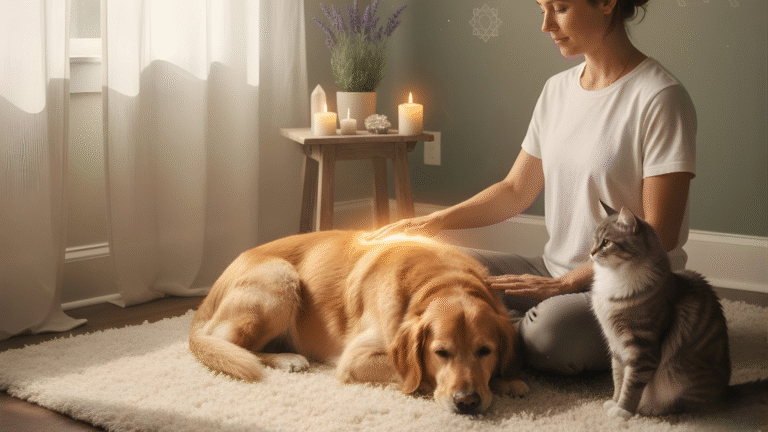
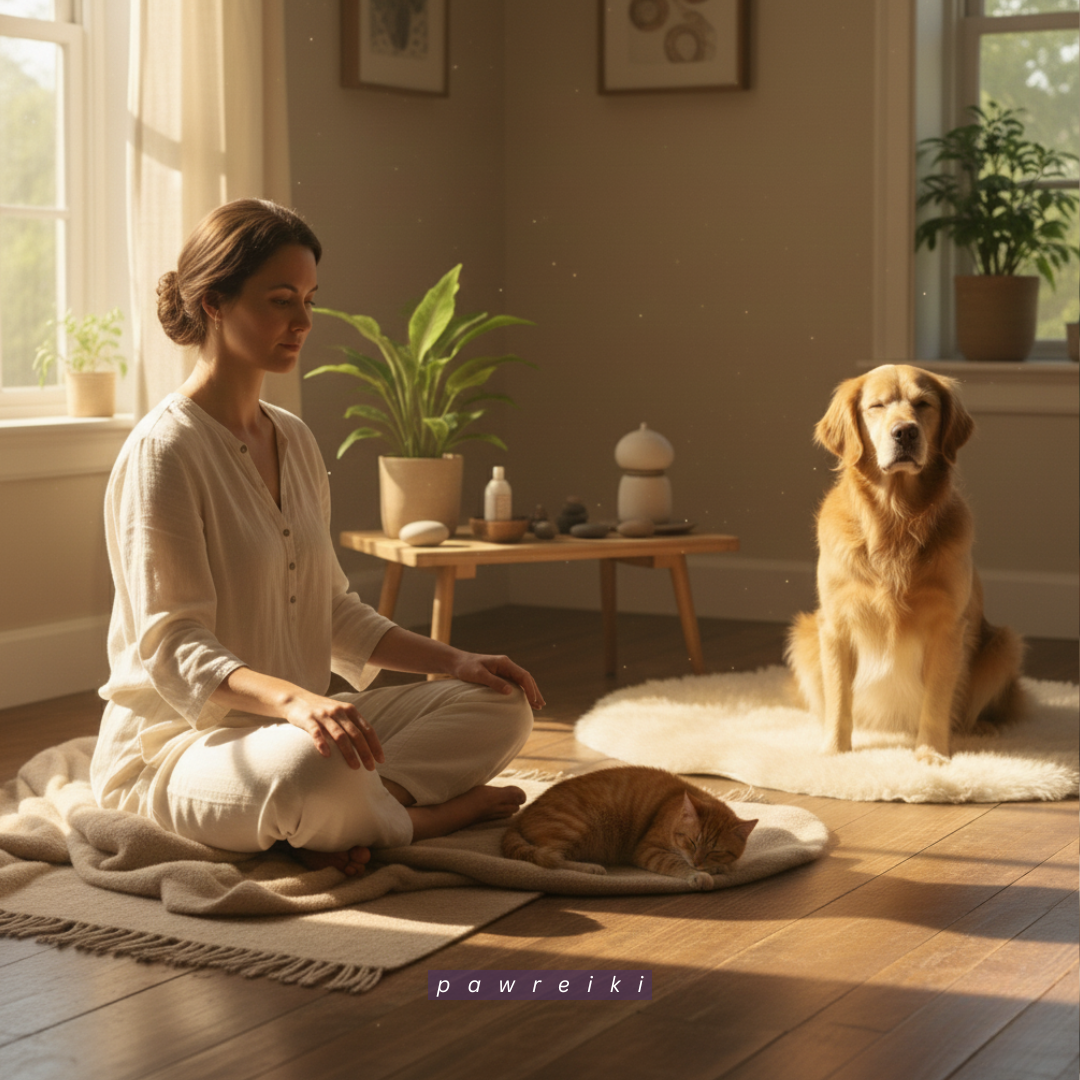
Select a peaceful spot where your pet already feels safe—like their bed, a sofa corner, or a soft rug. Reduce noise, turn off distractions, and keep the environment gentle. A quiet space helps your pet relax faster and allows the Reiki energy to flow smoothly without interruption.
2. Let Your Pet Approach Naturally
Never force your pet to sit still or stay close. Allow them to come to you at their own pace. When animals choose the connection themselves, they open up more easily.
This voluntary participation creates trust, ensures comfort, and makes the entire Reiki session more effective and respectful.
3. Set A Simple And Positive Intention
Before touching your pet, mentally set a calm intention like “I offer comfort” or “I offer healing.” This helps shift your mind into a peaceful state.
Animals respond strongly to your energy, so a clear intention supports emotional balance for both you and your pet throughout the session.
4. Centre Yourself With Slow Breathing
Breathe deeply and slowly for a minute. Release stress, soften your body, and settle into the moment. Your calm breathing helps your pet relax, too.
Animals read your energy instantly, so starting in a centred state creates the perfect healing environment and makes your presence grounding and soothing.
5. Keep The Reiki Session Short And Gentle
For beginners, keep sessions 10–15 minutes. Short sessions help your pet stay comfortable and prevent overstimulation.
Move slowly, use light touch or hovering, and avoid any pressure. A gentle, easy approach builds trust and allows your pet to receive the energy in a natural, stress-free way.
Hand Positions for Animal Reiki: Step by Step, a Complete Beginner’s Guide
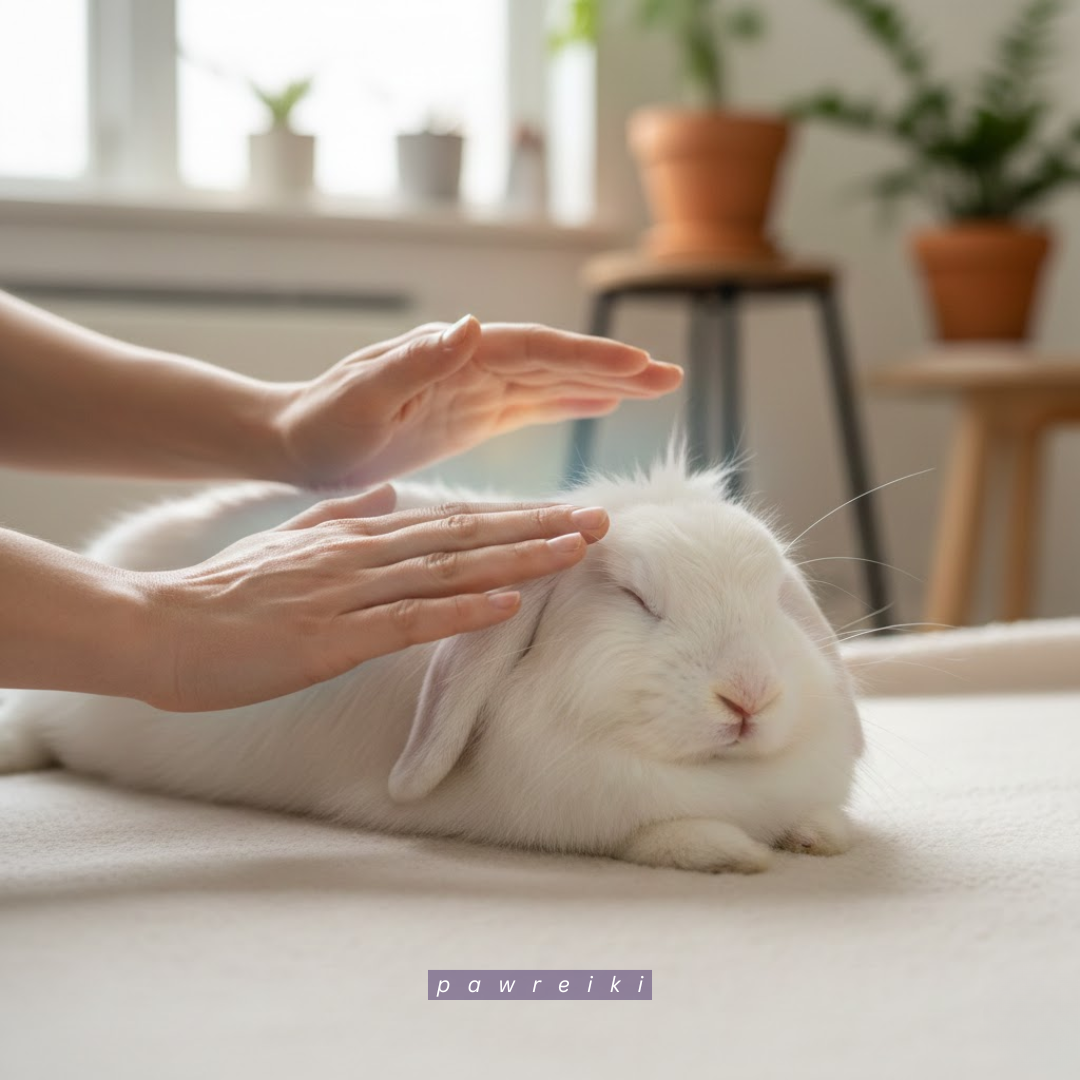
1. The “Hello” Position
The “Hello” Position is the gentle beginning of any Animal Reiki session. It helps your pet feel safe, calm, and open to receiving healing energy. This position is beneficial for nervous or sensitive animals who need time to warm up.
Your soft presence teaches your pet that this is a peaceful moment, not something to fear. By introducing Reiki slowly, you create trust and emotional ease. This simple starting step sets the tone for the entire session and helps your pet settle into a relaxed state.
How To Do It
- One hand above the head
- One hand near the chest
- Keep touch soft
- Stay calm and quiet
- Allow movement freely
Benefits
- Builds trust
- Introduces energy gently
- Creates a calm atmosphere
- Encourages relaxation
- Strengthens bond
2. The Closing Hands Position
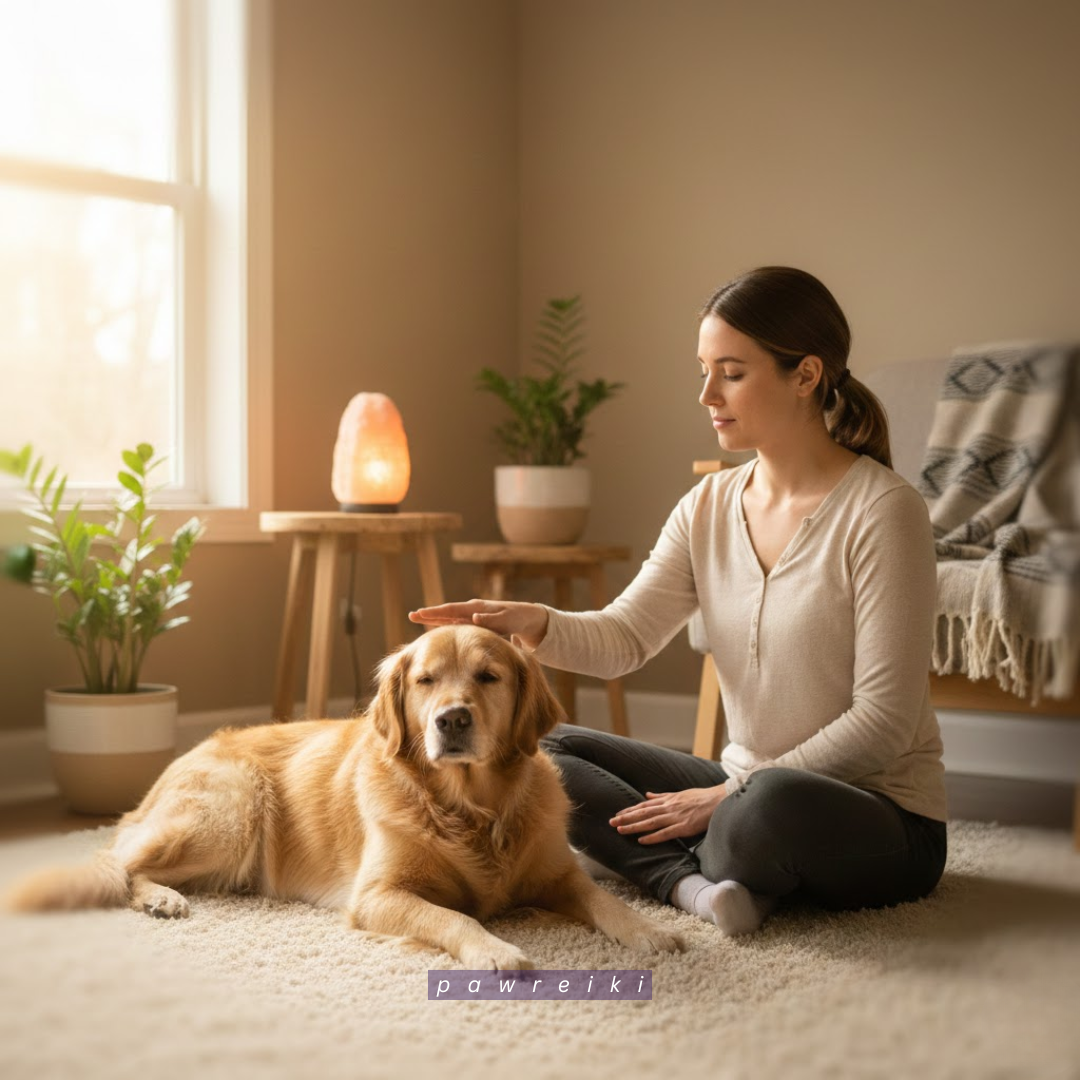
The Closing Hands Position is used at the end of a Reiki session to help your pet gently return to a balanced state. This position settles the energy, provides grounding, and helps your pet absorb the healing fully.
It brings peaceful closure and signals that the session is complete. Most animals naturally begin to stretch, sigh, or relax deeply during this stage.
It also helps reduce overstimulation and ensures your pet feels emotionally safe. Ending with this position allows your pet to process the healing comfortably and calmly.
How To Do It
- Place both hands on your pet’s back
- Keep hands relaxed
- Hold still for a moment
- Breathe slowly
- Release hands gently
Benefits
- Smoothly ends the session
- Settles energy
- Promotes deep relaxation
- Supports emotional balance
- Provides comfort and grounding
3. Light Touch Position
The Light Touch Position is ideal for pets who enjoy gentle physical contact but are sensitive to pressure. This soft placement of the hands helps calm tense muscles, soothe emotional stress, and create a sense of safety.
Many pets respond with soft blinking or relaxed breathing because the touch is comforting and non-invasive. This position works beautifully for kittens, puppies, older pets, or animals healing from injury. It allows Reiki energy to flow without overwhelming your pet, making it a perfect middle step during a session.
How To Do It
- Touch lightly with fingertips
- Avoid pressing down
- Rest hands gently
- Hold for a short period
- Move slowly if needed
Benefits
- Perfect for sensitive pets
- Reduces tension
- Comforts injured areas
- Encourages relaxation
- Builds gentle trust
4. Hovering Hand Position
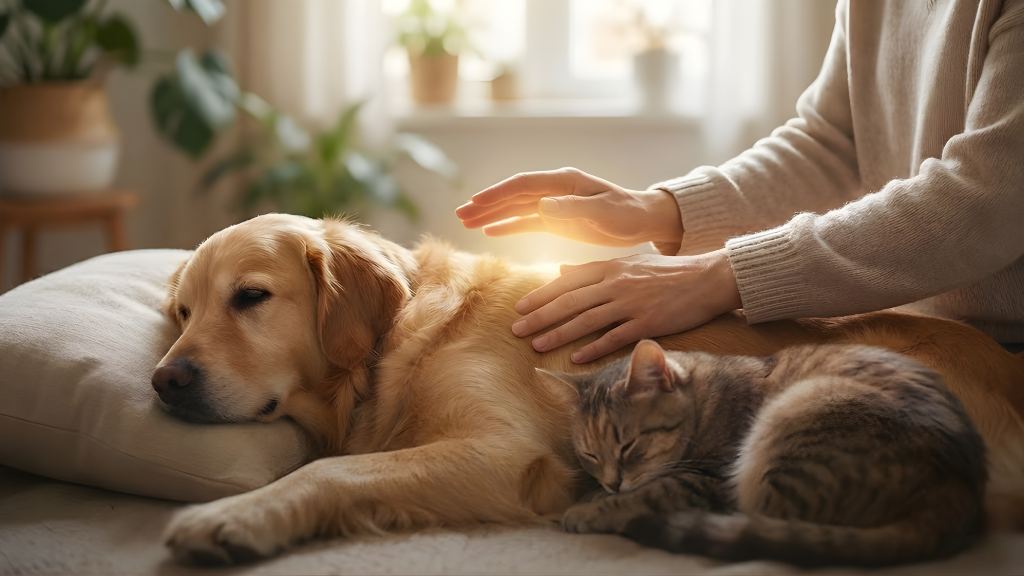
The Hovering Hand Position is excellent for pets who do not like to be touched or are nervous about physical contact. By keeping your hands slightly above their body, you offer healing energy without causing discomfort.
This technique is ideal for scared rescues, reactive pets, or animals with painful injuries. The absence of touch gives your pet the freedom to stay in control, which builds trust and confidence. This position helps your pet accept healing in a comfortable, safe way.
How To Do It
- Hold hands 1–3 inches above the body
- Keep them steady
- Move slowly
- Avoid sudden motion
- Follow your pet’s comfort
Benefits
- Safe for touch-sensitive pets
- Relieves fear
- Supports trauma healing
- Builds trust gently
- Allows healing without pressure
5. Scanning Hand Position
The Scanning Hand Position helps you sense areas where your pet might need more healing. Moving your hand slowly above the body allows you to feel warmth, coolness, or tingling that may indicate an energy imbalance.
This technique guides you to the right spots without stressing the animal. It helps you to respond to their needs with compassion and a deeper understanding. Pets often relax as you gently scan because it feels calming and respectful.
How To Do It
- Hover your hand above the body
- Move from head to tail
- Keep movements slow
- Notice temperature changes
- Focus on sensitive areas
Benefits
- Detects energy imbalances
- Helps locate tension spots
- Guides session flow
- Supports intuitive healing
- Reduces discomfort
6. Sweeping Hand Position
The Sweeping Hand Position is used to clear away heavy or blocked energy from your pet’s body. This movement is gentle but effective, helping your pet feel lighter and more relaxed.
By sweeping your hands along the body, you help release emotional stress, fear, or physical tension. Pets often show relief after sweeping motions, such as yawning or stretching. This technique prepares the body for deeper healing and brings a refreshing sense of ease.
How To Do It
- Sweep hands from head to tail
- Keep movements fluid
- Use slow, soft motions
- Maintain a relaxed posture
- Repeat several times
Benefits
- Clears blocked energy
- Reduces emotional heaviness
- Encourages release of tension
- Supports healing flow
- Refreshes the energy field
7. Grounding Hand Position
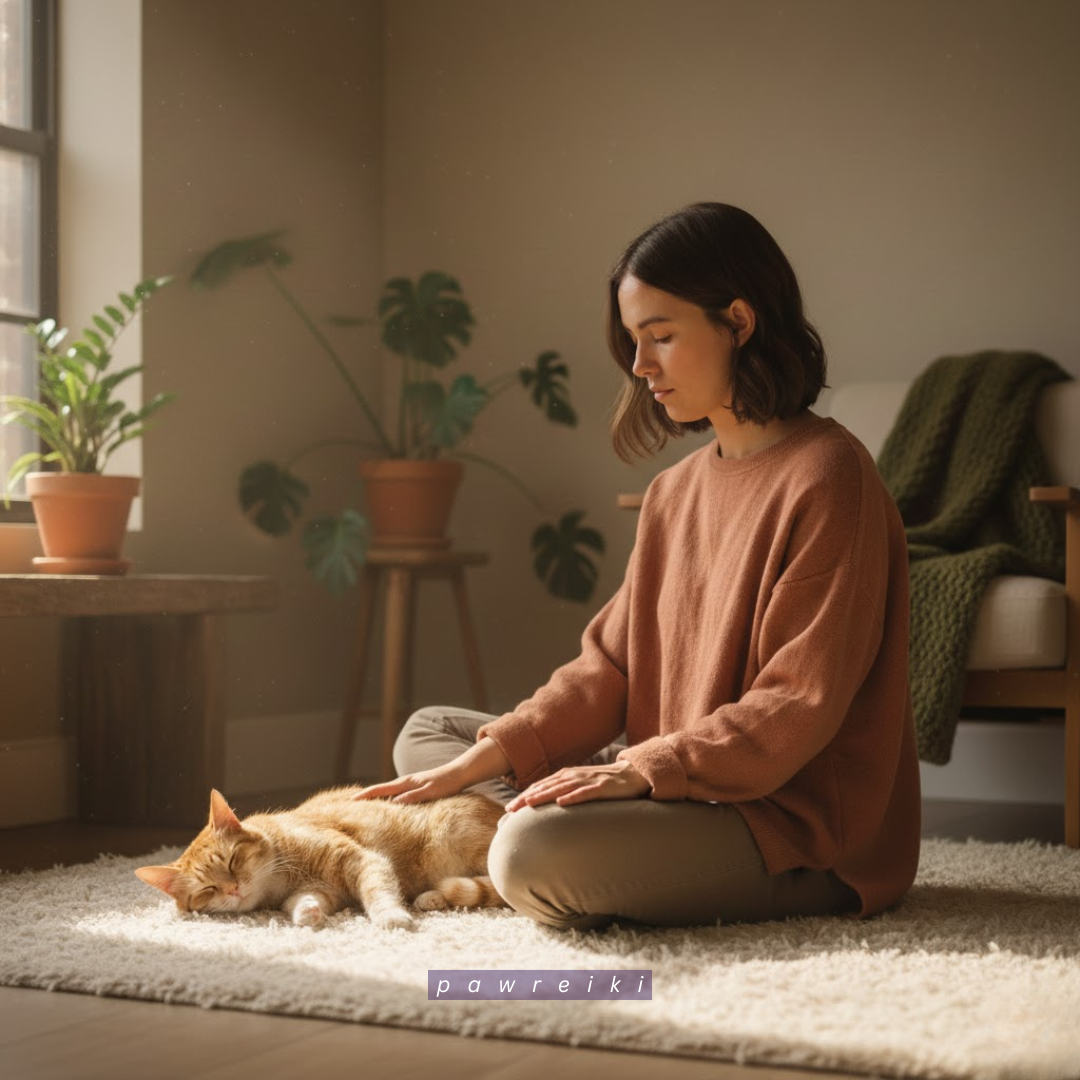
The Grounding Hand Position helps calm pets who are restless, anxious, or overstimulated. Placing your hands near the lower body or paws helps stabilize their energy and bring them back into balance.
This position works especially well for hyperactive dogs, frightened cats, or animals recovering from stressful experiences. Grounding gives them a sense of security and stillness, which supports emotional healing.
How To Do It
- Place hands near hind legs or paws
- Stay still and steady
- Breathe slowly
- Keep your energy calm
- Hold for a moment
Benefits
- Reduces anxiety
- Provides emotional stability
- Helps restless pets settle
- Balances the nervous system
- Encourages deep calm
8. Comfort Hand Position
The Comfort Hand Position is used to soothe pets who are sad, stressed, or seeking emotional support. Resting your hands gently in areas they enjoy provides a nurturing and loving presence.
This position helps your pet feel understood and cared for. It is beneficial during times of loneliness, grief, or significant change. Your steady touch reassures your pet that they are safe and loved.
How To Do It
- Place your hands on your favorite spots
- Keep touch warm
- Stay emotionally present
- Hold gently
- Follow your pet’s signals
Benefits
- Offers emotional comfort
- Supports pets during stress
- Strengthens connection
- Encourages trust
- Provides soothing warmth
9. Energy Channelling Hand Position
The Energy Channelling Hand Position directs healing energy into specific areas where your pet needs support. This position is ideal for pets recovering from illness, injury, or emotional trauma.
By holding your hands over targeted spots, you encourage healing flow and help restore balance. Your pet may show signs of relief, such as resting their head, slowing their breathing, or leaning into your hands. This focused technique promotes deeper healing.
How To Do It
- Place your hands on the needed area
- Hold steady
- Focus on gentle intention
- Breathe slowly
- Keep posture relaxed
Benefits
- Directs healing energy
- Supports recovery
- Reduces discomfort
- Encourages deep relaxation
- Helps restore balance
10. Heart-Centre Hand Position
The Heart-Centre Hand Position provides emotional support and helps pets feel deeply loved. Placing your hands over the chest area encourages feelings of safety and warmth.
This position is ideal for anxious, shy, or rescued animals who need extra affection. It helps open the emotional pathway between you and your pet, strengthening your bond. Many pets respond with deep breaths, soft sighs, or peaceful stillness.
How To Do It
- Place your hands over your chest
- Keeping your touch gentle
- Remain relaxed
- Hold still
- Let energy flow naturally
Benefits
- Supports emotional healing
- Reduces anxiety
- Strengthens the love bond
- Encourages peaceful breathing
- Balances emotions
11. Aura Holding Position
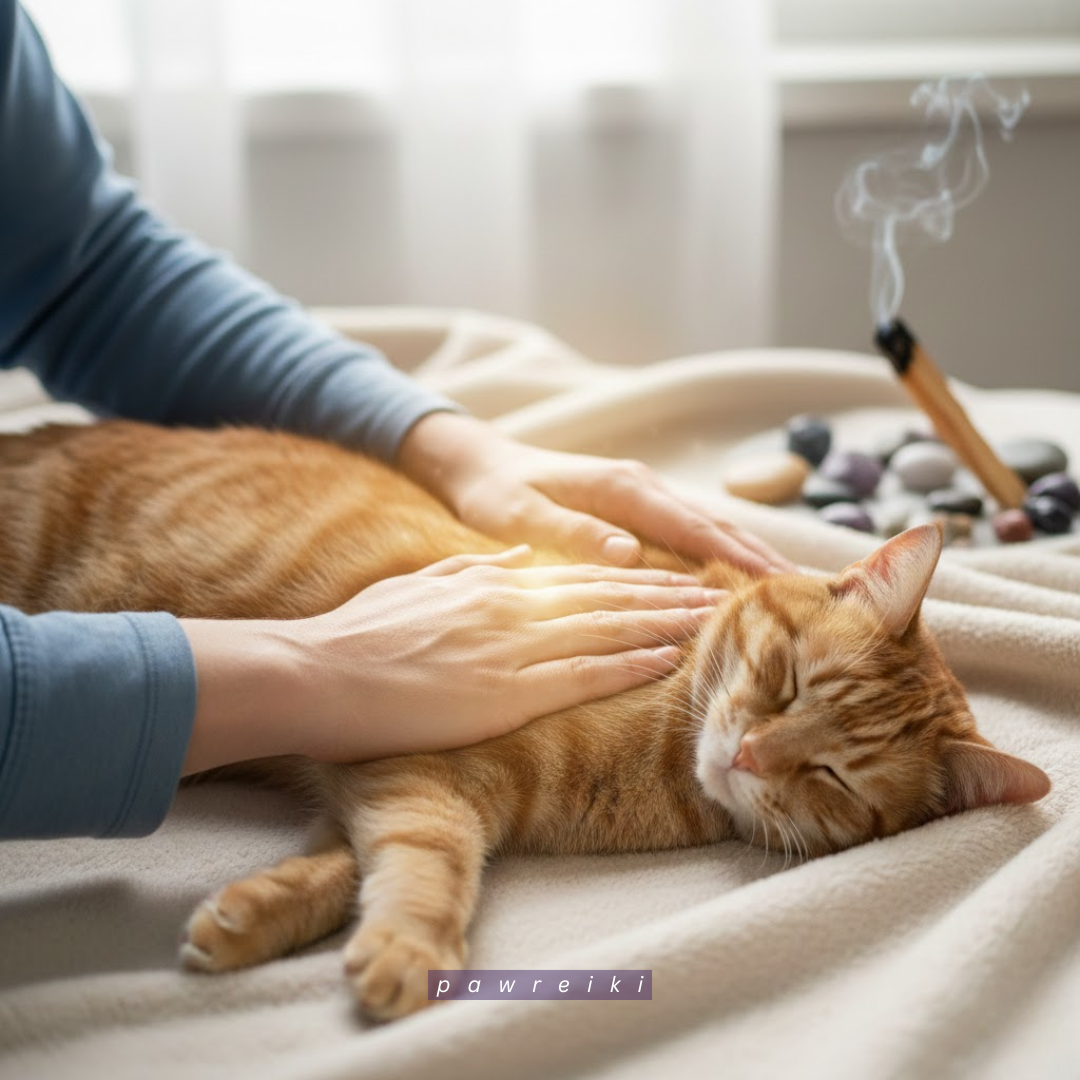
The Aura Holding Position focuses on balancing your pet’s energy field without touching the body. It is perfect for animals who are sensitive or recovering from trauma.
By holding your hands around the energetic space, you help stabilize and protect their energy. This technique creates a safe, comforting bubble around your pet, helping them feel secure and grounded.
How To Do It
- Hold hands around the body
- Keep them slightly lifted
- Maintain stillness
- Move slowly when adjusting
- Stay calm and centred
Benefits
- Balances the energy field
- Helps scared pets relax
- Supports emotional recovery
- Provides gentle protection
- Builds trust without touch
12. Backline Hand Position
The Backline Hand Position helps relax your pet’s entire spine and nervous system. Running your hands gently along the back encourages deep physical and emotional release.
This position is beneficial for pets who hold tension in their back or hips, older animals, or pets recovering from physical strain.
It promotes a strong flow of healing energy down the body, helping your pet feel more balanced and grounded. Many animals naturally lean into this position because it feels soothing and secure, supporting full-body comfort and relaxation.
How To Do It
- Place your hands gently along the spine
- Move slowly downward
- Keep your hands warm and steady
- Avoid pressing too hard
- Follow your pet’s posture
Benefits
- Relaxes the nervous system
- Reduces back tension
- Helps older pets feel better
- Encourages full-body balance
- Promotes deep physical comfort
13. Paw Hand Position
The Paw Hand Position supports grounding, emotional stability, and physical comfort. Pets often store stress and energy in their paws, making this position surprisingly calming.
Gently working around the paws helps your pet feel secure and more connected to the earth. This is especially beneficial for anxious pets, animals with mobility issues, or pets who dislike being touched elsewhere.
The paws are sensitive, so your gentle Reiki touch helps release tension and reassure your pet. Many animals show relaxation signs, such as paw stretching or deep breaths.
How To Do It
- Hold each paw gently
- Use very light pressure
- Keep hands warm
- Stay calm and patient
- Move to the next paw slowly
Benefits
- Supports grounding
- Reduces emotional stress
- Helps with tension release
- Calms anxious pets
- Promotes comfort in mobility
14. Cradling Hand Position
The Cradling Hand Position is nurturing and comforting, ideal for pets needing emotional support. By cradling your pet’s head or body, you create a sense of safety and love.
This position is perfect for shy, nervous, or recovering animals. Gentle energy flows into the body while the pet feels secure and supported.
Many pets respond with soft breathing, nudging closer, or resting their head, signalling trust and comfort. It helps your pet feel grounded while receiving gentle healing energy.
How To Do It
- Gently support the head or body with both hands
- Keep touch soft and warm
- Hold calmly
- Avoid pressure
- Let your pet shift naturally
Benefits
- Provides emotional security
- Encourages relaxation
- Supports nervous or anxious pets
- Enhances bond with owner
- Promotes healing comfort
15. Receiving Hand Position
The Receiving Hand Position allows your pet to accept Reiki energy without interference. Hands are placed lightly or hovered above receptive areas, creating a calm, non-invasive experience.
This is excellent for sensitive, shy, or injured animals who need healing but cannot tolerate touch. It helps pets tune into the energy themselves, promoting self-soothing and relaxation.
By offering energy without force, you encourage your pet to receive it naturally, building trust and comfort during the session.
How To Do It
- Place hands lightly on or above the body
- Keep hands relaxed
- Avoid pressing
- Maintain calm energy
- Allow the pet to respond freely
Benefits
- Supports natural energy flow
- Reduces stress or fear
- Encourages self-healing
- Builds trust and comfort
- Ideal for sensitive or nervous pets
Frequently Asked Questions On The Hand Positions For Animal Reiki
1. Can I Do Reiki On My Pet If They Are Anxious Or Scared?
Yes, Reiki is gentle and safe for anxious pets. Start slowly, let them approach, and use hovering or light touch to create comfort, trust, and relaxation during the session.
2. How Long Should A Reiki Session For Pets Last?
Beginner sessions should be 10–15 minutes. Short sessions prevent overstimulation, keep pets comfortable, and allow them to relax while receiving the healing energy naturally.
3. Do I Need Special Training To Perform Animal Reiki At Home?
Basic Reiki principles can be practiced at home with mindfulness and intention. Formal training enhances skill and confidence, but calm, gentle energy and consistent hand positions are enough for beginners.
Helpful External Resources
If you’d like to explore pet wellness, behaviour support, or gentle healing practices further, here are trusted organizations and educational resources you may find helpful:
- American Veterinary Medical Association (AVMA) – General pet health, behaviour guidance, and care resources.
- ASPCA Pet Care Library – Behaviour tips, anxiety support, and animal-care information.
- VCA Animal Hospitals: Know Your Pet – Comprehensive articles written by veterinarians.
- International Center for Reiki Training (ICRT): Animal Reiki – Introductory information and classes for working with animals.
- Shelter Animal Reiki Association (SARA) – Ethical, animal-led Reiki practices and training.
Conclusion
Animal Reiki is a gentle, effective way to support your pet’s physical and emotional well-being. Using the correct Hand Positions for Animal Reiki helps channel energy, promote relaxation, and strengthen the bond between you and your animal.
Even short, calm sessions can make a big difference in reducing stress and tension. Any pet owner may provide solace, healing, and a stronger bond with their cherished companion with patience and effort.
I trust you enjoyed this article on the Hand Positions For Animal Reiki: A Complete Beginner’s Guide. Please stay tuned for more Reiki insights, pet wellness tips, and holistic lifestyle ideas.
Take care!
— JeannetteZ 🐾 💜
💬 Your Opinion Is Important To Me
Do you have thoughts, ideas, or questions? I’d love to hear from you. Please leave your comments below or email me directly at Jeannette@pawreiki.com.
📚 More PawReiki Reads — Discover Energy Healing & Holistic Pet Wellness
💜 My #1 Recommendation for Online Success
Reiki has brought so much peace and purpose to my life, and sharing it online has been a true blessing. If you’ve ever dreamed of creating a gentle income stream around your love for animals and holistic healing, this platform gives you all the tools, training, and community support you need — no tech experience required.
🌟 See How Reiki Lovers Build Online Income — Try WA FreeNo credit card required · Free starter training included
Disclosure
This post may contain affiliate links. As an Amazon Associate and participant in other affiliate programs, I earn from qualifying purchases at no extra cost to you. Please read my full affiliate disclosure.