
The Role Of Reiki In Behaviour Modification For Pets
The role of Reiki in behaviour modification for pets is becoming more widely recognized as animal lovers look for gentle, supportive ways to help their companions feel safe and balanced.
Many pets struggle with stress, fear, or emotional tension, and these feelings often shape how they act in daily life. Reiki offers a calming, non-invasive approach that helps settle the nervous system.
When pets feel more relaxed, their behaviour often softens naturally. They become more open to learning, adapting, and connecting with the people who care for them.
This guide explores how Reiki can support behavioural changes, why emotional well-being matters so much, and how you can begin using Reiki at home to help your pet feel calmer and more confident.
Understanding Reiki And Its Origins
Reiki began in Japan as a gentle method for relaxation and emotional balance. It is based on the idea that calm, supportive energy can help the body and mind settle into a more peaceful state.
Over time, this practice expanded into homes, shelters, and animal care settings because many people noticed how naturally animals respond to soft, steady calm.
Animals are sensitive beings. They pick up on our emotions, our routines, and the energy in their environment. When you offer Reiki to a pet, you create a moment of stillness where their nervous system can unwind.
This can be especially helpful for pets who struggle with stress or behaviours rooted in fear. Reiki for animals does not involve massage or physical pressure.
It is simply a quiet, intentional practice where you focus on offering comfort and calm. Many pets choose to sit nearby, lie down, or even fall asleep. Others observe from a distance until they feel ready.
Although science is still exploring how Reiki works, countless pet parents have seen their animals become softer, more relaxed, and more open to positive behaviour changes over time.
Consistent calm moments can shift how an animal responds to the world, making daily life feel less overwhelming and more manageable.
Reiki's Approach To Changing Animal Behaviour
Pets develop behaviours for many reasons. Stress, past experiences, sudden changes, or emotional overwhelm can all shape how they react.
When an animal feels unsafe or unsure, their behaviour often becomes louder, more defensive, or harder to understand.
Reiki offers a soft way to ease these underlying emotions. It helps calm the nervous system, which is often the first step toward meaningful behaviour change. When pets feel more grounded, they can think more clearly, adjust faster, and respond to training with less tension.
Reiki does not replace behavioural work, training, or veterinary care. Instead, it supports everything you are already doing. A calmer pet is more open to learning, building trust, and trying new habits.
This makes behaviour modification feel less like a struggle and more like a gradual, natural shift. For example, a dog who startles easily may become more relaxed after regular Reiki sessions.
A cat who hides during social visits may feel brave enough to explore. These changes often begin quietly, with small shifts in body language, confidence, or willingness to interact.
Reiki creates consistent moments of safety. Over time, these moments help reshape how an animal views the world, giving them space to release old tension and adopt healthier behaviour patterns.
How A Typical Animal Reiki Session Works
A Reiki session for pets is simple and peaceful. It takes place in a quiet space where your animal feels safe and free to move. There are no expectations, positions, or requirements. Your pet leads the experience from start to finish.
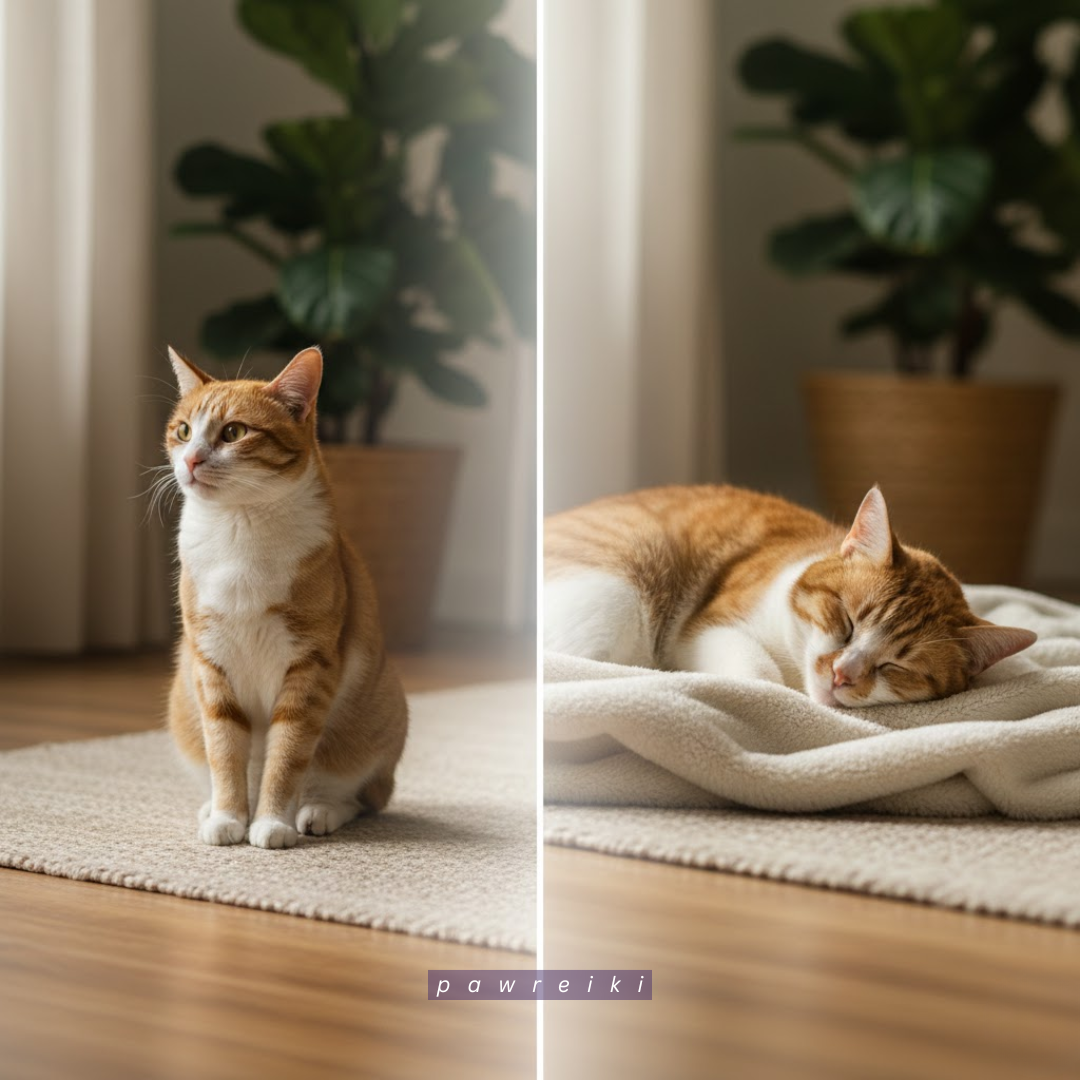
Most pets choose a comfortable spot. Some curl up in a favourite bed. Others sit nearby or stretch out across the room. Reiki works whether they stay close or keep a gentle distance. The goal is to create calm, not to control their behaviour.
You begin by settling your own energy. Slow breathing, quiet presence, and a soft intention help set the tone. Animals notice this shift instantly. Many relax the moment you become still.
Reiki is offered through light hands-on contact or hands held just above the body. Sensitive or shy animals often prefer hands-off techniques. Some pets will approach on their own when they are ready for touch, while others prefer the gentle presence without direct contact.
As the session continues, you may see signs of release. Pets often yawn, stretch, blink slowly, or sigh. Some fall into a deep sleep. Others shift positions or wander for a moment, then return. These natural movements show that your pet is processing the calm energy in their own way.
Sessions usually last between 15 and 40 minutes. The length depends on your pet’s comfort, not on a strict schedule. When your pet moves away or seems finished, the session naturally comes to a close. This respectful approach helps build trust and makes future sessions even smoother.
Over time, pets often look forward to Reiki. Many begin to approach as soon as they sense the quiet atmosphere forming, ready for another moment of peace.
The Role Of Reiki In Behaviour Modification For Pets
Reiki can play a supportive role in helping pets move through emotional blocks, stress responses, and behaviour patterns rooted in fear or overwhelm. By encouraging calm and restoring balance to the nervous system, Reiki helps create the conditions where true behaviour change becomes possible.
1. Noise Sensitivities
Thunderstorms, fireworks, and sudden noises often trigger panic or fear. Reiki helps soften the stress response, making these experiences less overwhelming over time.
2. Separation-Related Anxiety
Pets who struggle when left alone may find sessions grounding and comforting. Reiki encourages emotional steadiness, helping reduce the intensity of their reactions.
3. Fear-Based Reactivity
Barking, hiding, growling, or avoidant behaviours are often tied to underlying tension. Reiki supports emotional balance, helping pets respond more gently to the world around them.
4. Emotional Withdrawal
Some pets express stress by shutting down, retreating, or developing compulsive behaviours. Reiki offers gentle relief and helps them feel safe enough to re-engage.
5. Adjusting To Life Changes
Moves, new people, new animals, or disruptions in routine can cause behavioural setbacks. Reiki provides a calming influence that helps pets transition more smoothly.
How Reiki Supports Behaviour Change Over Time
Reiki offers a gentle, supportive way to help pets shift out of stress-based behaviours. Many behaviour challenges come from fear, overwhelm, or uncertainty rather than stubbornness.
When you help ease that emotional tension, pets often become more open, balanced, and steady. Behaviour issues can develop from many situations.
Noise sensitivity, past trauma, sudden changes in routine, or lack of confidence all shape how a pet reacts. When a pet holds all that tension internally, their behaviour becomes a reflection of their emotional state.
Reiki works by helping the nervous system soften. When an animal feels safe, calm, and grounded, their reactions change. They become more centred, less reactive, and more capable of learning new habits.
Reiki does not replace training or veterinary guidance. Instead, it creates the emotional foundation that makes behaviour work more easily. A relaxed pet can listen, learn, and adapt without feeling overwhelmed.
Here are the main ways Reiki can contribute to healthier behaviour patterns.
1. Helps Pets Release Stored Tension
Many behaviour problems come from built-up stress. Reiki introduces calm and helps the body let go of that stored pressure. Pets begin responding instead of reacting.

2. Creates A Sense Of Emotional Safety
When animals feel safe, their world becomes bigger. Reiki helps create that safety, allowing pets to explore, trust, and try new behaviours without fear.
3. Supports Learning And Adaptation
A calm nervous system can absorb new experiences more easily. This makes behaviour training smoother and reduces frustration for both you and your pet.
4. Reduces Overwhelm During Triggering Moments
Reiki can help soften strong emotional reactions. Whether it’s thunderstorms, loud visitors, or big household changes, pets often regain balance more quickly.
5. Encourages Long-Term Behaviour Stability
Over time, repeated relaxation experiences help shift a pet’s baseline emotional state. A more balanced pet naturally adopts calmer, steadier behaviour patterns.
How A Typical Animal Reiki Session Works
Animal Reiki sessions are simple, quiet, and guided by your pet’s comfort. You don’t need special equipment or formal training. What matters most is creating a peaceful moment and offering calm, supportive energy without pressure.
During a session, your pet is free to move, settle, or rest however they choose. Some curl up beside you immediately, while others prefer to stay across the room and observe. Both responses are perfectly natural.
Your role is to stay relaxed and present. Animals are very sensitive to energy and can feel your calmness. This helps them unwind and feel safe.
Here’s what a gentle at-home Reiki session usually looks like:
1. Choose A Quiet And Comfortable Space
Pick a spot where your pet already feels secure. A favourite blanket, a sunny patch on the floor, or their usual resting area works beautifully.
2. Settle Your Own Energy First
Take a few slow, grounding breaths. When your body relaxes, your pet senses the shift. This sets the tone for the session.
3. Allow Your Pet To Lead The Experience
Invite your pet, but never guide or position them. They may come close, wander, or rest at a distance. Every choice they make is part of their natural process.
4. Offer Reiki Through Gentle Presence Or Light Touch
If your pet enjoys contact, you can place your hands softly on them. If they prefer space, simply hold your hands a few inches away or rest them in your lap. Both ways are equally supportive.
5. Let The Session End Naturally
Pets often signal “I'm done” by shifting positions, walking away, or suddenly settling into a deeper rest. Follow their cues and keep the experience easy and unforced.
Most sessions last anywhere from a few minutes to half an hour. Sensitive or anxious animals may start with shorter sessions and build confidence over time.
Want to Share Your Love for Pet Reiki?
Discover how rewarding it can be to bring healing energy and compassion to pets — and to share that passion online with others.
🌟 Please read: How to Make Money Within the Pet Reiki NicheCommon Behavioural Challenges Reiki Can Gently Support
Reiki can be a valuable addition to behaviour work when pets are struggling with emotional or situational triggers. Rather than addressing the behaviour directly, Reiki helps calm the underlying stress that often drives unwanted responses.
1. Overstimulation And Hyperarousal
Some pets become overwhelmed quickly — jumping, barking, or reacting intensely. Reiki helps soften that heightened state so they can settle more easily.

2. Tension Around Strangers Or New Environments
Animals who freeze, hide, or grow tense in unfamiliar situations often benefit from the emotional grounding Reiki provides.
3. Difficulty Adjusting To Household Changes
New pets, new babies, visitors, or schedule disruptions can unsettle sensitive animals. Reiki offers stability that helps them adapt at their own pace.
4. Stress-Related Habits
Behaviours like over-grooming, pacing, whining, or chewing can sometimes lessen as pets receive more consistent calming support.
5. Emotional Recovery For Rescue Animals
Pets with trauma histories often respond well to Reiki’s gentle, non-invasive nature, helping them rebuild confidence over time.
Quick Guide For Trying Reiki With Your Pet
Trying Reiki with your pet at home is simple and intuitive. You don’t need special tools or training—just patience, calm presence, and a willingness to let your pet set the pace.
1. Start In A Quiet And Comfortable Space
Choose a place where your pet naturally feels safe. This could be a favourite bed, a sunny patch on the floor, or a quiet room away from busy household activity.
2. Let Your Pet Move Freely
There’s no need to position them or ask them to stay still. Allow them to come close, move away, or settle wherever they feel comfortable. This freedom builds trust.
3. Take A Centring Breath
Before you begin, take a moment to relax your own energy. Slow breathing helps create a peaceful atmosphere that your pet can feel.
4. Offer Gentle And Calm Energy
Rest your hands softly near your pet or keep them slightly above the body. If touch feels comfortable for your pet, great—if not, hands-off works perfectly. Your intention is enough.
5. Observe Their Reactions
Pets show relaxation in subtle ways: sighing, blinking slowly, stretching, settling down, or falling asleep. These small cues show they’re engaging with the session.
6. Keep Sessions Short And Positive
Especially in the beginning, 5–10 minutes is plenty. End the session whenever your pet gets restless, moves away, or seems done. Always finish while things feel calm and pleasant.
7. Notice Changes Over Time
Many shifts are gradual — better rest, calmer reactions, less clinginess, or improved comfort. Jotting notes helps you see progress you might miss day-to-day.
Tips For Making Reiki Sessions More Effective
Reiki works best when the atmosphere feels peaceful, predictable, and safe. These gentle adjustments can help your pet settle more easily and receive the calming energy more fully.
1. Let Your Pet Choose Their Space
Instead of placing your pet somewhere specific, simply allow them to rest where they feel most comfortable.
A familiar blanket, a sunny spot, or a quiet corner helps them relax before the session even begins.
2. Keep the Environment Calm
Soft lighting, reduced noise, and a slow pace help your pet unwind. Turning off the TV, lowering voices, and moving gently around the room all contribute to the peaceful setting.
3. Stay Relaxed and Present
Your energy matters. Take a few slow breaths to settle yourself before beginning. A calm, steady presence helps your pet feel safe and open to receiving Reiki.
4. Notice Subtle Signals of Relaxation
Pets often communicate in small ways — a long blink, a sigh, stretching, deeper breathing, or lying down. These quiet signs show your pet is easing into the session and processing the soothing energy.
5. Keep Sessions Consistent and Low-Pressure
Reiki works beautifully when offered regularly. Short, gentle sessions — even just a few minutes — create more impact over time than occasional long ones. If your pet becomes restless, end the session and try again later.

Reiki For Special Situations: Rescues, Seniors, And Multi-Animal Homes
Reiki can be beneficial in situations where pets are navigating extra stress, big life changes, or emotional challenges. These gentle sessions offer support that adapts to each animal’s comfort level and personality.
1. Rescue Animals Adjusting To New Environments
Rescues often come from uncertain or overwhelming backgrounds. When introduced to a new home, even positive change can feel intimidating.
Reiki helps soften the transition by easing nervous tension and offering emotional steadiness. Over time, many rescue pets become more open, trusting, and settled.
2. Senior Pets Needing Calm And Comfort
Older animals may deal with physical discomfort, slower mobility, or changes in cognition. Reiki can help them relax more deeply, rest better, and move through their day with less stress. For many senior pets, the gentle, quiet nature of Reiki becomes a soothing part of their routine.
3. Multi-Animal Homes And Group Harmony
In homes with two or more pets, personalities and energy levels sometimes clash. Reiki can bring a sense of balance and calm to the household, helping ease tension or jealousy. Some pets even relax more when receiving Reiki alongside their companions, creating a shared sense of peace.
4. Families With Children Or High-Energy Environments
Busy households can be overwhelming for sensitive pets. Reiki helps create pockets of calm that support emotional regulation and resilience. This can be especially helpful when new pets are introduced or when routines shift.
5. Pets Coping With Change Or Disruption
Moving homes, welcoming a new family member, or schedule changes can unsettle animals. Reiki provides a grounding influence, helping them feel secure while adjusting to their new circumstances.
Frequently Asked Questions About The Role Of Reiki In Behaviour Modification For Pets
Here are helpful answers to common questions from pet parents exploring how Reiki can support behaviour modification.
Q1: Can Reiki Replace Professional Training Or Vet Care?
Reiki offers calming, supportive energy that can help pets feel more balanced, but it does not replace hands-on training or veterinary care. It works best as a gentle addition to your pet’s overall wellness plan.
Q2: How Long Does It Take To See Behaviour Changes?
Some pets relax during the very first session, while others shift gradually over several sessions. Behaviour changes tend to happen slowly, as calm becomes part of their daily routine.
Q3: Can I Learn To Offer Reiki To My Own Pet?
Yes. Many people choose to learn simple Reiki techniques so they can offer support at home. This can deepen trust, strengthen your bond, and help reinforce calm between sessions.
Q4: What If My Pet Doesn’t Show Any Immediate Reaction?
Not all pets respond in obvious ways. Some process energy quietly and show changes later through softer behaviour, better sleep, or reduced tension. Subtle shifts still count as progress.
Q5: Is Reiki Helpful For Pets With Long-Term Behaviour Challenges?
It can be. Reiki creates a calmer emotional foundation, which may make training easier and help pets feel more secure. While not a stand-alone solution, it often enhances other behaviour-support strategies.
Helpful External Resources
If you’d like to explore pet wellness, behaviour support, or gentle healing practices further, here are trusted organizations and educational resources you may find helpful:
- American Veterinary Medical Association (AVMA) – General pet health, behaviour guidance, and care resources.
- ASPCA Pet Care Library – Behaviour tips, anxiety support, and animal-care information.
- VCA Animal Hospitals: Know Your Pet – Comprehensive articles written by veterinarians.
- International Center for Reiki Training (ICRT): Animal Reiki – Introductory information and classes for working with animals.
- Shelter Animal Reiki Association (SARA) – Ethical, animal-led Reiki practices and training.
Wrapping Up With Care And Awareness
Reiki offers a gentle path for pets who need emotional support, especially when they are working through behaviour challenges or adjusting to new situations. It helps create moments of calm that allow pets to relax, reset, and feel safer in their surroundings.
While Reiki is not a stand-alone solution, many pet parents find that it becomes a meaningful part of their pet’s overall care. When paired with training, enrichment, and regular veterinary guidance, Reiki can help soften reactive behaviours, ease stress, and support a more balanced daily life.
Patience plays an important role. Behaviour changes take time, and slow progress is entirely normal. With consistent support and a calm approach, many families notice their pets becoming more confident, settled, and receptive to positive experiences.
Reiki gives you a way to show your pet understanding and emotional presence. Over time, these quiet moments can make a real difference in how your pet feels and behaves day to day.
I trust you enjoyed this article on The Role Of Reiki In Behaviour Modification For Pets. Please stay tuned for more Reiki insights, pet wellness tips, and holistic lifestyle ideas.
Take care!
— JeannetteZ
💬 Your Opinion Is Important To Me
Do you have thoughts, ideas, or questions? I’d love to hear from you. Please leave your comments below or email me directly at Jeannette@pawreiki.com.
📚 More PawReiki Reads — Discover Energy Healing & Holistic Pet Wellness
💜 My #1 Recommendation for Online Success
Reiki has brought so much peace and purpose to my life, and sharing it online has been a true blessing. If you’ve ever dreamed of creating a gentle income stream around your love for animals and holistic healing, this platform gives you all the tools, training, and community support you need — no tech experience required.
🌟 See How Reiki Lovers Build Online Income — Try WA FreeNo credit card required · Free starter training included
Disclosure
This post may contain affiliate links. As an Amazon Associate and participant in other affiliate programs, I earn from qualifying purchases at no extra cost to you. Please read my full affiliate disclosure.